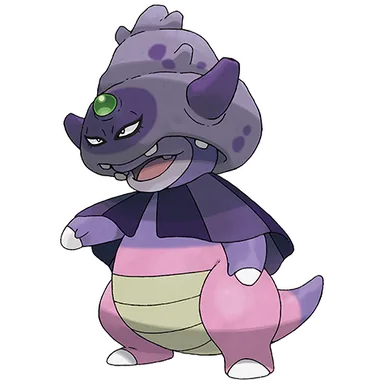
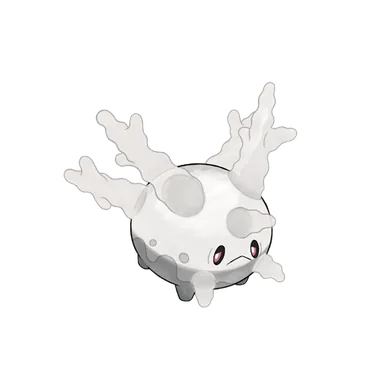
Galarian Corsola is a Ghost-type Pokémon introduced in Generation II and the first stage of its evolution line, with a base stat total of 410.
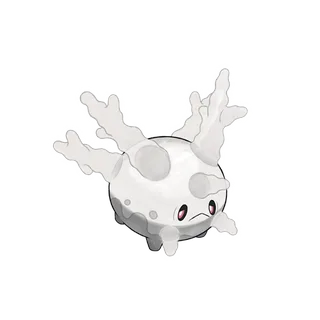
Galarian Corsola

Abilities
Physical attacks lower Defense and raise Speed.
May disable a move used on the Pokémon.
Hidden AbilityBase Stats
Galarian Corsola's Weaknesses and Resistances




Evolution Chain
Galarian Corsola evolves into Cursola at level 38.
 Galarian Corsola
 Cursola
Forms
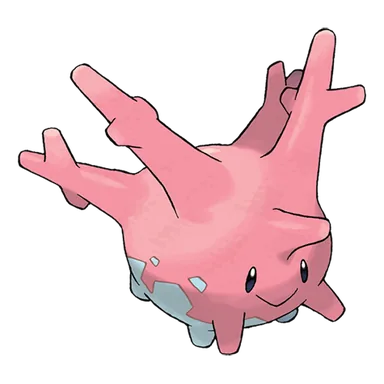 Corsola


Galarian Corsola Playthrough, Competitive, and Nuzlocke Usage
Using Galarian Corsola in a Playthrough
The Corsola family contains two fundamentally different branches: Johtonian Corsola is a defensive Water/Rock Pokemon that does not evolve, while Galarian Corsola is a pure Ghost-type that evolves into Cursola at level 38. Johtonian Corsola is slow and only modestly offensive, but good mixed defenses, Recover, useful resistances, and abilities such as Natural Cure or Regenerator in later generations can make it a durable support Pokemon when its weaknesses are carefully avoided. Its Water/Rock typing is especially vulnerable to Grass, which hits for quadruple damage, and it is also weak to Electric, Fighting, and Ground, making matchup knowledge important despite its defensive stats. Galarian Corsola plays almost the opposite way: base 100 Defense and Special Defense, Ghost immunities to Normal and Fighting, Will-O-Wisp, Strength Sap, and Eviolite can make the unevolved form exceptionally difficult to break, while evolving into Cursola trades much of that physical security for base 145 Special Attack and 130 Special Defense. Cursola is therefore a powerful but extremely slow special attacker, whereas Galarian Corsola itself can be the safer choice for players who value defensive reliability over damage.
Galarian Corsola in Competitive Pokémon
Johtonian Corsola has generally remained in low competitive tiers, but it possesses a real defensive toolkit through Recover, Stealth Rock, Scald or other Water STAB, status, Natural Cure, and especially Regenerator. Its respectable mixed defenses allow it to check selected attackers, yet Water/Rock typing creates several common weaknesses—including a quadruple Grass weakness—and low Speed and offensive pressure make it easier to exploit than stronger defensive Pokemon. Galarian Corsola briefly became much more notable because Eviolite multiplies its already excellent base 100 defenses, while Strength Sap, Will-O-Wisp, Night Shade, Stealth Rock, and Cursed Body allow it to function as an exceptionally stubborn physical wall. Cursola instead possesses an enormous base 145 Special Attack and 130 Special Defense, but base 50 Defense and base 30 Speed make it vulnerable to physical attackers before it can exploit that power; Perish Body can punish contact but is not enough to solve the underlying fragility. The family therefore has an unusual competitive situation in which the unevolved Galarian form can occupy a more useful defensive niche than its evolution, while Cursola is primarily a slow special wallbreaker.
Galarian Corsola in Nuzlockes
Johtonian Corsola can be useful in a Nuzlocke because Recover and solid defenses give it genuine staying power, and Natural Cure or Regenerator can improve its ability to recover from status or repeated switching in games where those abilities are available. Its quadruple Grass weakness is a severe hazard, however, and Electric, Ground, and Fighting coverage also make it unsafe to use as a blind defensive switch simply because its defenses are high. Galarian Corsola can be one of the safer defensive Pokemon in its game when holding Eviolite, with Normal and Fighting immunities, excellent effective bulk, Strength Sap, burns, and recovery-based play offering a large margin for error against known physical opponents. Evolving into Cursola is not automatically an upgrade for a permadeath run: Cursola gains extraordinary Special Attack and special bulk but drops to base 50 Defense and loses the Eviolite boost, making physical mistakes much more dangerous. For a Nuzlocke, keeping Galarian Corsola unevolved can therefore be a legitimate long-term strategy rather than merely delaying evolution.
Learnsets
13 moves · Sword Shield
Level Up — Sword Shield





Pokédex Entries
19 entries
It continuously sheds and grows. The tip of its head is prized as a treasure for its beauty.
In a south sea nation, the people live in communities that are built on groups of these POKéMON.
The points on its head absorb nutrients from clean water. They cannot survive in polluted water.
CORSOLA’s branches glitter very beautifully in seven colors when they catch sunlight. If any branch breaks off, this POKéMON grows it back in just one night.
Clusters of CORSOLA congregate in warm seas where they serve as ideal hiding places for smaller POKéMON. When the water temperature falls, this POKéMON migrates to the southern seas.
CORSOLA live in warm southern seas. If the sea becomes polluted, the beautiful coral stalks become discolored and crumble away in tatters.
In a south sea nation, the people live in communities that are built on groups of these POKéMON.
Many live in the clean seas of the south. They apparently can’t live in polluted waters.
It continuously sheds and grows. The tip of its head is prized as a treasure because of its beauty.
In a south-sea nation, the people live in communities that are built on groups of these Pokémon.
They prefer unpolluted southern seas. Their coral branches lose their color and deteriorate in dirty water.
Corsola’s branches glitter very beautifully in seven colors when they catch sunlight. If any branch breaks off, this Pokémon grows it back in just one night.
Clusters of Corsola congregate in warm seas where they serve as ideal hiding places for smaller Pokémon. When the water temperature falls, this Pokémon migrates to the southern seas.
Coral branches grow from its head. They break off quite easily, but they grow back in about three days.
Pursued by Mareanie for the branches on its head, this Pokémon will sometimes snap its own branches off as a diversion while it escapes.
The pink of Corsola that live in Alola is deep and vibrant, thanks to seas filled with nutrition.
In Alola, where their natural enemies Mareanie are plentiful, many Corsola have stubby branches on their heads.
It will regrow any branches that break off its head. People keep particularly beautiful Corsola branches as charms to promote safe childbirth.
These Pokémon live in warm seas. In prehistoric times, many lived in the oceans around the Galar region as well.
Additional Images
PokeAPI sprites
Open this section to load extra PokeAPI sprite images.
Galarian Corsola Biology and Behavior
Galarian Corsola represents the ghostly remains of an ancient Corsola population that was wiped out after sudden changes in climate and ocean temperature destroyed its marine habitat. Its bleached shell resembles dead coral, while the translucent branches surrounding it are incorporeal projections that can disappear and reform at will. Those ghostly branches cannot injure a victim through ordinary physical force, but they can take root inside another creature, immobilize it, and drain away life energy. Galarian Corsola often remain among the fossilized remnants of prehistoric seas and can be mistaken for ordinary stones; people who accidentally kick one are said to be cursed. Continuous feeding on spiritual energy eventually causes the remaining shell to break apart, allowing the ghostly body within to emerge fully as Cursola.
Galarian Corsola Biological Data
- National Pokédex
- #222
- Species
- Coral Pokémon
- Height
- 2' 0" (0.6 m)
- Weight
- 1.1 lbs (0.5 kg)
- Habitat
- Sea
- Color
- Pink
- Body Style
- Armor
- Gender
- 75% female / 25% male
Misc
Catch Rate: 60
Base Experience: 144 Exp
Hatch Counter: 20
Galarian Corsola Size Comparison: BETA
Galarian Corsola is listed at 2' 0" (0.6 m) and shown in an in-chart visual comparison.
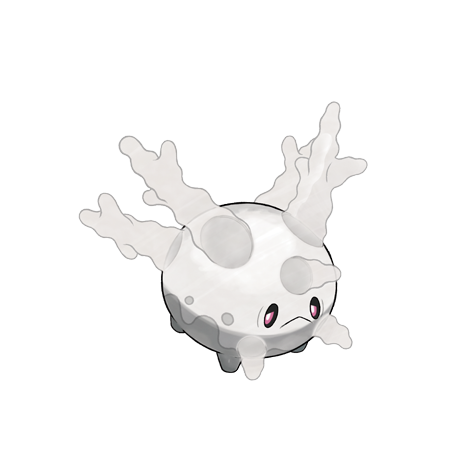

How is visual size determined?
Pokédex height is treated as the official listed measurement, but the chart uses pose-aware visual scaling so each sprite looks reasonable in a direct comparison.
For long or coiled Pokémon, the listed height may represent total body length rather than upright height. For Pokémon with floppy ears, leaves, feathers, antennae, wings, or other flexible features, the chart usually measures to the top of the solid, substantial part of the head or body instead of the tallest decorative feature.
The goal is not to replace the official height, but to make the artwork compare naturally at the size it appears to occupy.