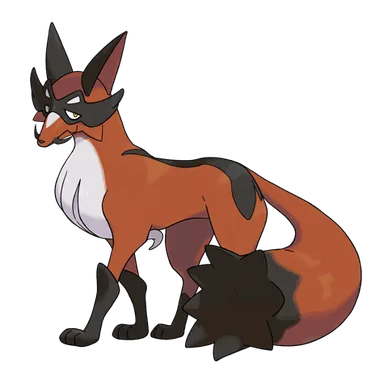
Nickit is a Dark-type Pokémon introduced in Generation VIII and the first stage of its evolution line, with a base stat total of 245.
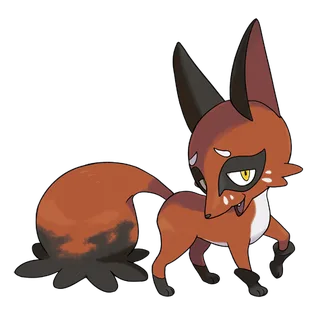
Nickit

Abilities
Base Stats
Nickit's Weaknesses and Resistances





Evolution Chain
Nickit evolves into Thievul at level 18.
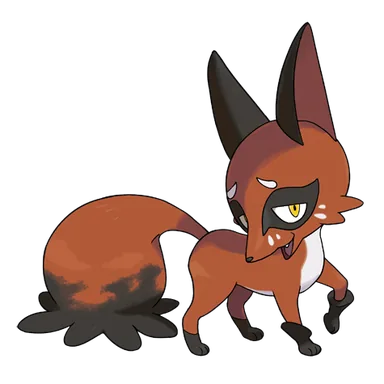 Nickit
 Thievul
Nickit Playthrough, Competitive, and Nuzlocke Usage
Using Nickit in a Playthrough
Nickit is available almost immediately in Sword/Shield and evolves into Thievul at level 18, so the family reaches its final stage early and can fill a Dark-type slot well before the middle of the game. Thievul is primarily a special attacker despite its fox-like physical design, with base 87 Special Attack, 92 Special Defense, and 90 Speed but only base 58 Attack and Defense. Dark Pulse is its most reliable STAB, while Psychic, Grass Knot, Burning Jealousy, Snarl, and other coverage or utility moves can help against Fighting-, Rock-, Ground-, Grass-, or Steel-oriented opponents depending on the game. Stakeout is the most powerful Ability when available because it doubles Thievul's offensive damage against a target on the turn that target switches in, while Unburden can double Speed after its held item is consumed or lost; Run Away has little battle value. Nasty Plot can turn Thievul into a strong special attacker, but its mediocre physical bulk makes spending a setup turn risky against opponents that can hit it hard. Pure Dark provides a Psychic immunity and resistances to Dark and Ghost while leaving weaknesses to Bug, Fairy, and Fighting, so Thievul is best used through Speed, prediction, and favorable switches rather than as a general defensive Pokémon. Modest is useful when maximizing its otherwise only moderate Special Attack, while Timid is a good alternative when outspeeding nearby threats matters more.
Nickit in Competitive Pokémon
Thievul has remained a lower-tier specialist rather than a broadly successful competitive Pokémon, but its Abilities give it two distinct offensive identities. In Sword and Shield it is classified ZU, while Smogon analyses in both ZU and PU highlight Choice Specs plus Stakeout as a genuine wallbreaking strategy because any opponent that switches into Thievul takes double damage from the incoming attack. That interaction allows even base 87 Special Attack and an ordinary 80-power Dark Pulse to become dangerous when Thievul is positioned correctly, while Psychic and Burning Jealousy provide coverage against Fighting-, Fairy-, Grass-, and Steel-oriented answers. The alternative approach uses Nasty Plot with Unburden, often consuming a terrain seed or another held item so that Thievul simultaneously gains a Speed boost and increases its Special Attack. Both strategies are prediction- or setup-dependent: without Stakeout, Nasty Plot, or an item activation, Thievul's raw damage is mediocre, and base 70/58 physical bulk leaves it vulnerable to faster attackers and strong priority. Its weaknesses to Fighting, Fairy, and Bug and competition from more immediately threatening Dark-types have consequently kept it in the lowest usage tiers despite the potential for spectacular damage in the correct position. Thievul is unavailable in standard Scarlet and Violet, so its conventional competitive history remains a Generation VIII story.
Nickit in Nuzlockes
Nickit's early availability and level-18 evolution make the family convenient in a Nuzlocke, but Thievul's mediocre physical bulk means convenience should not be mistaken for safety. A Psychic immunity can provide completely free switches against known Psychic attacks, and its Dark and Ghost resistances also create useful opportunities to enter battle without taking heavy damage. Dark Pulse is accurate and reliable, while Parting Shot in generations where available can lower an opponent's offenses and bring in a teammate more safely than a hard switch. Stakeout can reward predicting an enemy switch, but ordinary story AI does not always switch predictably enough to build a survival strategy around the Ability; Unburden is similarly useful only when the held-item activation is actually controlled. Nasty Plot is powerful but exposes Thievul's weak physical side for a full turn, so it is safer against passive or specially oriented opponents than against unknown physical attackers. Fighting-, Fairy-, and Bug-type moves are the major threats, and because Thievul's damage is not overwhelming without a boost, the player should avoid long neutral exchanges where its modest defenses can be worn down.
Learnsets
11 moves · Sword Shield
Level Up — Sword Shield




Pokédex Entries
2 entries
Aided by the soft pads on its feet, it silently raids the food stores of other Pokémon. It survives off its ill-gotten gains.
Cunning and cautious, this Pokémon survives by stealing food from others. It erases its tracks with swipes of its tail as it makes off with its plunder.
Where To Find Nickit
2 locations
Route 1 · GalarOverworld · version details vary
Route 1
Route 2 · GalarOverworld · version details vary
Route 2
Route 2 (Lakeside)
Additional Images
PokeAPI sprites
Open this section to load extra PokeAPI sprite images.
Nickit Biology and Behavior
Nickit is a cunning young fox that prefers stealing food from other creatures to gathering or hunting for food itself. The pads on its feet are unusually soft and compress against the ground, allowing Nickit to move with very little sound while approaching a target. Its large brush-like tail is then used to sweep away the paw prints it leaves behind, making the trail much more difficult to follow after a theft. This combination of silent movement and deliberate track removal makes stealth a true behavioral adaptation rather than merely a visual thief motif. Nickit has a fierce rivalry with Purrloin, another species known for stealing and deception.
Nickit Biological Data
- National Pokédex
- #827
- Species
- Fox Pokémon
- Height
- 2' 0" (0.6 m)
- Weight
- 19.6 lbs (8.9 kg)
- Habitat
- Currently Unknown
- Color
- Brown
- Body Style
- Quadruped
- Gender
- 50% female / 50% male
Misc
Catch Rate: 255
Base Experience: 49 Exp
Hatch Counter: 15
Nickit Size Comparison: BETA
Nickit is listed at 2' 0" (0.6 m) and shown in an in-chart visual comparison.
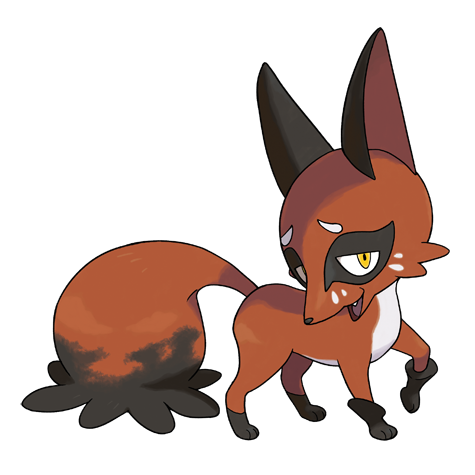

How is visual size determined?
Pokédex height is treated as the official listed measurement, but the chart uses pose-aware visual scaling so each sprite looks reasonable in a direct comparison.
For long or coiled Pokémon, the listed height may represent total body length rather than upright height. For Pokémon with floppy ears, leaves, feathers, antennae, wings, or other flexible features, the chart usually measures to the top of the solid, substantial part of the head or body instead of the tallest decorative feature.
The goal is not to replace the official height, but to make the artwork compare naturally at the size it appears to occupy.