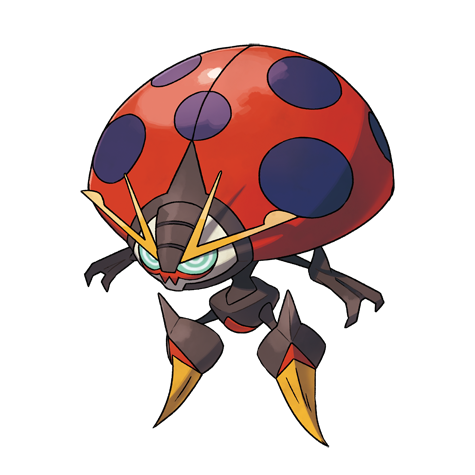
Orbeetle is a Bug/Psychic-type Pokémon introduced in Generation VIII and a final stage of its evolution line, with a base stat total of 505.
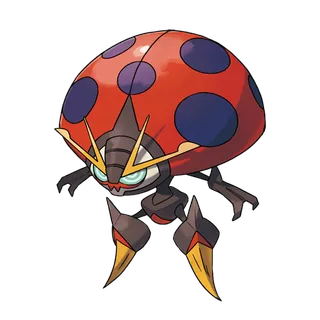
Orbeetle


Abilities
Base Stats
Orbeetle's Weaknesses and Resistances





Evolution Chain
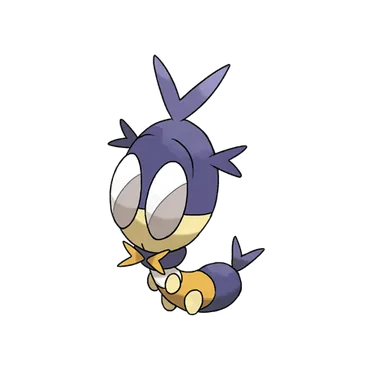
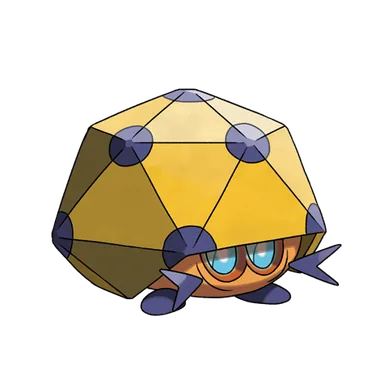
Blipbug evolves into Dottler at level 10, and Dottler evolves into Orbeetle at level 30.
 Blipbug
 Dottler
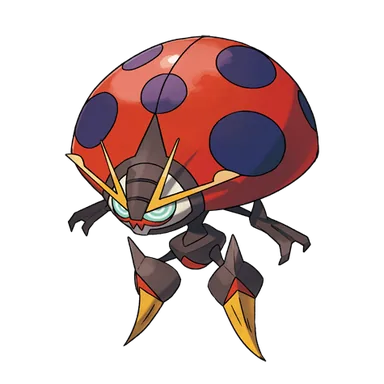 Orbeetle
Forms
 Orbeetle Gmax
Orbeetle Playthrough, Competitive, and Nuzlocke Usage
Using Orbeetle in a Playthrough
Blipbug evolves into Dottler at level 10 and Dottler into Orbeetle at level 30, so the family develops quickly at first but spends a substantial portion of the early game in its defensive middle stage. Dottler gains Psychic typing and strong defensive stats but is extremely slow and not very powerful, making screens and support more useful than trying to force damage until Orbeetle arrives. Orbeetle finishes with base 110 Defense, 120 Special Defense, 90 Speed, and 80 Special Attack, giving it unusual mixed bulk and enough Speed to support the team before many ordinary opponents act. Bug/Psychic provides a 4× resistance to Fighting plus resistances to Grass, Ground, and Psychic, but it also carries six weaknesses to Bug, Dark, Fire, Flying, Ghost, and Rock, so the impressive raw defenses do not make every matchup safe. Psychic, Bug Buzz, Giga Drain, screens, Sticky Web, Reflect, Light Screen, and setup options such as Calm Mind or Iron Defense give Orbeetle more value as a support or setup Pokémon than as a straightforward damage dealer. Frisk is useful in games where opposing held items matter, while Telepathy is mainly a doubles Ability and Swarm is situational; Gigantamax Orbeetle can additionally use G-Max Gravitas to create Gravity during its temporary Dynamax state. Bold or Calm can reinforce its defensive role, while Timid is useful when the goal is to establish screens, webs, or other support before the opponent moves.
Orbeetle in Competitive Pokémon
Orbeetle's competitive career has been modest despite a distinctive support movepool and strong defensive stats. In Sword and Shield it is classified ZU, where Smogon describes it as generally unviable because Bug/Psychic supplies too many common weaknesses and Orbeetle is passive before it successfully sets up. Its most recognizable singles strategies use combinations such as Agility, Iron Defense, Body Press, and Stored Power, attempting to turn defensive boosts into offensive pressure after several setup turns. Orbeetle has also found a more coherent niche on Psychic-type Monotype teams, where Reflect, Light Screen, Sticky Web, and U-turn allow it to support stronger setup sweepers and wallbreakers rather than attempting to sweep itself. Frisk can reveal opposing items and Telepathy has niche doubles utility, but neither Ability solves the fundamental problem that six weaknesses make long-term defensive positioning difficult despite base 110 Defense and 120 Special Defense. Gigantamax Orbeetle's G-Max Gravitas creates Gravity, which can support low-accuracy moves and remove Ground immunities in Dynamax-enabled formats, but Gigantamax itself is not part of standard Smogon singles and should not be used to inflate Orbeetle's conventional tier history. Orbeetle is unavailable in standard Scarlet and Violet, so its established traditional singles history remains centered on Generation VIII lower tiers and specialized formats.
Orbeetle in Nuzlockes
The Blipbug line can be useful in a Nuzlocke because it evolves to Dottler very early and then gains enough defensive bulk to survive many neutral attacks while supporting the team with screens. Dottler's low offensive stats and extreme slowness make direct battles take longer, however, which increases exposure to critical hits and status if it is used as though it were already Orbeetle. Once fully evolved, Orbeetle's strong mixed defenses and 4× Fighting resistance can create excellent switch opportunities, and Reflect or Light Screen can reduce risk for the entire team rather than merely protecting Orbeetle itself. Sticky Web can make later opponents easier for slower teammates to handle, while Giga Drain provides some recovery and accurate Psychic or Bug attacks avoid unnecessary accuracy variance. The major danger is the typing: six weaknesses are a large number for a defensive Pokémon, and unexpected Dark, Ghost, Fire, Flying, Rock, or Bug coverage can turn what looks like a safe defensive matchup into a serious threat. Because Orbeetle often wins by setting up support rather than by immediately knocking opponents out, the safest use is to exploit clearly known resistances and avoid prolonged setup against enemies that can score critical hits or carry super-effective coverage.
Learnsets
16 moves · Sword Shield
Level Up — Sword Shield



Pokédex Entries
2 entries
It’s famous for its high level of intelligence, and the large size of its brain is proof that it also possesses immense psychic power.
It emits psychic energy to observe and study what’s around it—and what’s around it can include things over six miles away.
Additional Images
PokeAPI sprites
Open this section to load extra PokeAPI sprite images.
Orbeetle Biology and Behavior
Orbeetle possesses an exceptionally large brain for its body size, and the enormous intelligence produced by that brain manifests as powerful psychic abilities. It can emit psychic energy to observe and study objects and events more than six miles away, effectively allowing it to survey a huge area without physically approaching what it is monitoring. Although it retains wings, Orbeetle rarely depends on them for ordinary flight and instead levitates through psychic power. Its behavior is consequently more observational and calculating than that of many insect Pokémon, with perception and remote awareness serving as its primary adaptations.
Orbeetle Biological Data
- National Pokédex
- #826
- Species
- Seven Spot Pokémon
- Height
- 1' 4" (0.4 m)
- Weight
- 89.9 lbs (40.8 kg)
- Habitat
- Currently Unknown
- Color
- Red
- Body Style
- Wings
- Gender
- 50% female / 50% male
Misc
Catch Rate: 45
Base Experience: 253 Exp
Hatch Counter: 15
Orbeetle Size Comparison: BETA
Orbeetle is listed at 1' 4" (0.4 m) and shown in an in-chart visual comparison.

How is visual size determined?
Pokédex height is treated as the official listed measurement, but the chart uses pose-aware visual scaling so each sprite looks reasonable in a direct comparison.
For long or coiled Pokémon, the listed height may represent total body length rather than upright height. For Pokémon with floppy ears, leaves, feathers, antennae, wings, or other flexible features, the chart usually measures to the top of the solid, substantial part of the head or body instead of the tallest decorative feature.
The goal is not to replace the official height, but to make the artwork compare naturally at the size it appears to occupy.