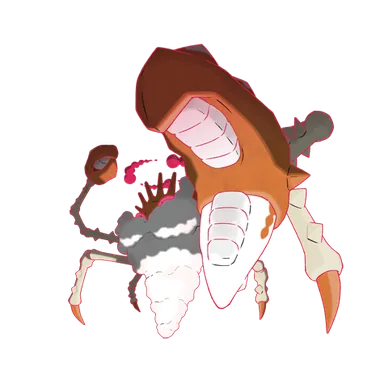
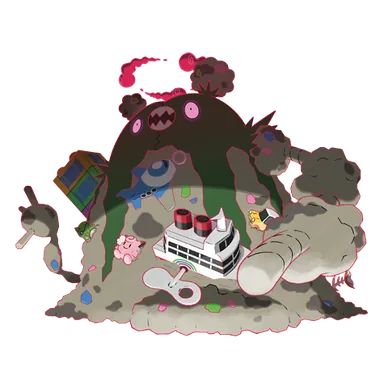
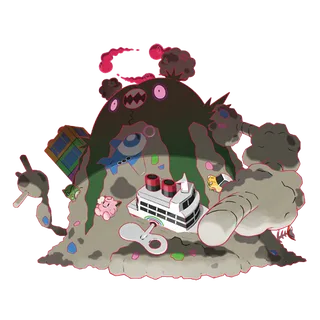
Garbodor Gmax is a Poison-type Pokémon introduced in Generation V and a final stage of its evolution line, with a base stat total of 474.
Garbodor Gmax

Abilities
Helps repel wild POKéMON.
Physical attacks lower Defense and raise Speed.
Damages the foe landing the finishing hit.
Hidden AbilityBase Stats
Garbodor Gmax's Weaknesses and Resistances





Evolution Chain
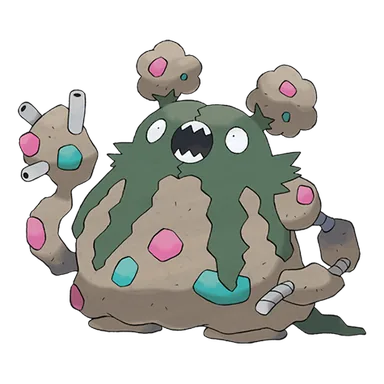
Trubbish evolves into Garbodor at level 36.
Garbodor Gmax is a Gigantamax form of Garbodor, not a separate evolutionary stage. The chain below shows the base species relationship.
 Trubbish
 Garbodor
Forms
 Garbodor Gmax
 Playthrough, Competitive, and Nuzlocke Usage
Using Garbodor Gmax in a Playthrough
Trubbish evolves into Garbodor at level 36, producing a pure Poison Pokemon with balanced physical bulk, base 95 Attack, and excellent access to entry hazards. Gunk Shot or Poison Jab provides STAB, while Seed Bomb, Drain Punch, Rock Blast, Body Slam, Stomping Tantrum in later games, and Explosion or utility coverage give it enough offense to avoid complete passivity. Spikes and Toxic Spikes are the family's most distinctive support tools, allowing Garbodor to weaken entire opposing teams over repeated switches. Stench can cause flinches with damaging moves, Weak Armor trades Defense for Speed after physical hits, and the Hidden Ability Aftermath damages a contact attacker when Garbodor is knocked out, although the last effect is naturally undesirable in a Nuzlocke. Poison typing grants resistances to Grass, Fighting, Poison, Bug, and Fairy from Generation VI onward and automatically absorbs Toxic Spikes upon switching in while grounded. Adamant or Impish are sensible depending on whether the player values offense or physical durability.
Garbodor Gmax in Competitive Pokémon
Garbodor was one of BW NU's premier Spikes users and one of the few fully evolved Pokemon in the tier with access to both Spikes and Toxic Spikes. Its Poison typing, respectable physical bulk, lack of a Stealth Rock weakness, and ability to punish contact through Rocky Helmet plus Aftermath made it especially effective at repeatedly setting hazards against Fighting-types and passive defensive Pokemon. Clear Smog prevented setup sweepers from exploiting it freely, while Pain Split in relevant generations gave limited recovery and Gunk Shot ensured that Taunt did not make it useless. Later generations preserved this identity, with Garbodor repeatedly appearing in lower tiers as a durable hazard setter rather than a conventional sweeper. Gigantamax Garbodor has a separate Generation VIII doubles-oriented niche because G-Max Malodor damages all opposing targets and poisons them, but Gigantamax does not alter Garbodor's base statistics and is tied to Dynamax formats rather than representing a permanently stronger evolution.
Garbodor Gmax in Nuzlockes
Garbodor is a useful Nuzlocke support Pokemon because pure Poison typing provides several resistances, removes Toxic Spikes simply by entering the field, and its defenses are solid enough to handle many physical neutral attacks. Spikes can make long trainer battles progressively safer by weakening every grounded opponent that switches in, while Toxic Spikes can wear down bulky teams without requiring Garbodor to stay exposed. Gunk Shot is powerful but inaccurate, so Poison Jab or another reliable move is usually safer when the extra damage is unnecessary. Weak Armor can become dangerous because a physical hit lowers Defense even while increasing Speed, and Aftermath only activates when Garbodor faints, so neither should be treated as a primary survival plan. Gigantamax Garbodor is considerably safer in formats where Dynamax is available because of the temporary HP increase, while G-Max Malodor adds guaranteed teamwide poison pressure without changing its underlying weaknesses to Ground and Psychic.
Learnsets
19 moves · Sword Shield
Level Up — Sword Shield





Pokédex Entries
9 entries
It clenches opponents with its left arm and finishes them off with foul-smelling poison gas belched from its mouth.
They absorb garbage and make it part of their bodies. They shoot a poisonous liquid from their right-hand fingertips.
Consuming garbage makes new kinds of poison gases and liquids inside their bodies.
Beware the poisonous liquid it shoots from its right arm. If even a little of it gets on you, you’ll experience the effects of the unidentified toxin.
For a time, their numbers increased explosively in Alola. Since the arrival of Grimer, their population has decreased dramatically.
It locks opponents in place with its left hand, immobilizing them by entirely dousing their bodies with poisonous liquid.
Some say the reason Garbodor in Alola are a little stronger than their counterparts elsewhere is the presence of Muk, their natural enemy.
This Pokémon eats trash, which turns into poison inside its body. The main component of the poison depends on what sort of trash was eaten.
The toxic liquid it launches from its right arm is so virulent that it can kill a weakened creature instantly.
Additional Images
PokeAPI sprites
Open this section to load extra PokeAPI sprite images.
Garbodor Gmax Biology and Behavior
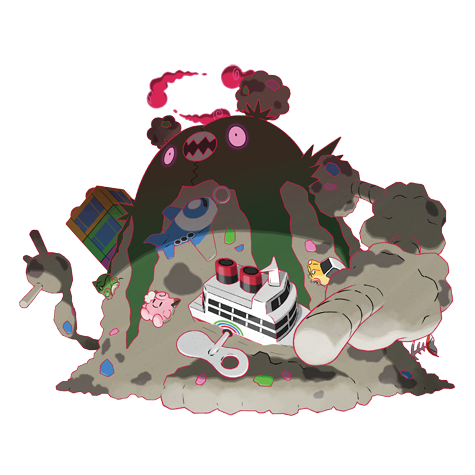
Gigantamax energy greatly thickens Garbodor's toxic gas until it visibly congeals into masses resembling discarded toys, vehicles, dolls, a Master Ball, and other refuse embedded around its enormous body. It can release toxic gas from both its mouth and fingers. Pokédex descriptions warn that this gas can penetrate victims deeply enough for the toxins to reach the bones. The form is therefore essentially a gigantic living landfill whose pollution has become physically denser and more dangerous.
Garbodor Gmax Biological Data
- National Pokédex
- #569
- Species
- Trash Heap Pokémon
- Height
- 68' 11" (21.0 m)
- Weight
- 2204.6 lbs (1000.0 kg)
- Habitat
- Currently Unknown
- Color
- Green
- Body Style
- Humanoid
- Gender
- 50% female / 50% male
Misc
Catch Rate: 60
Base Experience: 166 Exp
Hatch Counter: 20
Garbodor Gmax Size Comparison: BETA
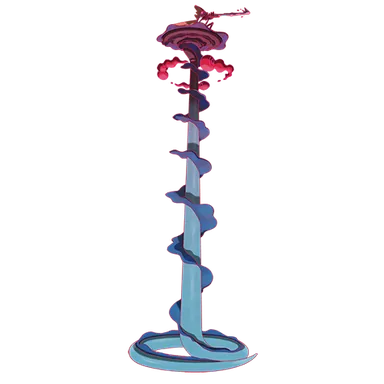
Garbodor Gmax is listed at 68' 11" (21.0 m) and shown in an in-chart visual comparison.

How is visual size determined?
Pokédex height is treated as the official listed measurement, but the chart uses pose-aware visual scaling so each sprite looks reasonable in a direct comparison.
For long or coiled Pokémon, the listed height may represent total body length rather than upright height. For Pokémon with floppy ears, leaves, feathers, antennae, wings, or other flexible features, the chart usually measures to the top of the solid, substantial part of the head or body instead of the tallest decorative feature.
The goal is not to replace the official height, but to make the artwork compare naturally at the size it appears to occupy.