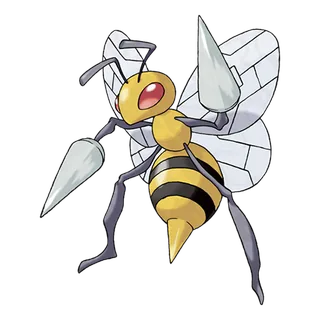
Beedrill is a Bug/Poison-type Pokémon introduced in Generation I and a final stage of its evolution line, with a base stat total of 395.
Beedrill


Abilities
Base Stats
Beedrill's Weaknesses and Resistances





Evolution Chain
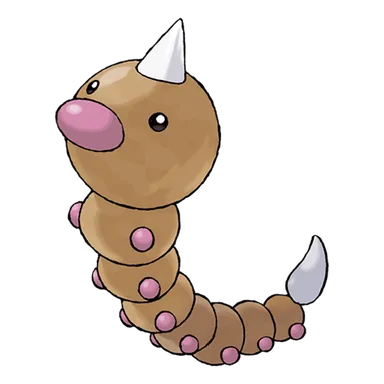
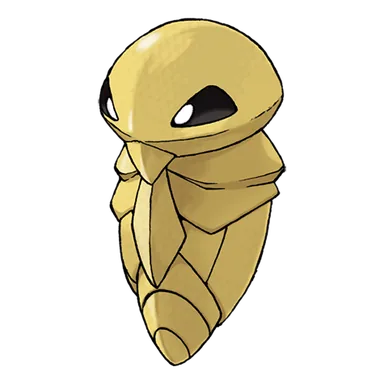
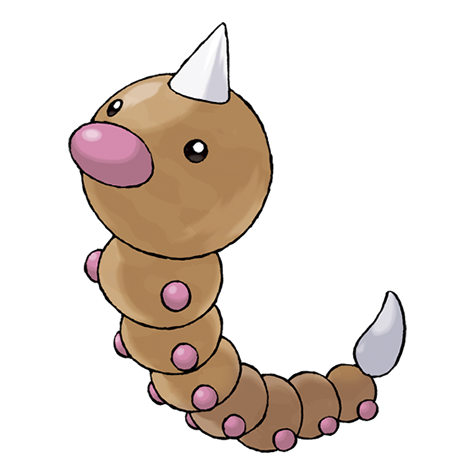
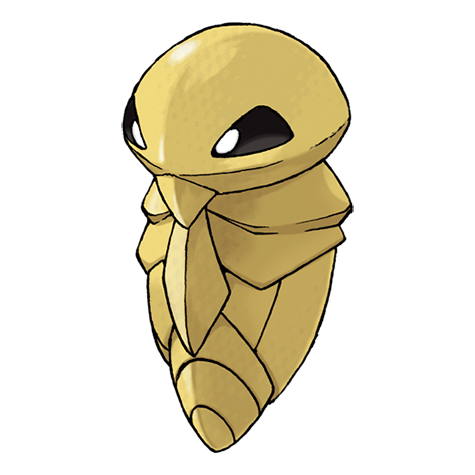
Weedle evolves into Kakuna at level 7, and Kakuna evolves into Beedrill at level 10.
 Weedle
 Kakuna
 Beedrill
Forms
 Mega Beedrill
Beedrill Playthrough, Competitive, and Nuzlocke Usage
Using Beedrill in a Playthrough
Like Caterpie, the Weedle line reaches its final evolution at level 10, giving Beedrill a significant statistical advantage over many unevolved Pokemon encountered early in a game. Beedrill is primarily a physical attacker, and moves such as Twineedle historically gave it access to usable Bug-type STAB earlier than many other Bug Pokemon, while later generations added stronger options such as U-turn and Poison Jab. Its effectiveness falls as the game progresses because its physical Defense is extremely poor and its offensive movepool has historically been limited in several generations. Where Mega Evolution is available, Mega Beedrill dramatically changes the line's potential by providing far greater Speed and Attack alongside Adaptability-boosted STAB attacks.
Beedrill in Competitive Pokémon
Standard Beedrill has historically struggled competitively because its offensive strengths are not sufficient to compensate for poor physical bulk, exploitable weaknesses, and limited opportunities to enter battle safely. Mega Beedrill transformed it into a much more dangerous offensive Pokemon, with Adaptability greatly strengthening U-turn and Poison Jab and its extremely high Speed allowing it to threaten or pivot out of many matchups before being attacked. U-turn is particularly important because it combines heavy damage with momentum, while Poison Jab provides powerful secondary STAB and Drill Run can cover some opponents that resist its main attacks. Even as a Mega Evolution it remains exceptionally frail, so its success depends heavily on entering battle safely and avoiding priority attacks, hazards, and unfavorable contact.
Beedrill in Nuzlockes
The Weedle line gains meaningful Nuzlocke value from evolving into Beedrill at level 10, creating an early power spike at a stage when many other encounters are still unevolved. In FireRed and LeafGreen, Twineedle gives Beedrill specific utility against targets such as Misty's Starmie and can threaten Psychic-types, although its own Poison typing makes direct exposure to Psychic attacks dangerous. Community Nuzlocke analyses consistently note that Beedrill's usefulness falls off more sharply than Butterfree's because it lacks comparable status utility and has extremely poor physical Defense. It can therefore be useful for carefully selected early and midgame matchups, but unexpected physical attacks or unfavorable coverage make it risky to treat as a general-purpose switch-in.
Learnsets
18 moves · Brilliant Diamond Shining Pearl
Level Up — Brilliant Diamond Shining Pearl




Pokédex Entries
13 entries
It has three poisonous stingers on its forelegs and its tail. They are used to jab its enemy repeatedly.
Flies at high speed and attacks using its large venomous stingers on its forelegs and tail.
It has 3 poisonous stingers on its forelegs and its tail. They are used to jab its enemy repeatedly.
It can take down any opponent with its powerful poison stingers. It sometimes attacks in swarms.
It has three poison barbs. The barb on its tail secretes the most powerful poison.
It uses sharp, poisonous stings to defeat prey, then takes the victim back to its nest for food.
BEEDRILL is extremely territorial. No one should ever approach its nest - this is for their own safety. If angered, they will attack in a furious swarm.
A BEEDRILL is extremely territorial. For safety reasons, no one should ever approach its nest. If angered, they will attack in a swarm.
May appear in a swarm. Flies at violent speeds, all the while stabbing with the toxic stinger on its rear.
It flies at high speed and attacks using the large venomous stingers on its forelegs and tail.
Its best attack involves flying around at high speed, striking with poison needles, then flying off.
It can take down any opponent with its powerful poison stingers. It sometimes attacks in swarms.
Beedrill is extremely territorial. No one should ever approach its nest—this is for their own safety. If angered, they will attack in a furious swarm.
Where To Find Beedrill
19 locations
Route 4 · AlolaIsland Scan · version details vary
Alola Route 4 Area
Azalea Town · JohtoHeadbutt High, Headbutt Low, Headbutt Normal · version details vary
Azalea Town
Ilex Forest · JohtoHeadbutt Low, Headbutt Normal, Headbutt High, Headbutt · version details vary
Ilex Forest
Lake of Rage · JohtoHeadbutt High, Headbutt Low, Headbutt Normal · version details vary
Lake of Rage
National Park · JohtoWalking · version details vary
National Park
Route 34 · JohtoHeadbutt High, Headbutt Low, Headbutt Normal · version details vary
Road 34
Route 35 · JohtoHeadbutt High, Headbutt Low, Headbutt Normal · version details vary
Road 35
Route 36 · JohtoHeadbutt High, Headbutt Low, Headbutt Normal · version details vary
Road 36
Route 37 · JohtoHeadbutt High, Headbutt Low, Headbutt Normal · version details vary
Road 37
Route 38 · JohtoHeadbutt High, Headbutt Low, Headbutt Normal · version details vary
Road 38
Route 39 · JohtoHeadbutt High, Headbutt Low, Headbutt Normal · version details vary
Road 39
Route 47 · JohtoHeadbutt · version details vary
Road 47
Route 2 · KantoWalking · version details vary
Road 2 (north, towards Pewter City)
Road 2 (south, towards Viridian City)
Route 26 · KantoHeadbutt High, Headbutt Low, Headbutt Normal · version details vary
Road 26
Route 27 · KantoHeadbutt High, Headbutt Low, Headbutt Normal · version details vary
Road 27
Viridian Forest · KantoOverworld, Walking · version details vary
Viridian Forest
Cipher Key Lair · OrreSnag · version details vary
Cipher Key Lair 3F
Pinwheel Forest · UnovaHidden Grotto · version details vary
Pinwheel Forest (Hidden Grotto – Inner area)
Route 12 · UnovaGrass Spots · version details vary
Road 12
Held Items
1 items
- Ruby: 5% chance
- Sapphire: 5% chance
- Emerald: 5% chance
- Firered: 5% chance
- Leafgreen: 5% chance
- Diamond: 5% chance
- Pearl: 5% chance
- Platinum: 5% chance
- Heartgold: 5% chance
- Soulsilver: 5% chance
- Black: 5% chance
- White: 5% chance
- Black 2: 5% chance
- White 2: 5% chance
- X: 5% chance
- Y: 5% chance
- Omega Ruby: 5% chance
- Alpha Sapphire: 5% chance
- Sun: 5% chance
- Moon: 5% chance
- Ultra Sun: 5% chance
- Ultra Moon: 5% chance
- Xd: 100% chance
Additional Images
PokeAPI sprites
Open this section to load extra PokeAPI sprite images.
Beedrill Biology and Behavior
Beedrill is a highly territorial flying insect Pokemon armed with large stingers on both forelimbs and a third stinger on its abdomen, with the abdominal stinger containing its strongest poison. Wild Beedrill cooperate in groups around food, territory, and reproduction, and disturbing one individual can provoke an attack from the wider group. The animated series specifically depicts Beedrill aggressively defending Weedle and Kakuna when they are disturbed, indicating protective behavior toward the earlier stages of its evolutionary line. Beedrill attacks at high speed with its venomous stingers and has been described carrying victims back to its nesting area as food.
Beedrill Biological Data
- National Pokédex
- #15
- Species
- Poison Bee Pokémon
- Height
- 3' 3" (1.0 m)
- Weight
- 65.0 lbs (29.5 kg)
- Habitat
- Forest
- Color
- Yellow
- Body Style
- Bug Wings
- Gender
- 50% female / 50% male
Misc
Catch Rate: 45
Base Experience: 178 Exp
Hatch Counter: 15
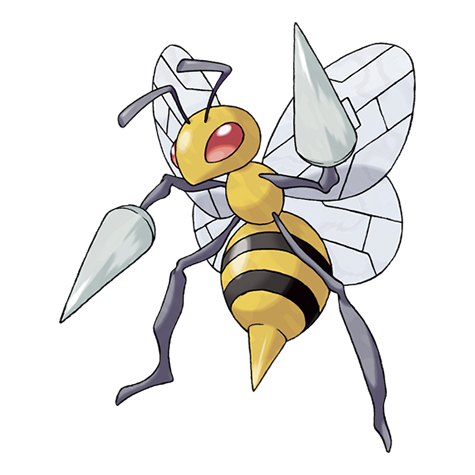
Beedrill Size Comparison: BETA
Beedrill is listed at 3' 3" (1.0 m); this chart uses a pose-adjusted visual scale.

How is visual size determined?
Pokédex height is treated as the official listed measurement, but the chart uses pose-aware visual scaling so each sprite looks reasonable in a direct comparison.
For long or coiled Pokémon, the listed height may represent total body length rather than upright height. For Pokémon with floppy ears, leaves, feathers, antennae, wings, or other flexible features, the chart usually measures to the top of the solid, substantial part of the head or body instead of the tallest decorative feature.
The goal is not to replace the official height, but to make the artwork compare naturally at the size it appears to occupy.
Beedrill currently uses a pose-adjusted visual scale.