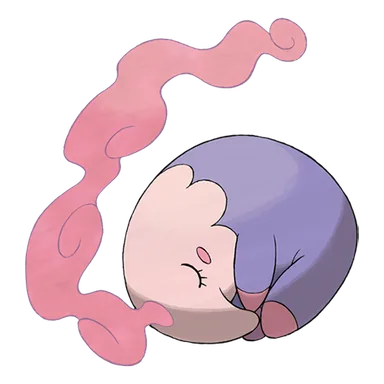
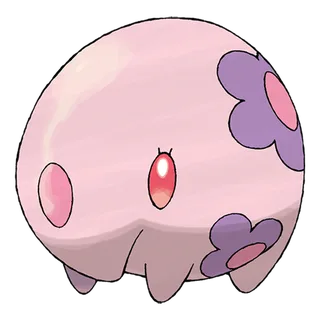
Munna is a Psychic-type Pokémon introduced in Generation V and the first stage of its evolution line, with a base stat total of 292.
Munna

Abilities
Determines what moves the foe has.
Passes on status problems.
Anticipates an ally’s attack and dodges it.
Hidden AbilityBase Stats
Munna's Weaknesses and Resistances



Evolution Chain
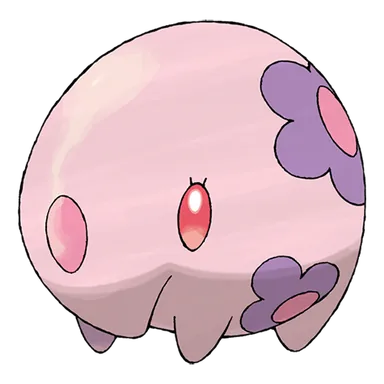
Munna evolves into Musharna with a Moon Stone.
 Munna
 Musharna
Munna Playthrough, Competitive, and Nuzlocke Usage
Using Munna in a Playthrough
Munna evolves into Musharna with a Moon Stone, producing one of Unova's slowest but bulkiest Psychic-types. Musharna has base 116 HP, 85 Defense, 95 Special Defense, and 107 Special Attack but only base 29 Speed, making it an excellent candidate for Trick Room and a poor choice for strategies that depend on naturally moving first. Psychic or Psyshock provides dependable STAB, while Moonlight, Calm Mind, Hypnosis, Thunder Wave, Reflect, Light Screen, Energy Ball, Shadow Ball, and other support or coverage moves let it function as a durable special attacker or team supporter. Synchronize reflects burn, poison, or paralysis back to the opponent that inflicted it, while Forewarn reveals one of the opponent's most powerful moves and can provide useful scouting information; the Hidden Ability Telepathy is primarily valuable in double battles because it protects Musharna from damaging moves used by allies. Because Moon Stone evolution can restrict later natural move learning in older games, players should check Munna's desired level-up moves before evolving; Quiet is excellent under Trick Room, while Modest, Bold, or Calm suit offensive or defensive builds.
Munna in Competitive Pokémon
Musharna was a substantial BW-era lower-tier Pokemon rather than merely a slow story Psychic. Its 116/85/95 bulk, base 107 Special Attack, Moonlight, Calm Mind, Heal Bell, Thunder Wave, Baton Pass or support options, and extremely low Speed let it function as a bulky win condition, defensive pivot, or Trick Room setter. In VGC 2011, Smogon identified Musharna as one of the premier Trick Room users because base 29 Speed works in its favor under reversed turn order, while Telepathy lets it safely stand beside allies using moves such as Earthquake, Surf, or Explosion. In singles it also developed a strong NU reputation as a catch-all physical check, with Moonlight giving it reliable recovery and Psychic preventing complete passivity. Dark-, Ghost-, and Bug-type attacks remain serious weaknesses, and competition from Psychic-types such as Reuniclus limits its offensive uniqueness, but Musharna's combination of huge HP, recovery, and genuinely useful special offense gives it a much stronger competitive résumé than many early-Unova Pokemon.
Munna in Nuzlockes
Musharna is one of the safer early-access Psychic-types for Nuzlockes because 116 HP and solid defenses give it a large margin against neutral attacks, while Moonlight can provide repeatable healing. Its base 29 Speed means it will almost always take a hit before acting outside Trick Room, so Dark, Ghost, and Bug coverage must be identified carefully rather than relying on raw bulk to save every matchup. Forewarn can be unusually valuable under permadeath rules because revealing an opponent's strongest move may expose dangerous coverage before the player commits to a plan, while Synchronize can punish status without requiring a prediction. Hypnosis is too inaccurate to serve as the primary survival strategy, whereas Reflect, Light Screen, Thunder Wave, Calm Mind, or Trick Room provide more controlled forms of support. A Bold or Calm Musharna is particularly forgiving, and Quiet becomes excellent when the team is deliberately built around Trick Room.
Learnsets
15 moves · Sword Shield
Level Up — Sword Shield





Pokédex Entries
5 entries
Munna always float in the air. People whose dreams are eaten by them forget what the dreams had been about.
It eats the dreams of people and Pokémon. When it eats a pleasant dream, it expels pink-colored mist.
This Pokémon appears before people and Pokémon who are having nightmares and eats those dreams.
Late at night, it appears beside people’s pillows. As it feeds on dreams, the patterns on its body give off a faint glow.
It eats dreams and releases mist. The mist is pink when it’s eating a good dream, and black when it’s eating a nightmare.
Where To Find Munna
4 locations
Mirage Island · HoennWalking · version details vary
Mirage Island (Route 132)
Mirage Mountain · HoennWalking · version details vary
Mirage Mountain (South East of Route 129)
Friend Safari · KalosWalking · version details vary
Friend Safari (Psychic)
Dreamyard · UnovaDark Grass, Walking · version details vary
Dreamyard
Dreamyard (B1F)
Additional Images
PokeAPI sprites
Open this section to load extra PokeAPI sprite images.
Munna Biology and Behavior
Munna floats through the air and feeds on the dreams of people and Pokemon. A person whose dream has been eaten forgets its contents, while the mark on Munna's forehead releases Dream Mist that can project what it has consumed. Pleasant dreams produce pink mist and make the flower-like patterns on Munna's body glow with apparent happiness; nightmares create dark mist. Munna can also seek out sleeping beings suffering from nightmares and remove those dreams by eating them.
Munna Biological Data
- National Pokédex
- #517
- Species
- Dream Eater Pokémon
- Height
- 2' 0" (0.6 m)
- Weight
- 51.4 lbs (23.3 kg)
- Habitat
- Currently Unknown
- Color
- Pink
- Body Style
- Quadruped
- Gender
- 50% female / 50% male
Misc
Catch Rate: 190
Base Experience: 58 Exp
Hatch Counter: 10
Munna Size Comparison: BETA
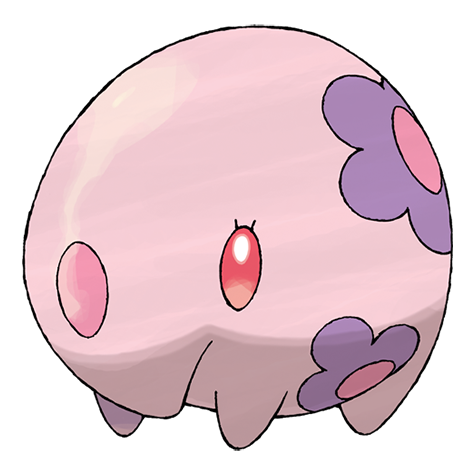
Munna is listed at 2' 0" (0.6 m) and shown in an in-chart visual comparison.

How is visual size determined?
Pokédex height is treated as the official listed measurement, but the chart uses pose-aware visual scaling so each sprite looks reasonable in a direct comparison.
For long or coiled Pokémon, the listed height may represent total body length rather than upright height. For Pokémon with floppy ears, leaves, feathers, antennae, wings, or other flexible features, the chart usually measures to the top of the solid, substantial part of the head or body instead of the tallest decorative feature.
The goal is not to replace the official height, but to make the artwork compare naturally at the size it appears to occupy.