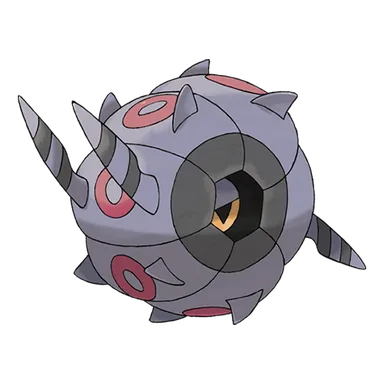
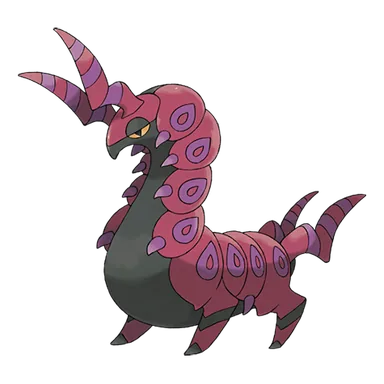
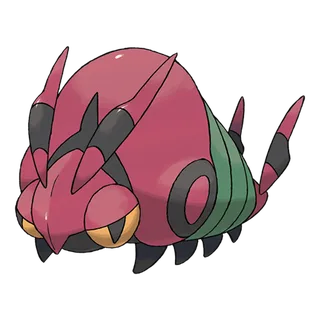
Venipede is a Bug/Poison-type Pokémon introduced in Generation V and the first stage of its evolution line, with a base stat total of 260.
Venipede


Abilities
Poisons foe on contact.
Ups BUG moves in a pinch.
Gradually boosts SPEED.
Hidden AbilityBase Stats
Venipede's Weaknesses and Resistances





Evolution Chain
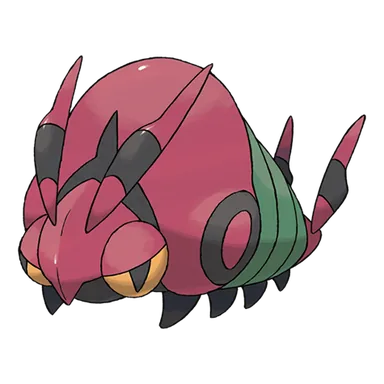
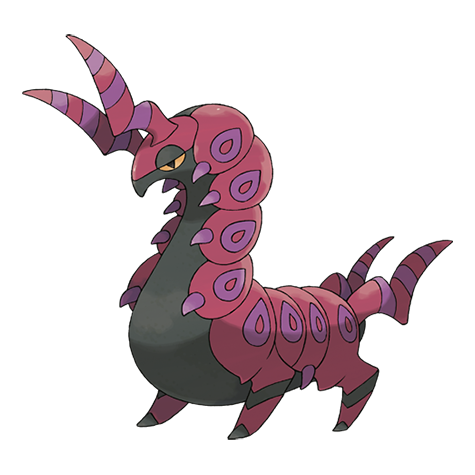
Venipede evolves into Whirlipede at level 22, and Whirlipede evolves into Scolipede at level 30.
 Venipede
 Whirlipede
 Scolipede
Venipede Playthrough, Competitive, and Nuzlocke Usage
Using Venipede in a Playthrough
Venipede evolves into Whirlipede at level 22 and Scolipede at level 30, giving the family a relatively quick route to a fully evolved Bug/Poison attacker. Standard Scolipede has excellent base 112 Speed and, from Generation VI onward, base 100 Attack; its Attack was only 90 in Generation V. Megahorn, Poison Jab, Earthquake, Rock Slide, Aqua Tail, Swords Dance, Spikes, Toxic Spikes, and later Baton Pass or other utility give it both offensive and support options. Poison Point can punish contact, Swarm boosts Bug attacks at low HP, and the Hidden Ability changed from Quick Feet in Generation V to the much stronger Speed Boost from Generation VI onward, raising Speed by one stage at the end of each turn. Bug/Poison provides quadruple resistance to Fighting and Grass but leaves Fire, Flying, Psychic, and Rock weaknesses, while mediocre 60/89/69 bulk means Scolipede prefers to attack or set hazards before taking heavy damage. Mega Scolipede is radically different: it remains Bug/Poison but shifts to 140 Attack, 149 Defense, 99 Special Defense, and only 62 Speed, with Shell Armor preventing critical hits; Adamant or Impish can exploit its new physical profile far better than the Jolly nature commonly favored by the fast standard form.
Venipede in Competitive Pokémon
Standard Scolipede was a BW NUBL Pokemon with a useful UU niche as a very fast offensive Spikes setter, combining base 112 Speed with Megahorn and enough resistances to force selected switches. Generation VI transformed its competitive identity by increasing Attack from 90 to 100 and replacing the Hidden Ability Quick Feet with Speed Boost. Speed Boost plus Swords Dance turned Scolipede into a dangerous cleaner and wallbreaker, while Substitute, Protect, and Baton Pass also made it one of the central engines of early XY Baton Pass chains; those strategies became important enough to contribute directly to repeated Baton Pass restrictions in XY and ORAS. In SM, Scolipede sat in UUBL and remained a threatening Speed Boost sweeper using Swords Dance, Megahorn, Earthquake, Aqua Tail, or Z-Moves. Mega Scolipede is a much newer form and should be evaluated separately: confirmed modern data gives it 140 Attack, 149 Defense, 99 Special Defense, only 62 Speed, and Shell Armor, trading the base form's famous Speed for extreme physical bulk and much stronger immediate Attack. It does not yet possess the decades-long tier résumé of standard Scolipede, so historical claims about the Mega should remain conservative.
Venipede in Nuzlockes
Standard Scolipede is useful in Nuzlockes because it evolves by level 30, base 112 Speed helps it avoid incoming damage, and its quadruple Fighting and Grass resistances can create excellent planned switches. Poison Point can occasionally punish contact, but Speed Boost is the most valuable later-generation ability because every completed turn makes Scolipede harder to revenge kill without requiring a risky setup move. Fire, Flying, Psychic, and Rock coverage are dangerous, and its special bulk is poor enough that even neutral special attacks deserve respect. Megahorn's imperfect accuracy is a liability under permadeath rules, so X-Scissor or another reliable attack can be preferable when the extra power is unnecessary. Mega Scolipede flips the safety profile: Shell Armor completely removes critical-hit risk and 149 Defense is extraordinary, but base 62 Speed means it takes far more attacks before acting; the Mega form is therefore better used as a physical tank and breaker than as the fast cleaner represented by standard Scolipede.
Learnsets
13 moves · Sword Shield
Level Up — Sword Shield




Pokédex Entries
5 entries
Its bite injects a potent poison, enough to paralyze large bird Pokémon that try to prey on it.
It discovers what is going on around it by using the feelers on its head and tail. It is brutally aggressive.
Using the feelers on its head and tail, it picks up vibrations in the air to determine its prey’s location and state.
Venipede and Sizzlipede are similar species, but when the two meet, a huge fight ensues.
Its fangs are highly venomous. If this Pokémon finds prey it thinks it can eat, it leaps for them without any thought of how things might turn out.
Where To Find Venipede
4 locations
Route 4 · AlolaIsland Scan · version details vary
Alola Route 4 Area
Lostlorn Forest · UnovaDark Grass, Walking · version details vary
Lostlorn Forest
Pinwheel Forest · UnovaWalking · version details vary
Pinwheel Forest (inside)
Route 20 · UnovaDark Grass · version details vary
Road 20
Held Items
2 items
- Black: 50% chance
- White: 50% chance
- Black: 5% chance
- White: 5% chance
- Black 2: 5% chance
- White 2: 5% chance
- X: 5% chance
- Y: 5% chance
- Omega Ruby: 5% chance
- Alpha Sapphire: 5% chance
- Sun: 5% chance
- Moon: 5% chance
- Ultra Sun: 5% chance
- Ultra Moon: 5% chance
Additional Images
PokeAPI sprites
Open this section to load extra PokeAPI sprite images.
Venipede Biology and Behavior
Venipede senses its surroundings through antennae and rear feelers that detect vibrations in the air. It is highly aggressive for its small size, and its fangs inject venom strong enough to paralyze large bird Pokemon. Venipede often fights with Sizzlipede, a related species. It hunts opportunistically and may attack any Pokemon it believes it can eat.
Venipede Biological Data
- National Pokédex
- #543
- Species
- Centipede Pokémon
- Height
- 1' 4" (0.4 m)
- Weight
- 11.7 lbs (5.3 kg)
- Habitat
- Currently Unknown
- Color
- Red
- Body Style
- Armor
- Gender
- 50% female / 50% male
Misc
Catch Rate: 255
Base Experience: 52 Exp
Hatch Counter: 15
Venipede Size Comparison: BETA
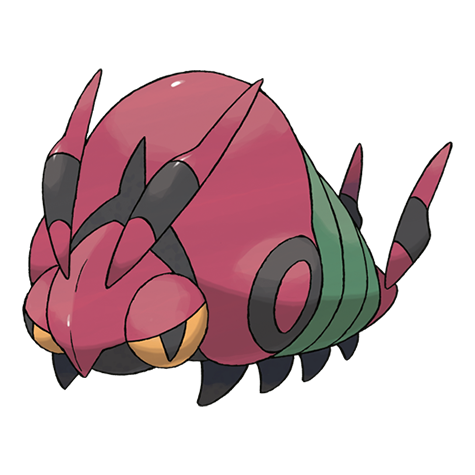
Venipede is listed at 1' 4" (0.4 m) and shown in an in-chart visual comparison.

How is visual size determined?
Pokédex height is treated as the official listed measurement, but the chart uses pose-aware visual scaling so each sprite looks reasonable in a direct comparison.
For long or coiled Pokémon, the listed height may represent total body length rather than upright height. For Pokémon with floppy ears, leaves, feathers, antennae, wings, or other flexible features, the chart usually measures to the top of the solid, substantial part of the head or body instead of the tallest decorative feature.
The goal is not to replace the official height, but to make the artwork compare naturally at the size it appears to occupy.