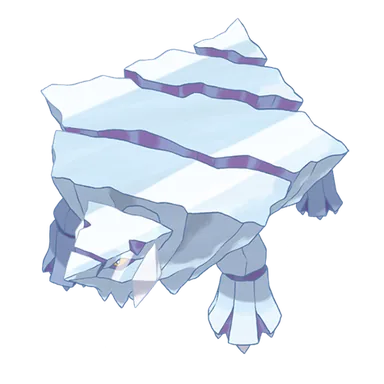
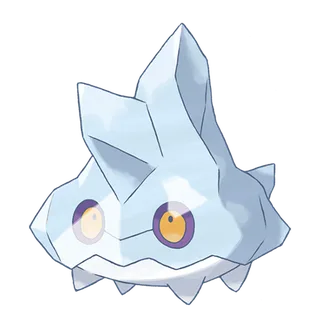
Bergmite is an Ice-type Pokémon introduced in Generation VI and the first stage of its evolution line, with a base stat total of 304.
Bergmite

Abilities
Base Stats
Bergmite's Weaknesses and Resistances



Evolution Chain
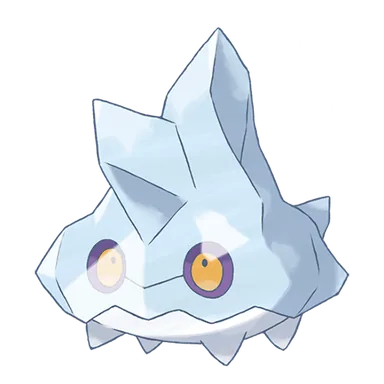
Bergmite evolves into Avalugg at level 37.
 Bergmite
 Avalugg
Bergmite Playthrough, Competitive, and Nuzlocke Usage
Using Bergmite in a Playthrough
Bergmite evolves into Avalugg at level 37. Standard Avalugg is a pure Ice physical wall with 95 HP, 117 Attack, and an extraordinary base 184 Defense, but only 46 Special Defense and 28 Speed; Avalanche, Body Press in later generations, Earthquake, Rapid Spin, Recover, Curse, and Roar let it absorb physical hits while providing hazard control or pressure. Own Tempo prevents confusion, Ice Body restores HP during hail or snow, and the Hidden Ability Sturdy guarantees survival from full HP against a single otherwise fatal hit. Hisuian Avalugg instead becomes Ice/Rock with base 127 Attack, the same 184 Defense, only 36 Special Defense, and 38 Speed; it can have Strong Jaw, Ice Body, or Sturdy and uses moves such as Mountain Gale, Rock Slide, Stone Edge, Body Press, and Earthquake. Standard Ice typing has four common weaknesses and only an Ice resistance, while Hisuian Ice/Rock gains additional resistances but suffers quadruple Fighting and Steel weaknesses plus Water, Grass, Ground, and Rock weaknesses. Careful is usually safest for standard Avalugg because physical Defense needs little help, while Adamant or Brave can make better use of Hisuian Avalugg's higher Attack.
Bergmite in Competitive Pokémon
Standard Avalugg's niche is extremely concentrated but legitimate: base 184 Defense, Recover, Rapid Spin, and enough Attack to avoid complete passivity make it one of the strongest pure physical tanks available in lower tiers. Smogon's XY analysis emphasizes that it can repeatedly remove hazards and withstand neutral physical attacks that would overwhelm most spinners, while Recover allows it to maintain Sturdy and continue checking threats. Its crippling weaknesses are poor Ice defensive typing, vulnerability to entry hazards, awful Speed, and very low Special Defense, all of which make even modest special attacks dangerous. Hisuian Avalugg pushes the physical specialization further with base 127 Attack and the same enormous Defense, but Ice/Rock is even harder to defend with because Fighting and Steel deal quadruple damage and several other types are super effective. Strong Jaw gives the Hisuian form more offensive potential with biting moves, but neither form is broadly splashable; they succeed only when a team specifically values extreme physical bulk and can cover their many special and type-based vulnerabilities.
Bergmite in Nuzlockes
Standard Avalugg can make physical Nuzlocke encounters extraordinarily safe because base 184 Defense and Recover allow it to absorb repeated neutral contact better than almost any ordinary Pokemon. Sturdy is excellent insurance if Avalugg enters at full HP, while Rapid Spin can remove hazards without sacrificing the team's own hazards in older mechanics. The danger is special offense: base 46 Special Defense is poor enough that even neutral special moves deserve respect, and Fire, Fighting, Rock, and Steel attacks are super effective. Hisuian Avalugg is even more dangerous to use blindly because Fighting and Steel attacks deal quadruple damage and its Special Defense falls to base 36. Careful investment can patch standard Avalugg's weakest stat, but neither form should be left in against an unknown special attacker merely because its physical Defense is enormous.
Learnsets
47 moves · Scarlet Violet
Level Up






Machine



Egg
Pokédex Entries
5 entries
It blocks opponents’ attacks with the ice that shields its body. It uses cold air to repair any cracks with new ice.
Using air of -150 degrees Fahrenheit, they freeze opponents solid. They live in herds above the snow line on mountains.
They chill the air around them to −150 degrees Fahrenheit, freezing the water in the air into ice that they use as armor.
This Pokémon lives in areas of frigid cold. It secures itself to the back of an Avalugg by freezing its feet in place.
Lives on mountains blanketed in perennial snow. It freezes water vapor in the air to make the ice helmet that it dons for defense.
Where To Find Bergmite
2 locations
Friend Safari · KalosWalking · version details vary
Friend Safari (Ice)
Frost Cavern · KalosWalking · version details vary
Frost Cavern (unknown area 314)
Frost Cavern (unknown area 315)
Frost Cavern (unknown area 316)
Frost Cavern (unknown area 317)
Additional Images
PokeAPI sprites
Open this section to load extra PokeAPI sprite images.
Bergmite Biology and Behavior
Bergmite lives in cold regions and covers its small body with a protective shell of ice. It creates and repairs that armor by blasting freezing air from its body, and groups of Bergmite often gather together on or around much larger Avalugg. They can cling to Avalugg's broad back while it carries them across water and between icy habitats. Bergmite's body temperature is extremely low, and cracks or damage in the ice armor can be repaired by refreezing moisture around it.
Bergmite Biological Data
- National Pokédex
- #712
- Species
- Ice Chunk Pokémon
- Height
- 3' 3" (1.0 m)
- Weight
- 219.4 lbs (99.5 kg)
- Habitat
- Currently Unknown
- Color
- Blue
- Body Style
- Quadruped
- Gender
- 50% female / 50% male
Misc
Catch Rate: 190
Base Experience: 61 Exp
Hatch Counter: 20
Bergmite Size Comparison: BETA
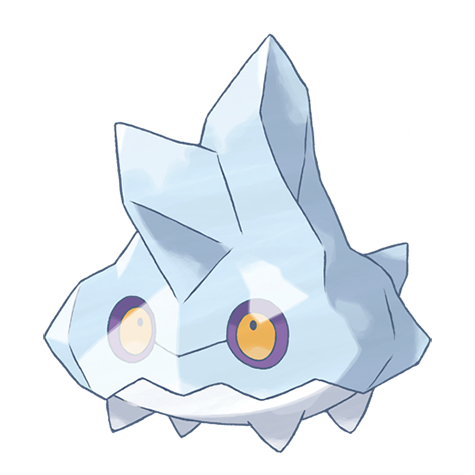
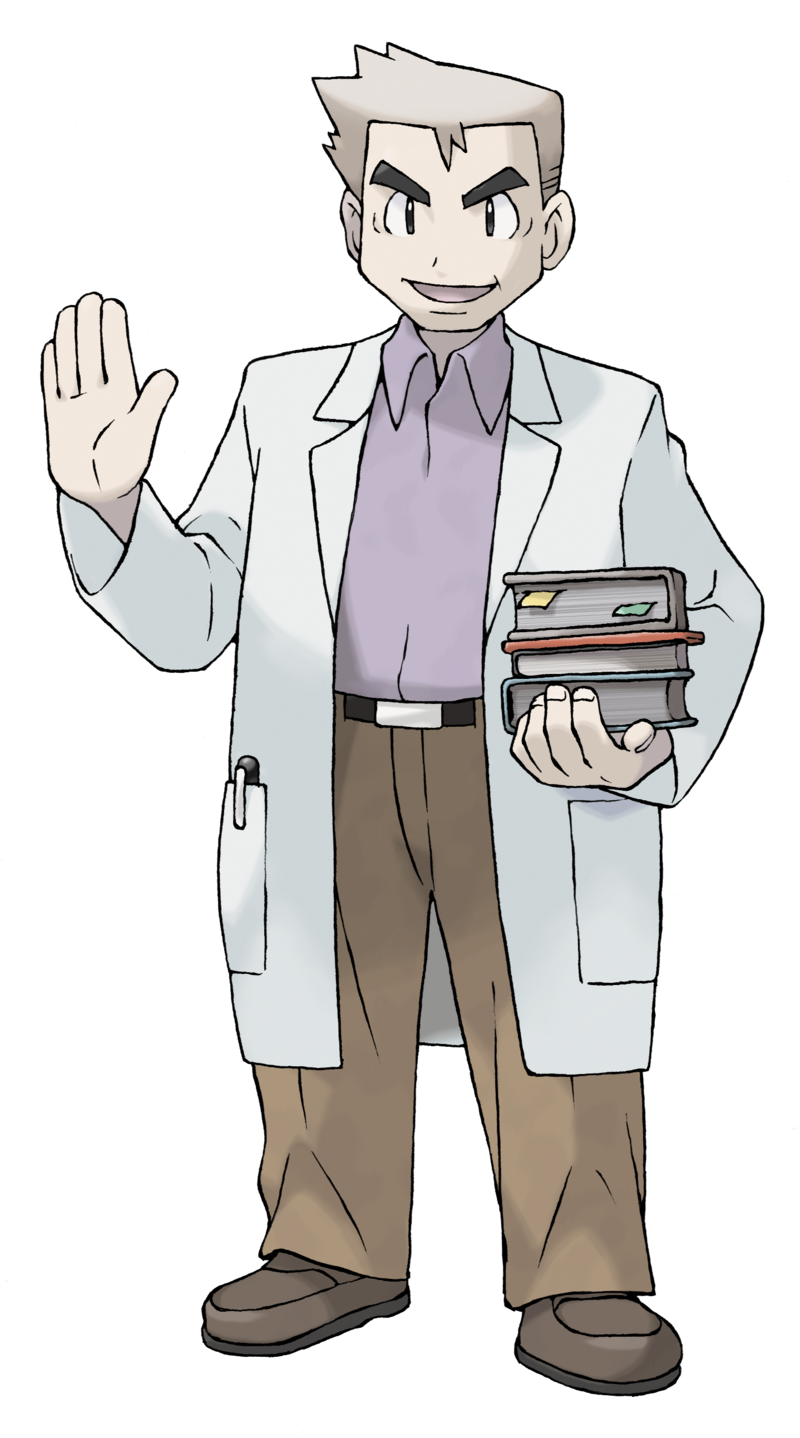
Bergmite is listed at 3' 3" (1.0 m) and shown in an in-chart visual comparison.
How is visual size determined?
Pokédex height is treated as the official listed measurement, but the chart uses pose-aware visual scaling so each sprite looks reasonable in a direct comparison.
For long or coiled Pokémon, the listed height may represent total body length rather than upright height. For Pokémon with floppy ears, leaves, feathers, antennae, wings, or other flexible features, the chart usually measures to the top of the solid, substantial part of the head or body instead of the tallest decorative feature.
The goal is not to replace the official height, but to make the artwork compare naturally at the size it appears to occupy.