Phantump is a Ghost/Grass-type Pokémon introduced in Generation VI and the first stage of its evolution line, with a base stat total of 309.
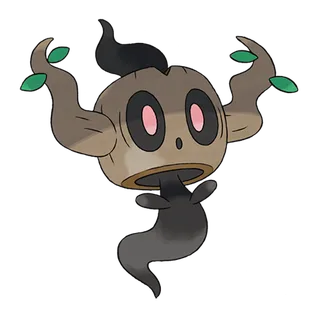
Phantump


Abilities
Heals upon switching out.
The Pokémon can check the foe’s held item.
May create another Berry after one is used.
Hidden AbilityBase Stats
Phantump's Weaknesses and Resistances







Evolution Chain
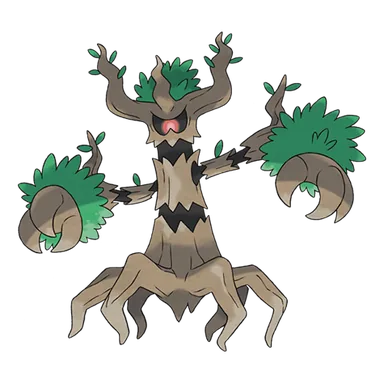
Phantump evolves into Trevenant by trading.
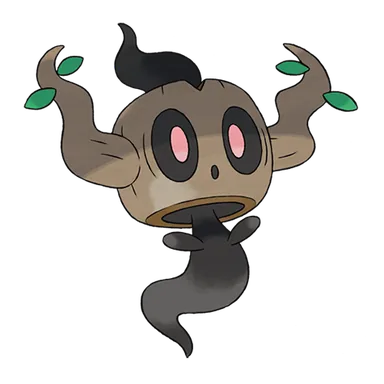 Phantump
 Trevenant
Phantump Playthrough, Competitive, and Nuzlocke Usage
Using Phantump in a Playthrough
Phantump evolves into Trevenant when traded, so the line's main practical obstacle is access to trading rather than level. Trevenant is Ghost/Grass with base 110 Attack, 85 HP, 82 Special Defense, and only base 56 Speed, making it a slow physical attacker and utility Pokemon rather than a sweeper. Horn Leech provides reliable Grass STAB with healing, while Wood Hammer offers much greater power at the cost of recoil; Shadow Claw or Phantom Force, Earthquake, Rock Slide, Will-O-Wisp, Leech Seed, Curse, and Forest's Curse provide offense or disruption. Natural Cure removes non-volatile status when Trevenant switches out, Frisk reveals opposing held items, and the Hidden Ability Harvest has a 50 percent chance each turn to restore a consumed Berry, becoming guaranteed in harsh sunlight. Ghost/Grass grants Normal and Fighting immunities plus resistances to Water, Electric, Grass, and Ground, but Fire, Ice, Flying, Ghost, and Dark are super effective. Adamant is best for direct physical offense, while Careful or specially defensive investment can support Harvest and recovery-based sets.
Phantump in Competitive Pokémon
Trevenant has generally occupied lower competitive tiers but possesses several distinct niches. Base 110 Attack and STAB Wood Hammer let it function as a physical wallbreaker, while Earthquake and Rock Slide punish several common Grass-resistant switch-ins; Smogon's XY analysis specifically notes that this coverage distinguishes Trevenant from many competing Grass-types. Natural Cure gives offensive sets a valuable status-absorbing role, while Harvest can support slower defensive strategies built around repeatedly restoring Sitrus, Lum, or other Berries alongside Will-O-Wisp, Leech Seed, Horn Leech, or Protect. Its problems are equally consistent: base 56 Speed is poor, its defensive stats are only moderate, and Ghost/Grass carries five weaknesses. Trevenant therefore rewards prediction and role specialization but has never had the efficiency or raw durability to become a sustained upper-tier staple.
Phantump in Nuzlockes
Trevenant is useful in Nuzlockes because two immunities and several resistances create safe switch opportunities, while Horn Leech can restore health without requiring a separate recovery turn. Natural Cure is particularly safe because burns, poison, paralysis, and sleep are removed by switching, while Harvest can create repeated Berry recovery if the Hidden Ability is available. Wood Hammer should be used cautiously because recoil can turn otherwise clean wins into dangerous chip, and Phantom Force's two-turn timing can create unexpected interactions. Fire, Ice, Flying, Ghost, and Dark moves remain the major threats, especially because Trevenant is slow and often takes the first hit. The largest practical drawback is the trade evolution itself: without trading, the player is limited to the substantially weaker Phantump.
Learnsets
63 moves · Scarlet Violet
Level Up



Machine


Egg
Pokédex Entries
8 entries
These Pokémon are created when spirits possess rotten tree stumps. They prefer to live in abandoned forests.
According to old tales, these Pokémon are stumps possessed by the spirits of children who died while lost in the forest.
These Pokémon are stumps possessed by the spirits of children who died in the forest. Their cries sound like eerie screams.
According to legend, medicine to cure any illness can be made by plucking the green leaves on its head, brewing them, and boiling down the liquid.
By imitating the voice of a child, it causes people to get hopelessly lost deep in the forest. It’s trying to make friends with them.
An unknown spirit came to lodge in a tree stump, creating this Pokémon. A cure-all can be made from an infusion of its green leaves.
After a lost child perished in the forest, their spirit possessed a tree stump, causing the spirit’s rebirth as this Pokémon.
With a voice like a human child’s, it cries out to lure adults deep into the forest, getting them lost among the trees.
Where To Find Phantump
4 locations
Memorial Hill · AlolaWalking · version details vary
Memorial Hill Area
Tapu Village · AlolaNpc Trade · version details vary
Tapu Village Area
Friend Safari · KalosWalking · version details vary
Friend Safari (Ghost)
Route 16 · KalosRough Terrain, Yellow Flowers · version details vary
Road 16
Additional Images
PokeAPI sprites
Open this section to load extra PokeAPI sprite images.
Phantump Biology and Behavior
Phantump is a ghostly Pokemon inhabiting a tree stump. Folklore says it is created when the spirit of a child who became lost and died in a forest possesses a stump, although this origin is presented as a legend rather than a demonstrated biological process. Its cries resemble the voice or screams of a child, and people who follow those sounds can become lost; however, Phantump is often described as trying to make friends rather than deliberately luring victims to harm. The green leaves growing from its branches can be brewed into a liquid with curative properties.
Phantump Biological Data
- National Pokédex
- #708
- Species
- Stump Pokémon
- Height
- 1' 4" (0.4 m)
- Weight
- 15.4 lbs (7.0 kg)
- Habitat
- Currently Unknown
- Color
- Brown
- Body Style
- Arms
- Gender
- 50% female / 50% male
Misc
Catch Rate: 120
Base Experience: 62 Exp
Hatch Counter: 20
Phantump Size Comparison: BETA
Phantump is listed at 1' 4" (0.4 m); this chart uses a pose-adjusted visual scale.
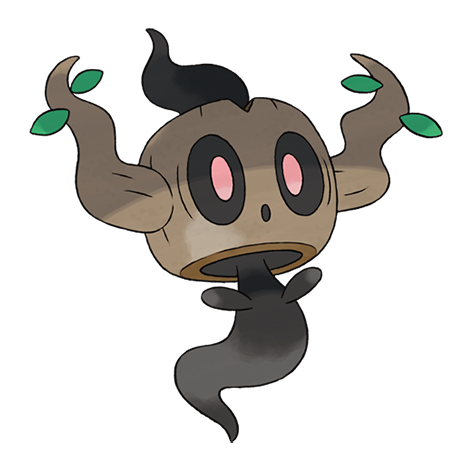

How is visual size determined?
Pokédex height is treated as the official listed measurement, but the chart uses pose-aware visual scaling so each sprite looks reasonable in a direct comparison.
For long or coiled Pokémon, the listed height may represent total body length rather than upright height. For Pokémon with floppy ears, leaves, feathers, antennae, wings, or other flexible features, the chart usually measures to the top of the solid, substantial part of the head or body instead of the tallest decorative feature.
The goal is not to replace the official height, but to make the artwork compare naturally at the size it appears to occupy.
Phantump currently uses a pose-adjusted visual scale.