Klefki is a Steel/Fairy-type Pokémon introduced in Generation VI, with a base stat total of 470 and no standard evolutions.
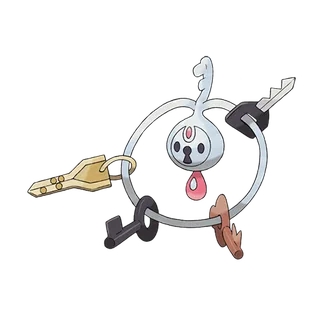
Klefki


Abilities
Base Stats
Klefki's Weaknesses and Resistances




Evolution Chain
Klefki does not evolve into or from any other Pokémon.
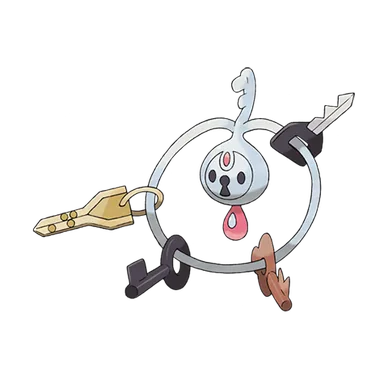 Klefki
 Playthrough, Competitive, and Nuzlocke Usage
Using Klefki in a Playthrough
Klefki is a single-stage Steel/Fairy Pokemon whose modest 57/80/91/80/87/75 stats are compensated by one of the best support typings and abilities in the series. Steel/Fairy grants immunities to Dragon and Poison, a very large set of resistances, and only Fire and Ground weaknesses. Prankster gives +1 priority to non-damaging moves, letting Klefki use Spikes, Thunder Wave, Reflect, Light Screen, Magnet Rise, Rain Dance, Sunny Day, Fairy Lock, and other support before faster opponents; from Generation VII onward, opposing Dark-types are immune to Prankster-boosted status moves that target them. The Hidden Ability Magician steals the target's held item after Klefki hits it while holding no item, but Prankster is overwhelmingly more useful for most support roles. Dazzling Gleam, Flash Cannon, Foul Play, and Play Rough give limited offensive presence, while Magnet Rise can temporarily remove its Ground weakness. Calm or Bold are generally best because Klefki's value comes from surviving long enough to support the team rather than maximizing damage.
Klefki in Competitive Pokémon
Klefki was one of Generation VI's most important support Pokemon. In XY UU, Prankster Spikes, Thunder Wave, dual screens, Toxic, Magnet Rise, and Fairy Lock combined with Steel/Fairy typing to let it check numerous Dragons and fast offensive threats while stacking hazards or crippling switch-ins. Its influence extended well beyond UU: Klefki was also a high-ranking XY Ubers support Pokemon and one of the metagame's notable Xerneas checks because it could resist Moonblast, use priority Thunder Wave, and lay Spikes against many otherwise dangerous teams. The notorious Swagger plus Prankster strategies of early Generation VI also contributed to Klefki's reputation, although later mechanics and rules changes reduced that style. Generation VII's Prankster nerf gave Dark-types immunity to targeted priority status moves, removing some of Klefki's universal disruption. Even after that change, Steel/Fairy typing and priority hazards or screens kept it viable across multiple lower and specialized formats.
Klefki in Nuzlockes
Klefki is very safe in Nuzlockes because Steel/Fairy gives two immunities, many resistances, and only Fire and Ground weaknesses. Priority Reflect and Light Screen can protect the entire team before an opponent moves, while Thunder Wave provides emergency speed control and Spikes can help wear down repeated boss switches in formats where the AI uses them. Magnet Rise is especially useful when a predictable Ground move would otherwise threaten Klefki, temporarily leaving Fire as its only ordinary weakness. Its offensive stats are mediocre, so it is better used to create safe situations for stronger teammates than to force knockouts itself. From Generation VII onward, Prankster status moves do not affect opposing Dark-types, an important mechanical exception when planning around priority Thunder Wave or similar support.
Learnsets
51 moves · Scarlet Violet
Level Up




Machine


Egg
Pokédex Entries
8 entries
These key collectors threaten any attackers by fiercely jingling their keys at them.
It never lets go of a key that it likes, so people give it the keys to vaults and safes as a way to prevent crime.
This even-tempered Pokémon has a habit of collecting keys. It will sneak into people’s homes to steal their keys.
It inserts its horn into chinks in metal, absorbing metal ions. For some reason, it collects keys.
Although it’s unclear why it collects keys, giving it a key makes Klefki very happy. However, it apparently only likes master keys.
Long ago it lived in mines, but once the minerals that make up its diet became scarcer, Klefki began appearing in human settlements.
This Pokémon is constantly collecting keys. Entrust a Klefki with important keys, and the Pokémon will protect them no matter what.
Klefki sucks in metal ions with the horn topping its head. It seems this Pokémon loves keys so much that its head needed to look like one, too.
Where To Find Klefki
6 locations
Poké Pelago · AlolaGift · version details vary
Poke Pelago Elite Four Defeated
Poke Pelago Poni Island Reached
Royal Avenue · AlolaWalking · version details vary
Thrifty Megamart Abandoned Site
Friend Safari · KalosWalking · version details vary
Friend Safari (Steel)
Lost Hotel · KalosWalking · version details vary
Lost Hotel
Route 15 · KalosHorde, Red Flowers, Walking · version details vary
Road 15
Route 16 · KalosHorde, Rough Terrain, Yellow Flowers · version details vary
Road 16
Additional Images
PokeAPI sprites
Open this section to load extra PokeAPI sprite images.
Klefki Biology and Behavior
Klefki originally lived in mineral-rich mines, but as those resources became scarce it moved into human settlements and adapted to feeding on metal ions from keys and other metal objects. It collects keys obsessively, especially master keys, and can sneak into homes to steal them. A favored key may be kept for decades, which led nobles and other wealthy people to entrust important vault keys to carefully raised Klefki. The ring-like loop around its body is highly mobile, allowing Klefki to collect, rattle, rearrange, or even use its keys as part of threat displays and communication.
Klefki Biological Data
- National Pokédex
- #707
- Species
- Key Ring Pokémon
- Height
- 0' 8" (0.2 m)
- Weight
- 6.6 lbs (3.0 kg)
- Habitat
- Currently Unknown
- Color
- Gray
- Body Style
- Ball
- Gender
- 50% female / 50% male
Misc
Catch Rate: 75
Base Experience: 165 Exp
Hatch Counter: 20
Klefki Size Comparison: BETA
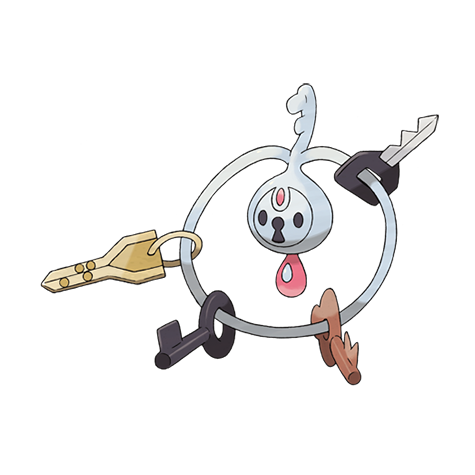
Klefki is listed at 0' 8" (0.2 m) and shown in an in-chart visual comparison.

How is visual size determined?
Pokédex height is treated as the official listed measurement, but the chart uses pose-aware visual scaling so each sprite looks reasonable in a direct comparison.
For long or coiled Pokémon, the listed height may represent total body length rather than upright height. For Pokémon with floppy ears, leaves, feathers, antennae, wings, or other flexible features, the chart usually measures to the top of the solid, substantial part of the head or body instead of the tallest decorative feature.
The goal is not to replace the official height, but to make the artwork compare naturally at the size it appears to occupy.