Carbink is a Rock/Fairy-type Pokémon introduced in Generation VI, with a base stat total of 500 and no standard evolutions.
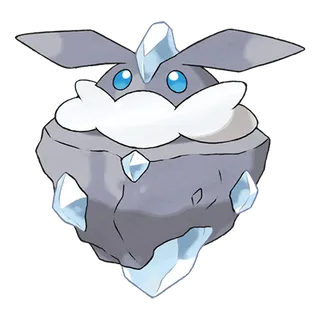
Carbink


Abilities
Prevents ability reduction.
Negates 1-hit KO attacks.
Hidden AbilityBase Stats
Carbink's Weaknesses and Resistances






Evolution Chain
Carbink does not evolve into or from any other Pokémon.
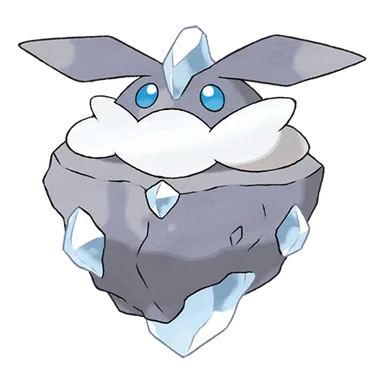 Carbink
 Playthrough, Competitive, and Nuzlocke Usage
Using Carbink in a Playthrough
Carbink is a single-stage Rock/Fairy Pokemon built almost entirely around defense, with base 150 Defense and 150 Special Defense but only base 50 HP, offenses, and Speed. Moonblast and Power Gem provide modest STAB, while Stealth Rock, Reflect, Light Screen, Trick Room, Calm Mind, Body Press in later generations, and Rest give it support or slow setup options. Clear Body prevents opposing effects from lowering Carbink's stats, while Sturdy guarantees survival from full HP against a single hit that would otherwise knock it out and also blocks one-hit KO moves. Rock/Fairy grants a Dragon immunity and useful resistances to Normal, Fire, Flying, Bug, and Dark, but Water, Grass, and Ground are super effective and Steel deals quadruple damage. Bold, Calm, Relaxed, or Sassy all fit defensive roles, with minimum Speed particularly useful on Trick Room teams. Carbink's strength lies in reliably creating team support rather than dealing immediate damage.
Carbink in Competitive Pokémon
Carbink has spent most of its competitive history in very low tiers, but its niche is well defined. Base 150 in both defenses, Stealth Rock, dual screens, Trick Room, Sturdy, and later Body Press allow it to compress several support jobs into one team slot. In XY ZU and PU, Smogon describes Carbink as a premier physical wall on some balance teams, capable of checking Normal- and Fire-types while setting Stealth Rock and using Calm Mind or Rest to avoid complete passivity. In later generations it also became a useful dedicated Trick Room lead because Sturdy can nearly guarantee that Trick Room or hazards go up before Carbink is removed. The central drawback is that base 50 offenses are poor and Steel attacks deal quadruple damage, so many opponents can exploit it if it lacks exactly the right support move.
Carbink in Nuzlockes
Carbink is a safe Nuzlocke support Pokemon because Sturdy can guarantee survival from full HP and its 150/150 defensive stats make many neutral attacks manageable. Stealth Rock, Reflect, Light Screen, and Trick Room can all make later team members safer without requiring Carbink to score knockouts itself. Steel moves are the critical danger because they deal quadruple damage, while Water, Grass, and Ground are also super effective; Sturdy only protects from one hit and can be broken by prior chip damage or multi-hit moves. Rest can provide full recovery but creates two turns of sleep, so it is best used only when the matchup is controlled. Bold or Calm are natural choices depending on whether the team needs stronger physical or special insurance.
Learnsets
60 moves · Scarlet Violet
Level Up




Machine

Pokédex Entries
8 entries
Born from the temperatures and pressures deep underground, it fires beams from the stone in its head.
It has slept underground for hundreds of millions of years since its birth. It’s occasionally found during the excavation of caves.
Born from the high temperatures and pressures deep underground, it defends itself by firing beams from the jewel part of its body.
Although this Pokémon is not especially rare, its glittering, jewel-draped body draws attention from people.
Some say that deep beneath the surface of the world, a pack of Carbink live with their queen in a kingdom of jewels.
To keep the jewels on their bodies free of tarnish, packs of Carbink use their soft manes to polish one another’s jewels.
When beset by attackers, Carbink wipes them all out by firing high-energy beams from the gems embedded in its body.
It’s said that somewhere in the world, there’s a mineral vein housing a large pack of slumbering Carbink. It’s also said that this pack has a queen.
Where To Find Carbink
4 locations
Poké Pelago · AlolaGift · version details vary
Poke Pelago Elite Four Defeated
Poke Pelago Poni Island Reached
Poke Pelago Ulaula Island Reached
Ten Carat Hill · AlolaWalking · version details vary
Ten Carat Hill Farthest Hollow
Ten Carat Hill Inside
Vast Poni Canyon · AlolaWalking · version details vary
Vast Poni Canyon Inside
Vast Poni Canyon Northwest
Vast Poni Canyon Outside
Reflection Cave · KalosHorde, Walking · version details vary
Reflection Cave (unknown area 305)
Reflection Cave (unknown area 306)
Reflection Cave (unknown area 307)
Reflection Cave (unknown area 308)
Additional Images
PokeAPI sprites
Open this section to load extra PokeAPI sprite images.
Carbink Biology and Behavior
Carbink forms deep underground under enormous heat and pressure and may remain asleep there for millions of years before being uncovered by excavation. It feeds and grows among mineral deposits, using the soft mane around its neck to polish the gemstones of other Carbink. Sableye and Gabite are known predators, and Carbink defends itself by firing high-energy beams from the crystals embedded in its body. On extremely rare occasions a Carbink undergoes a mysterious mutation and becomes Diancie, and legends describe colonies of Carbink living in jeweled underground kingdoms ruled by Diancie.
Carbink Biological Data
- National Pokédex
- #703
- Species
- Jewel Pokémon
- Height
- 1' 0" (0.3 m)
- Weight
- 12.6 lbs (5.7 kg)
- Habitat
- Currently Unknown
- Color
- Gray
- Body Style
- Ball
- Gender
- Genderless
Misc
Catch Rate: 60
Base Experience: 100 Exp
Hatch Counter: 25
Carbink Size Comparison: BETA
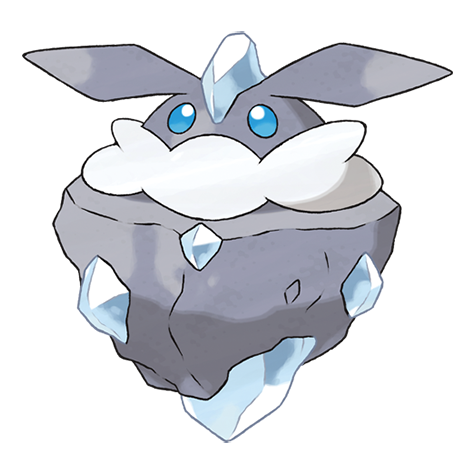
Carbink is listed at 1' 0" (0.3 m) and shown in an in-chart visual comparison.

How is visual size determined?
Pokédex height is treated as the official listed measurement, but the chart uses pose-aware visual scaling so each sprite looks reasonable in a direct comparison.
For long or coiled Pokémon, the listed height may represent total body length rather than upright height. For Pokémon with floppy ears, leaves, feathers, antennae, wings, or other flexible features, the chart usually measures to the top of the solid, substantial part of the head or body instead of the tallest decorative feature.
The goal is not to replace the official height, but to make the artwork compare naturally at the size it appears to occupy.