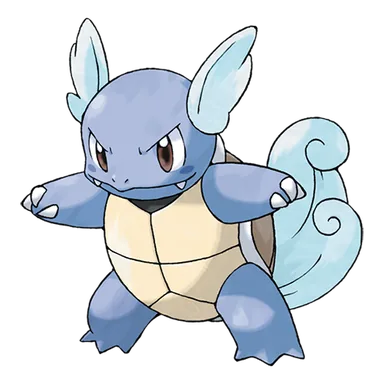
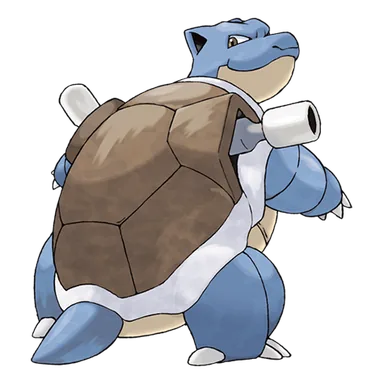
Bulbasaur is a Grass/Poison-type Pokémon introduced in Generation I and the first stage of its evolution line, with a base stat total of 318.
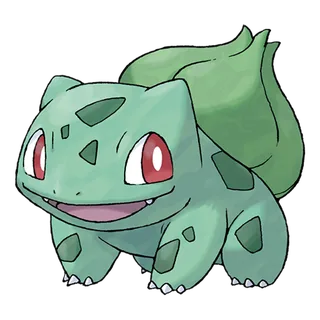
Bulbasaur


Abilities
Ups GRASS moves in a pinch.
Boosts the Pokémon’s Speed in sunshine.
Hidden AbilityBase Stats
Bulbasaur's Weaknesses and Resistances






Evolution Chain
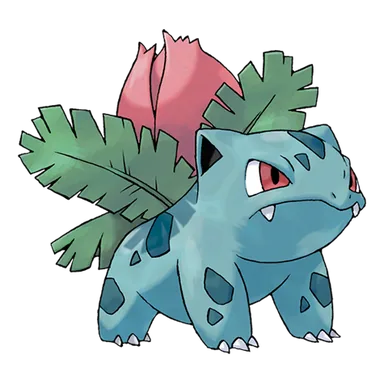
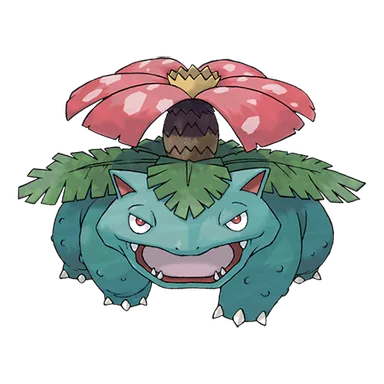
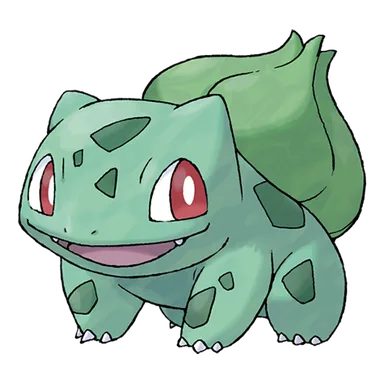
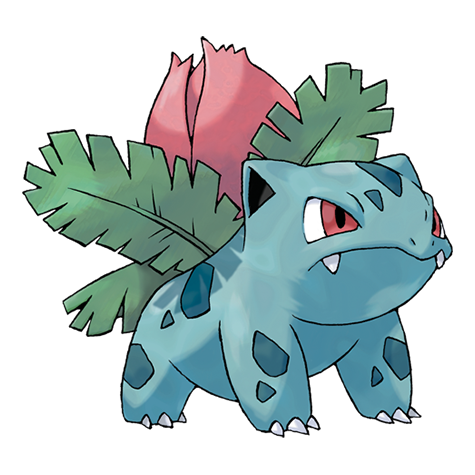
Bulbasaur evolves into Ivysaur at level 16, and Ivysaur evolves into Venusaur at level 32.
 Bulbasaur
 Ivysaur
 Venusaur
Bulbasaur Playthrough, Competitive, and Nuzlocke Usage
Using Bulbasaur in a Playthrough
The Bulbasaur line is particularly strong in Kanto, where Grass STAB gives it favorable matchups against Brock and Misty and useful defensive matchups against several other early opponents. Venusaur develops into a well-rounded Pokemon with solid mixed bulk, 100 Special Attack, useful Grass/Poison typing, and access to status and recovery options such as Sleep Powder, Leech Seed, and Synthesis depending on the game. Its offensive coverage is less expansive than many starters, but status moves allow it to remain useful even against opponents it cannot defeat efficiently with direct attacks. In later games, stronger Grass moves, Poison STAB after the physical/special split, and additional coverage improve its direct offensive capabilities, while Mega Venusaur can become an exceptionally durable playthrough Pokemon where Mega Evolution is available.
Bulbasaur in Competitive Pokémon
Venusaur has filled several distinct competitive roles across generations, ranging from a sleep and status user to a defensive pivot and dangerous sun sweeper. Chlorophyll doubles its Speed in sunlight, allowing offensive Venusaur to combine Growth with moves such as Giga Drain, Sludge Bomb, Weather Ball, and Earth Power to become a fast mixed or special sweeper on sun teams. Mega Venusaur takes the line in the opposite direction: greatly increased defenses combined with Thick Fat reduce the impact of its Fire and Ice weaknesses, producing an unusually difficult Pokemon to remove while retaining respectable offensive pressure and utility through moves such as Leech Seed. Venusaur's overall competitive viability is highly format-dependent, but access to sleep, recovery, useful resistances, Chlorophyll, and historically Mega Evolution has given it several viable identities rather than a single fixed role.
Bulbasaur in Nuzlockes
The Bulbasaur line is especially valuable in Kanto Nuzlockes because it performs well during the vulnerable early portion of a run, including excellent matchups against Brock and Misty when the player's encounter pool is still limited. Good mixed bulk and resistances to Water, Electric, Grass, and Fighting attacks give Venusaur useful switching opportunities, while Sleep Powder and Leech Seed can control dangerous opponents that cannot be defeated safely through direct damage. Its Poison typing also prevents poison in most generations, although weaknesses to Psychic, Flying, Fire, and Ice require care against common coverage moves. Bulbasaur's combination of early-game reliability, status control, bulk, and continued utility after its favorable early matchups have passed makes the line particularly well suited to risk-conscious play.
Learnsets
53 moves · Scarlet Violet
Level Up




Machine


Egg
Pokédex Entries
12 entries
A strange seed was planted on its back at birth. The plant sprouts and grows with this POKéMON.
It can go for days without eating a single morsel. In the bulb on its back, it stores energy.
The seed on its back is filled with nutrients. The seed grows steadily larger as its body grows.
It carries a seed on its back right from birth. As it grows older, the seed also grows larger.
While it is young, it uses the nutrients that are stored in the seeds on its back in order to grow.
BULBASAUR can be seen napping in bright sunlight. There is a seed on its back. By soaking up the sun’s rays, the seed grows progressively larger.
There is a plant seed on its back right from the day this POKéMON is born. The seed slowly grows larger.
For some time after its birth, it grows by gaining nourishment from the seed on its back.
A strange seed was planted on its back at birth. The plant sprouts and grows with this Pokémon.
Bulbasaur can be seen napping in bright sunlight. There is a seed on its back. By soaking up the sun’s rays, the seed grows progressively larger.
There is a plant seed on its back right from the day this Pokémon is born. The seed slowly grows larger.
While it is young, it uses the nutrients that are stored in the seed on its back in order to grow.
Where To Find Bulbasaur
5 locations
Route 2 · AlolaIsland Scan · version details vary
Alola Route 2 Main
Lumiose City · KalosGift · version details vary
Lumiose City
Cerulean City · KantoGift · version details vary
Cerulean City
Pallet Town · KantoGift · version details vary
Pallet Town
Viridian Forest · KantoOverworld Special · version details vary
Viridian Forest
Additional Images
PokeAPI sprites
Open this section to load extra PokeAPI sprite images.
Bulbasaur Biology and Behavior
Bulbasaur is born with a seed on its back that develops into a bulb and supplies it with energy through both photosynthesis and stored nutrients. It frequently basks or sleeps in sunlight and can survive for days without eating by drawing energy from the bulb. Its concealed vines are strong and dexterous enough to manipulate objects, climb trees, and gently carry smaller Pokemon. Bulbasaur has also been portrayed as loyal, well-behaved, and unusually nurturing toward weaker Pokemon, while wild groups gather in hidden gardens when the time comes for them to evolve.
Bulbasaur Biological Data
- National Pokédex
- #1
- Species
- Seed Pokémon
- Height
- 2' 4" (0.7 m)
- Weight
- 15.2 lbs (6.9 kg)
- Habitat
- Grassland
- Color
- Green
- Body Style
- Quadruped
- Gender
- 12.5% female / 87.5% male
Misc
Catch Rate: 45
Base Experience: 64 Exp
Hatch Counter: 20
Bulbasaur Size Comparison: BETA
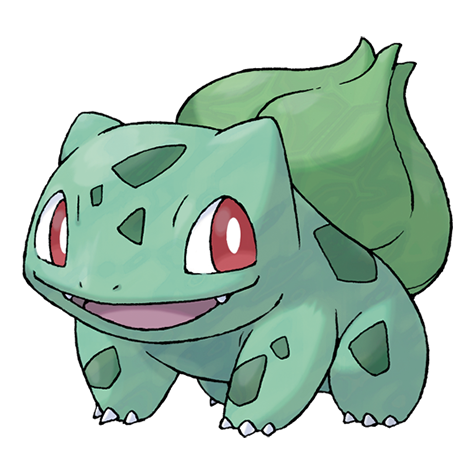
Bulbasaur is listed at 2' 4" (0.7 m) and shown in an in-chart visual comparison.

How is visual size determined?
Pokédex height is treated as the official listed measurement, but the chart uses pose-aware visual scaling so each sprite looks reasonable in a direct comparison.
For long or coiled Pokémon, the listed height may represent total body length rather than upright height. For Pokémon with floppy ears, leaves, feathers, antennae, wings, or other flexible features, the chart usually measures to the top of the solid, substantial part of the head or body instead of the tallest decorative feature.
The goal is not to replace the official height, but to make the artwork compare naturally at the size it appears to occupy.