Charmeleon is a Fire-type Pokémon introduced in Generation I and a middle stage of its evolution line, with a base stat total of 405.
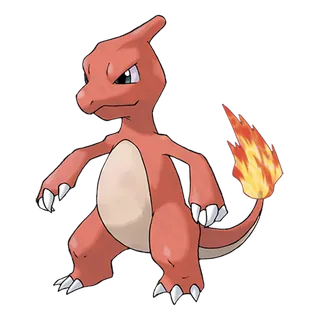
Charmeleon

Abilities
Ups FIRE moves in a pinch.
Boosts Sp. Atk, but lowers HP in sunshine.
Hidden AbilityBase Stats
Charmeleon's Weaknesses and Resistances





Evolution Chain
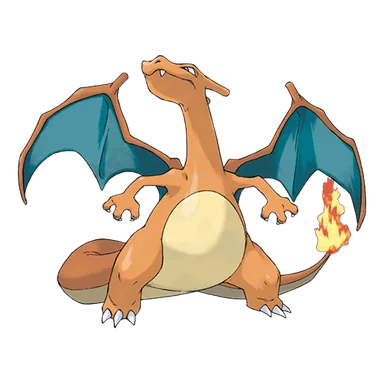
Charmander evolves into Charmeleon at level 16, and Charmeleon evolves into Charizard at level 36.
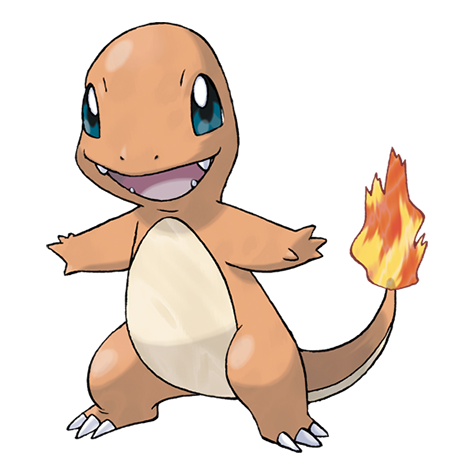 Charmander
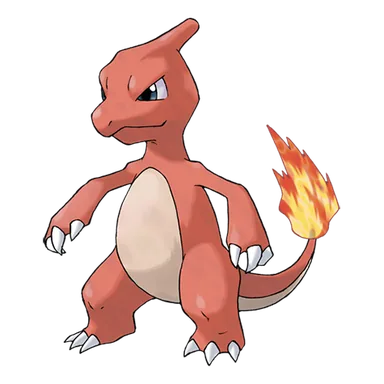 Charmeleon
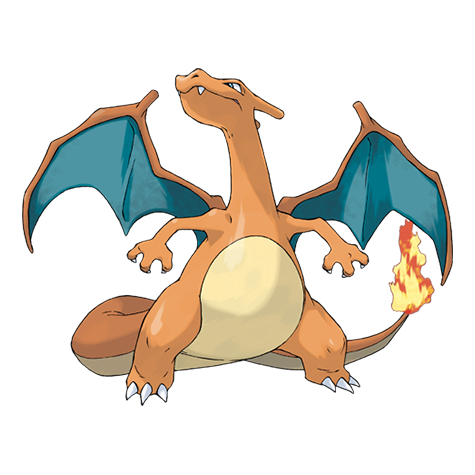 Charizard

Charmeleon Playthrough, Competitive, and Nuzlocke Usage
Using Charmeleon in a Playthrough
The Charmander line develops into a fast offensive Pokemon with strong Fire STAB, useful coverage, and a valuable Ground immunity once it becomes Charizard, but its effectiveness varies considerably between games. In Kanto, Charmander has poor early matchups against Brock and Misty and therefore requires more team support than Bulbasaur or Squirtle, although Charizard becomes much more useful once the available opponent and move pools broaden. Base 100 Speed and 109 Special Attack allow Charizard to defeat many story opponents before they can retaliate, while later generations provide stronger and more diverse options such as Flamethrower, Air Slash, Dragon moves, Solar Beam, and physical setup sets. Where available, Mega Charizard X can become a powerful physical Fire/Dragon sweeper while Mega Charizard Y becomes an extremely strong special attacker whose Drought boosts Fire attacks and enables immediate Solar Beam.
Charmeleon in Competitive Pokémon
Charizard's competitive history is unusually dependent on generation and available mechanics: standard Charizard has often struggled with its quadruple Stealth Rock weakness, but its offensive stats, Speed, Solar Power, and broad movepool can still support wallbreaking or sun-based roles. Mega Charizard X transformed it into a powerful Fire/Dragon physical sweeper, combining high Attack, Tough Claws, Dragon Dance, strong STAB attacks, coverage, and Roost. Mega Charizard Y instead became an elite special wallbreaker and sun setter, using Drought, enormous Special Attack, boosted Fire STAB, Solar Beam, Focus Blast, and Roost to pressure teams immediately upon entering battle. Charizard's competitive value therefore ranges from niche offensive threat to major top-tier attacker depending on which mechanics and forms are available.
Charmeleon in Nuzlockes
The Charmander line can be difficult to use safely in Kanto's early game because Brock and Misty create poor starter matchups at a point when alternative encounters are still limited. Its value improves substantially as the run progresses: Charizard's Speed allows it to remove many opponents before taking damage, its Fire typing handles Grass, Bug, Ice, and Steel threats, and Flying typing provides a valuable Ground immunity and additional resistances. However, the quadruple Rock weakness makes unexpected Rock coverage particularly dangerous, while Charizard is generally less capable of absorbing mistakes than bulky starters such as Venusaur or Blastoise. Its relative scarcity can partially compensate for these risks in some games because strong Fire-types are often harder to replace than Water-types.
Learnsets
64 moves · Scarlet Violet
Level Up





Machine





Egg
Pokédex Entries
14 entries
When it swings its burning tail, it elevates the temperature to unbearably high levels.
Tough fights could excite this POKéMON. When excited, it may blow out bluish- white flames.
It is very hotheaded by nature, so it constantly seeks opponents. It calms down only when it wins.
It has a barbaric nature. In battle, it whips its fiery tail around and slashes away with sharp claws.
If it becomes agitated during battle, it spouts intense flames, incinerating its surroundings.
CHARMELEON mercilessly destroys its foes using its sharp claws. If it encounters a strong foe, it turns aggressive. In this excited state, the flame at the tip of its tail flares with a bluish white color.
Without pity, its sharp claws destroy foes. If it encounters a strong enemy, it becomes agitated, and the flame on its tail flares with a bluish white color.
It lashes about with its tail to knock down its foe. It then tears up the fallen opponent with sharp claws.
When it swings its burning tail, it elevates the air temperature to unbearably high levels.
In the rocky mountains where CHARMELEON live, their fiery tails shine at night like stars.
It is very hotheaded by nature, so it constantly seeks opponents. It calms down only when it wins.
In the rocky mountains where Charmeleon live, their fiery tails shine at night like stars.
Charmeleon mercilessly destroys its foes using its sharp claws. If it encounters a strong foe, it turns aggressive. In this excited state, the flame at the tip of its tail flares with a bluish white color.
Tough fights could excite this Pokémon. When excited, it may breathe out bluish-white flames.
Where To Find Charmeleon
1 locations
Friend Safari · KalosWalking · version details vary
Friend Safari (Fire)
Additional Images
PokeAPI sprites
Open this section to load extra PokeAPI sprite images.
Charmeleon Biology and Behavior
Charmeleon is considerably more aggressive than Charmander and is described as hotheaded, combative, and constantly interested in finding opponents. Difficult battles excite it, causing it to produce bluish-white flames and potentially scorch its surroundings, while swinging its burning tail can raise the surrounding temperature to unbearable levels. It uses sharp claws as well as fire in combat and has been described as enjoying the process of overpowering or tormenting opponents. Once a battle is won, however, its aggression subsides, and its normally fierce temperament disappears while it sleeps.
Charmeleon Biological Data
- National Pokédex
- #5
- Species
- Flame Pokémon
- Height
- 3' 7" (1.1 m)
- Weight
- 41.9 lbs (19.0 kg)
- Habitat
- Mountain
- Color
- Red
- Body Style
- Upright
- Gender
- 12.5% female / 87.5% male
Misc
Catch Rate: 45
Base Experience: 142 Exp
Hatch Counter: 20
Charmeleon Size Comparison: BETA
Charmeleon is listed at 3' 7" (1.1 m); this chart uses a pose-adjusted visual scale.
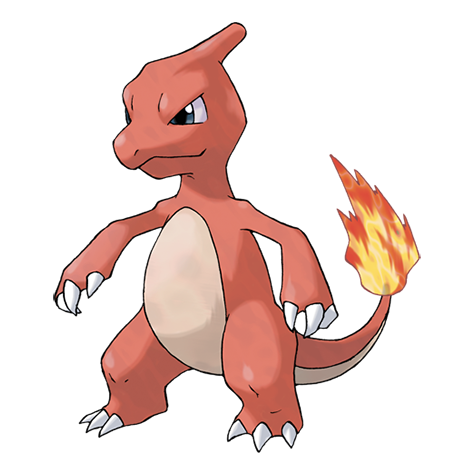

How is visual size determined?
Pokédex height is treated as the official listed measurement, but the chart uses pose-aware visual scaling so each sprite looks reasonable in a direct comparison.
For long or coiled Pokémon, the listed height may represent total body length rather than upright height. For Pokémon with floppy ears, leaves, feathers, antennae, wings, or other flexible features, the chart usually measures to the top of the solid, substantial part of the head or body instead of the tallest decorative feature.
The goal is not to replace the official height, but to make the artwork compare naturally at the size it appears to occupy.
Charmeleon currently uses a pose-adjusted visual scale.