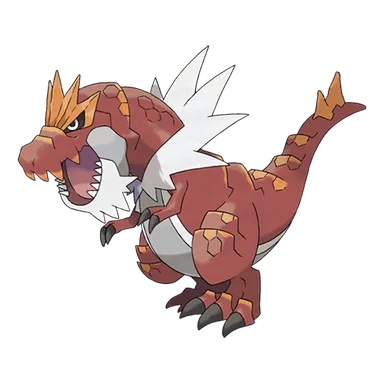
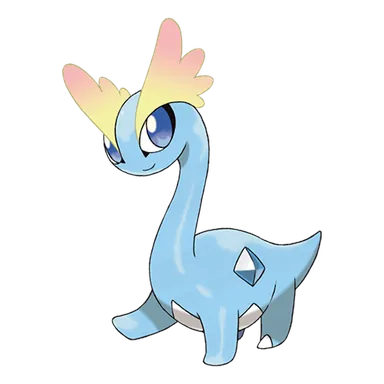
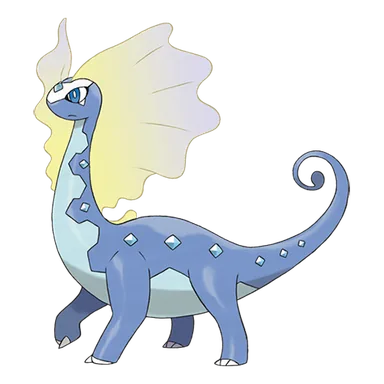
Tyrunt is a Rock/Dragon-type Pokémon introduced in Generation VI and the first stage of its evolution line, with a base stat total of 362.
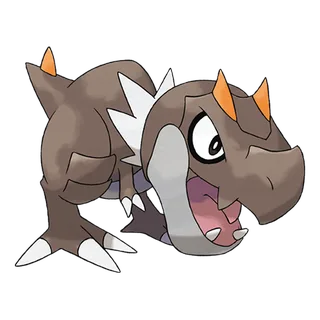
Tyrunt


Abilities
The Pokémon’s strong jaw gives it tremendous biting power.
Negates 1-hit KO attacks.
Hidden AbilityBase Stats
Tyrunt's Weaknesses and Resistances








Evolution Chain
Tyrunt evolves into Tyrantrum by leveling up at level 39during the day.
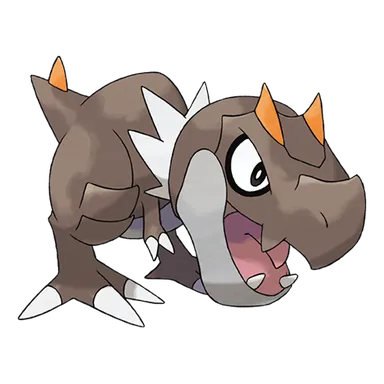 Tyrunt
 Tyrantrum
Tyrunt Playthrough, Competitive, and Nuzlocke Usage
Using Tyrunt in a Playthrough
Tyrunt is revived from a Jaw Fossil and evolves into Tyrantrum when leveled up during the day starting at level 39. Tyrantrum is Rock/Dragon with base 121 Attack, 119 Defense, and only base 71 Speed and 59 Special Defense, making it an exceptionally strong physical attacker but a vulnerable target for special coverage. Strong Jaw boosts bite-based attacks such as Crunch and elemental fangs by 50 percent, while the Hidden Ability Rock Head prevents recoil and allows Tyrantrum to use the 150-base-power Head Smash without damaging itself. Dragon Claw or Outrage, Head Smash or Rock Slide, Earthquake, Crunch, Psychic Fangs in later generations, Close Combat in applicable games, and Dragon Dance provide excellent physical options. Rock/Dragon resists Normal, Electric, Poison, Flying, and especially Fire, but is weak to Fighting, Ground, Steel, Ice, Dragon, and Fairy. Jolly helps the mediocre base 71 Speed, while Adamant maximizes wallbreaking and is especially effective when Dragon Dance or external speed control is available.
Tyrunt in Competitive Pokémon
Tyrantrum was placed in RUBL in XY and developed a serious UU wallbreaking niche. Base 121 Attack and Rock Head give it access to recoil-free Head Smash, one of the strongest repeatable physical STAB attacks available, while Outrage or Dragon Claw and Earthquake provide enough additional coverage to pressure most conventional Rock answers. Strong Jaw is a viable alternative for Crunch and elemental-fang sets, but competitive Tyrantrum is most famous for abusing Rock Head Head Smash. Smogon highlighted both its wallbreaking power and respectable base 119 Defense, but also its mediocre Speed and poor base 59 Special Defense, which allow many faster special attackers to revenge kill it. Dragon Dance can compensate for the Speed problem if Tyrantrum finds a setup opportunity, while Choice Scarf or Choice Band sets emphasize immediate pressure. The species is therefore a classic high-power physical breaker: terrifying when it attacks safely, but easy to exploit from the special side.
Tyrunt in Nuzlockes
Tyrantrum can be extremely effective in a Nuzlocke because base 121 Attack and 119 Defense allow it to win many physical matchups decisively. Rock Head is particularly valuable if available because it removes Head Smash recoil completely, turning an otherwise dangerous move into an exceptionally powerful repeated attack; with Strong Jaw instead, Crunch and fang moves remain safer accurate options. The family's six weaknesses are the main concern, especially because base 59 Special Defense makes Ice-, Fairy-, Ground-, or Fighting-type special coverage much more dangerous than its overall bulk suggests. Dragon Dance can create sweeps but requires a genuinely safe setup turn. Jolly is often safer when the extra Speed prevents an incoming attack, while Adamant is better when speed control is already guaranteed.
Learnsets
14 moves · Sword Shield
Level Up — Sword Shield




Pokédex Entries
6 entries
This Pokémon was restored from a fossil. If something happens that it doesn’t like, it throws a tantrum and runs wild.
Its immense jaws have enough destructive force that it can chew up an automobile. It lived 100 million years ago.
Its large jaw has incredible destructive power. Some theories suggest that its restored form is different from its form of long ago.
Tyrunt is spoiled and selfish. It may just be trying to frolic, but sometimes the ones it’s trying to frolic with are gravely injured.
This is an ancient Pokémon, revived in modern times. It has a violent disposition, and it’ll tear apart anything it gets between its hefty jaws.
This Pokémon is selfish and likes to be pampered. It can also inflict grievous wounds on its Trainer just by playing around.
Where To Find Tyrunt
2 locations
Route 8 · AlolaGift · version details vary
Alola Route 8 Fossil Restoration Center
Glittering Cave · KalosGift · version details vary
Glittering Cave (unknown area 303)
Additional Images
PokeAPI sprites
Open this section to load extra PokeAPI sprite images.
Tyrunt Biology and Behavior
Tyrunt is a Fossil Pokemon reconstructed from remains roughly 100 million years old. It behaves like a spoiled young royal, throwing violent tantrums when something displeases it and often injuring others accidentally even while playing. Its jaws are already powerful enough to shred or crush an automobile. Fossil reconstruction may not perfectly reproduce the original animal, and some modern theories suggest ancient Tyrunt may have had more extensive feathering than reconstructed individuals display.
Tyrunt Biological Data
- National Pokédex
- #696
- Species
- Royal Heir Pokémon
- Height
- 2' 7" (0.8 m)
- Weight
- 57.3 lbs (26.0 kg)
- Habitat
- Currently Unknown
- Color
- Brown
- Body Style
- Upright
- Gender
- 12.5% female / 87.5% male
Misc
Catch Rate: 45
Base Experience: 72 Exp
Hatch Counter: 30
Tyrunt Size Comparison: BETA
Tyrunt is listed at 2' 7" (0.8 m); this chart uses a pose-adjusted visual scale.
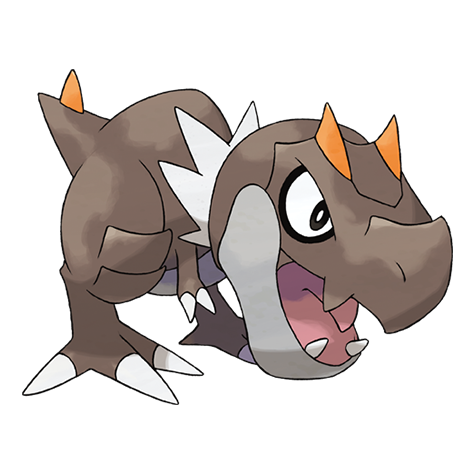

How is visual size determined?
Pokédex height is treated as the official listed measurement, but the chart uses pose-aware visual scaling so each sprite looks reasonable in a direct comparison.
For long or coiled Pokémon, the listed height may represent total body length rather than upright height. For Pokémon with floppy ears, leaves, feathers, antennae, wings, or other flexible features, the chart usually measures to the top of the solid, substantial part of the head or body instead of the tallest decorative feature.
The goal is not to replace the official height, but to make the artwork compare naturally at the size it appears to occupy.
Tyrunt currently uses a pose-adjusted visual scale.