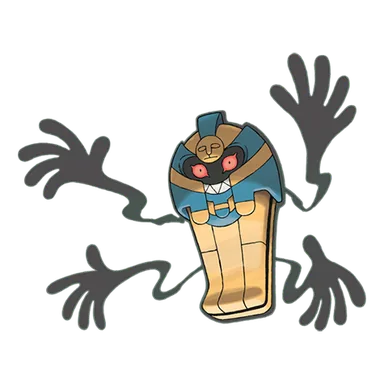
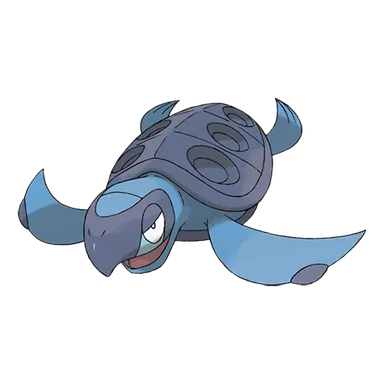
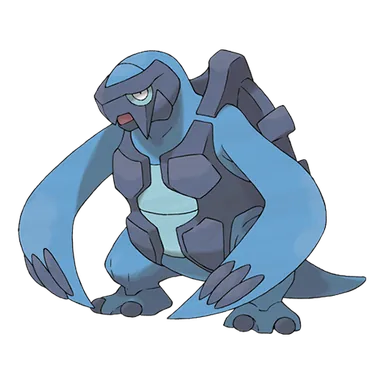
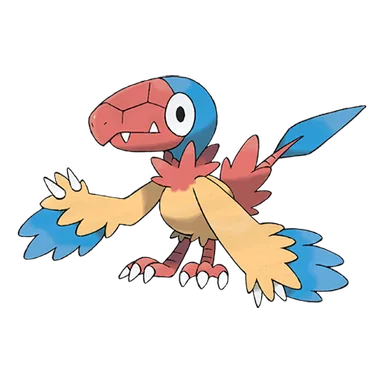
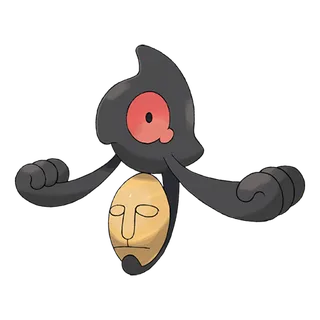
Yamask is a Ghost-type Pokémon introduced in Generation V and the first stage of its evolution line, with a base stat total of 303.
Yamask

Abilities
Contact with this Pokémon spreads this Ability.
Base Stats
Yamask's Weaknesses and Resistances




Evolution Chain
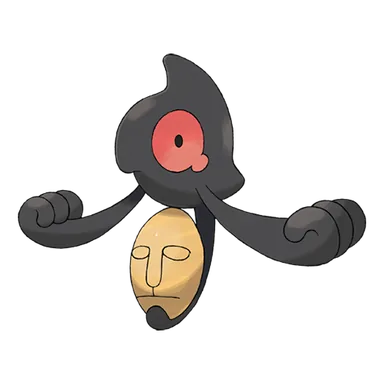
Yamask evolves into Cofagrigus at level 34.
 Yamask
 Cofagrigus
Forms
 Galarian Yamask

Yamask Playthrough, Competitive, and Nuzlocke Usage
Using Yamask in a Playthrough
Ordinary Yamask evolves into Cofagrigus at level 34, while Galarian Yamask follows a unique route to Runerigus: after taking at least 49 HP of qualifying damage without fainting, it must pass beneath a specific stone arch or equivalent landmark. Cofagrigus is pure Ghost with base 145 Defense, 105 Special Defense, 95 Special Attack, and only base 30 Speed, making it excellent for Trick Room, Will-O-Wisp, Shadow Ball, Nasty Plot, Hex, Toxic Spikes in later games, and physical walling. Its Mummy ability replaces the Ability of a Pokemon that makes contact with Cofagrigus, which can disable dangerous effects such as Huge Power, Guts, or other contact-dependent offensive advantages. Runerigus is Ground/Ghost with the same 58/145/105 defensive core but base 95 Attack instead of Cofagrigus's 95 Special Attack; Earthquake, Poltergeist or Shadow Claw, Stealth Rock, Toxic Spikes, Will-O-Wisp, and Trick Room suit its physical profile. Wandering Spirit swaps Runerigus's Ability with that of an opponent that makes contact, producing more complex interactions than Mummy. Quiet is excellent for offensive Trick Room Cofagrigus, while Impish or Careful suit defensive Runerigus.
Yamask in Competitive Pokémon
Cofagrigus was a strong BW UU Pokemon because its base 145 Defense and Ghost typing made it one of the tier's most reliable answers to powerful Fighting-types while simultaneously blocking Rapid Spin. Mummy weakened physical attackers that relied heavily on their abilities, and Cofagrigus was not purely passive: base 95 Special Attack, Nasty Plot, Shadow Ball, Hidden Power Fighting in the era, and Trick Room supported a dangerous offensive set in addition to defensive Will-O-Wisp builds. Runerigus inherited the same extraordinary physical Defense but shifted into a Ground/Ghost utility role with Stealth Rock, Toxic Spikes, Earthquake, and Wandering Spirit. Smogon places Runerigus in SS ZU and notes that its excellent physical bulk and wide support movepool are offset by five common weaknesses and the absence of reliable recovery, leaving it easier to wear down than the defensive stats suggest. The family therefore contains two related but strategically distinct walls: Cofagrigus is the stronger special attacker and historical spinblocker, while Runerigus offers Ground STAB, an Electric immunity, hazards, and ability-swapping utility.
Yamask in Nuzlockes
Cofagrigus is one of the safer physical walls available in a Nuzlocke because base 145 Defense, Normal and Fighting immunities, and Mummy can neutralize dangerous contact-based abilities. Its base 58 HP is much lower than the defenses imply, however, and strong Dark or Ghost attacks can still break through quickly; recovery is also limited compared with dedicated walls that have Recover or Slack Off. Trick Room can turn base 30 Speed into an advantage, but the safest use is usually Will-O-Wisp, reliable Ghost damage, and deliberate immunity switches. Runerigus adds an Electric immunity and Rock resistance but gains weaknesses to Water, Grass, Ice, Ghost, and Dark, so its Ground/Ghost typing is more matchup-dependent. The evolution requirement for Galarian Yamask is itself risky under permadeath rules because it must accumulate at least 49 HP of attack damage without fainting, so the process should be performed against carefully selected weak opponents rather than during an important battle.
Learnsets
16 moves · Sword Shield
Level Up — Sword Shield






Pokédex Entries
5 entries
Each of them carries a mask that used to be its face when it was human. Sometimes they look at it and cry.
These Pokémon arose from the spirits of people interred in graves in past ages. Each retains memories of its former life.
These Pokémon arose from the spirits of people interred in graves. Each retains memories of its former life.
It wanders through ruins by night, carrying a mask that’s said to have been the face it had when it was still human.
The spirit of a person from a bygone age became this Pokémon. It rambles through ruins, searching for someone who knows its face.
Where To Find Yamask
1 locations
Relic Castle · UnovaWalking · version details vary
Relic Castle (A)
Relic Castle (C)
Held Items
1 items
- Black: 5% chance
- White: 5% chance
- Black 2: 5% chance
- White 2: 5% chance
- X: 5% chance
- Y: 5% chance
- Omega Ruby: 5% chance
- Alpha Sapphire: 5% chance
- Sun: 5% chance
- Moon: 5% chance
- Ultra Sun: 5% chance
- Ultra Moon: 5% chance
Additional Images
PokeAPI sprites
Open this section to load extra PokeAPI sprite images.
Yamask Biology and Behavior
Unovan Yamask is said to arise from the spirit of a human buried in a grave long ago. It retains memories of its former human life and carries a golden mask shaped like the face it once had, sometimes staring at that mask and crying. Yamask becomes furious if the mask is taken away and may wander ruins searching for someone who recognizes its former face. In animation, a human wearing the mask can even be possessed by the Yamask.
Yamask Biological Data
- National Pokédex
- #562
- Species
- Spirit Pokémon
- Height
- 1' 8" (0.5 m)
- Weight
- 3.3 lbs (1.5 kg)
- Habitat
- Currently Unknown
- Color
- Black
- Body Style
- Arms
- Gender
- 50% female / 50% male
Misc
Catch Rate: 190
Base Experience: 61 Exp
Hatch Counter: 25
Yamask Size Comparison: BETA
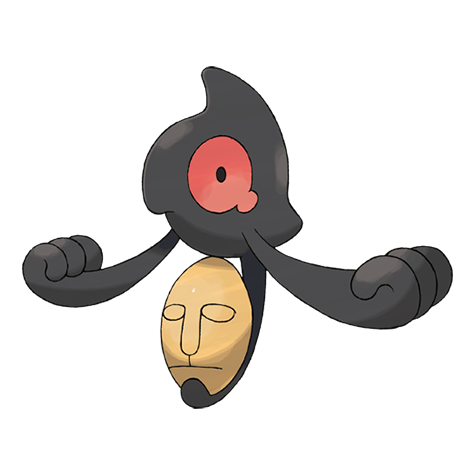
Yamask is listed at 1' 8" (0.5 m) and shown in an in-chart visual comparison.

How is visual size determined?
Pokédex height is treated as the official listed measurement, but the chart uses pose-aware visual scaling so each sprite looks reasonable in a direct comparison.
For long or coiled Pokémon, the listed height may represent total body length rather than upright height. For Pokémon with floppy ears, leaves, feathers, antennae, wings, or other flexible features, the chart usually measures to the top of the solid, substantial part of the head or body instead of the tallest decorative feature.
The goal is not to replace the official height, but to make the artwork compare naturally at the size it appears to occupy.