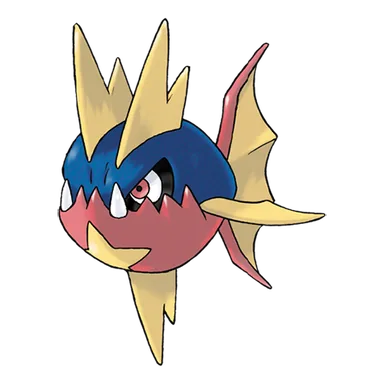
Carvanha is a Water/Dark-type Pokémon introduced in Generation III and the first stage of its evolution line, with a base stat total of 305.
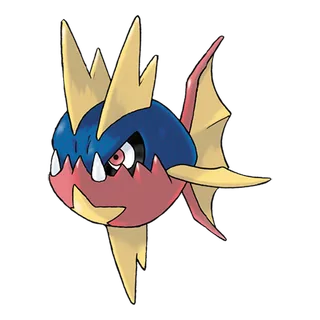
Carvanha


Abilities
Hurts to touch.
Gradually boosts SPEED.
Hidden AbilityBase Stats
Carvanha's Weaknesses and Resistances






Evolution Chain
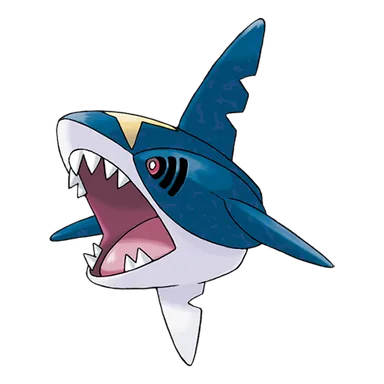
Carvanha evolves into Sharpedo at level 30.
 Carvanha
 Sharpedo
Carvanha Playthrough, Competitive, and Nuzlocke Usage
Using Carvanha in a Playthrough
Carvanha evolves into Sharpedo at level 30, producing a fast, extremely aggressive Water/Dark attacker with base 120 Attack, 95 Special Attack, and 95 Speed but only 70/40/40 defensive bulk. In Generation III both Water and Dark attacks are special, so Sharpedo's STAB moves initially rely on its still-usable base 95 Special Attack rather than the much stronger Attack stat; the Generation IV physical/special split is a major improvement because Crunch and Waterfall can finally exploit base 120 Attack. Rough Skin punishes contact and can contribute useful chip damage, while Speed Boost as a Hidden Ability from later generations raises Speed every turn and can transform Sharpedo into a dangerous cleaner after even a single protected turn. Its Water/Dark typing gives a Psychic immunity and useful offensive coverage, but weaknesses to Electric, Grass, Fighting, Bug, and later Fairy combined with terrible defenses mean it rarely survives strong hits comfortably. Mega Sharpedo becomes a much stronger late-game cleaner with base 140 Attack and Strong Jaw, which powers up Crunch, Ice Fang, Psychic Fangs, and other biting moves after Sharpedo has ideally collected a Speed Boost before Mega Evolving.
Carvanha in Competitive Pokémon
Sharpedo's competitive identity is built almost entirely around offense: high attacking stats, Speed Boost, priority-resistant Water/Dark typing in selected matchups, and enough coverage to clean teams once faster threats have been removed or outsped. Speed Boost allows standard Sharpedo to use Protect for a guaranteed Speed increase and then attack with moves such as Waterfall, Crunch, Ice Fang, or mixed coverage, but its terrible 70/40/40 bulk means failing to secure a knockout often results in immediate retaliation. Mega Sharpedo sharpened the cleaner role by combining a pre-Mega Speed Boost with base 140 Attack and Strong Jaw, which substantially increases the power of Crunch and biting coverage. Smogon has repeatedly treated Mega Sharpedo as a dangerous late-game cleaner whose ideal strategy is to preserve itself until opposing walls are weakened enough that it can sweep without needing to absorb hits. Its flaws are equally defining: poor defenses, several common weaknesses, Protect consuming a moveslot, and the possibility of losing momentum if a bulky opponent survives the first attack.
Carvanha in Nuzlockes
Sharpedo is a high-risk, high-reward Nuzlocke Pokemon because its powerful offenses and good Speed can end favorable fights quickly, but almost any strong neutral attack is dangerous if it has to take the hit. The Psychic immunity creates valuable safe switches, and Rough Skin can punish contact, while Speed Boost in later games can make Sharpedo progressively harder to outspeed. The problem is durability: base 40 Defense and Special Defense provide almost no forgiveness for incorrect damage estimates, and Electric, Grass, Fighting, Bug, and Fairy coverage can be immediately lethal. Protect can safely acquire a Speed Boost, but it also gives opponents a turn to use setup or status if their behavior is not known, so even this apparently safe option should be used with awareness of the opposing moveset. Mega Sharpedo is excellent as a planned finisher, but neither form should be treated as a defensive Water-type simply because Water is part of its typing.
Learnsets
13 moves · Brilliant Diamond Shining Pearl
Level Up — Brilliant Diamond Shining Pearl




Pokédex Entries
14 entries
CARVANHA’s strongly developed jaws and its sharply pointed fangs pack the destructive power to rip out boat hulls. Many boats have been attacked and sunk by this POKéMON.
If anything invades CARVANHA’s territory, it will swarm and tear at the intruder with its pointed fangs. On its own, however, this POKéMON turns suddenly timid.
CARVANHA attack ships in swarms, making them sink. Although it is said to be a very vicious POKéMON, it timidly flees as soon as it finds itself alone.
It lives in massive rivers that course through jungles. It swarms prey that enter its territory.
They swarm any foe that invades their territory. Their sharp fangs can tear out boat hulls.
They form packs to attack boats and rip out their hulls to sink them. They live in rivers in the jungle.
Carvanha’s strongly developed jaws and its sharply pointed fangs pack the destructive power to rip out boat hulls. Many boats have been attacked and sunk by this Pokémon.
If anything invades Carvanha’s territory, it will swarm and tear at the intruder with its pointed fangs. On its own, however, this Pokémon turns suddenly timid.
Each school has its own territory. Any intruders are mercilessly attacked with fangs bared.
If they scent the faintest trace of blood, they rush to attack en masse. When alone, they’re rather cowardly.
They’re such cowards that they won’t hunt alone. When five or so of them get together, they suddenly turn ferocious!
With its sturdy jaws and fangs, it can easily chomp wooden boats to splinters. It fights with Basculin over food.
It won’t attack while it’s alone—not even if it spots prey. Instead, it waits for other Carvanha to join it, and then the Pokémon attack as a group.
These Pokémon have sharp fangs and powerful jaws. Sailors avoid Carvanha dens at all costs.
Where To Find Carvanha
8 locations
Ancient Poni Path · AlolaBubbling Spots, Super Rod · version details vary
Ancient Poni Path Area
Poni Breaker Coast · AlolaBubbling Spots, Super Rod · version details vary
Poni Breaker Coast Area
Route 118 · HoennGood Rod, Super Rod · version details vary
Road 118
Route 119 · HoennGood Rod, Super Rod · version details vary
Road 119
Route 22 · KalosGood Rod · version details vary
Road 22
Cipher Lab · OrreSnag · version details vary
Cipher Lab B1F
Great Marsh · SinnohSuper Rod · version details vary
Great Marsh Area 1
Great Marsh Area 2
Great Marsh Area 3
Great Marsh Area 4
Great Marsh Area 5
Great Marsh Area 6
Village Bridge · UnovaSuper Rod, Super Rod Spots · version details vary
Village Bridge
Held Items
2 items
- Xd: 100% chance
- Diamond: 5% chance
- Pearl: 5% chance
- Platinum: 5% chance
- Heartgold: 5% chance
- Soulsilver: 5% chance
- Black: 5% chance
- White: 5% chance
- Black 2: 5% chance
- White 2: 5% chance
- X: 5% chance
- Y: 5% chance
- Omega Ruby: 5% chance
- Alpha Sapphire: 5% chance
- Sun: 5% chance
- Moon: 5% chance
- Ultra Sun: 5% chance
- Ultra Moon: 5% chance
Additional Images
PokeAPI sprites
Open this section to load extra PokeAPI sprite images.
Carvanha Biology and Behavior
Carvanha are fiercely territorial river predators whose jaws and razorlike teeth can tear through wooden boat hulls and even chew solid steel. A school becomes vicious toward almost anything entering its territory, swarming prey or intruders and attacking with little hesitation when five or more individuals are together. That aggression largely disappears when a Carvanha is isolated; lone individuals are described as surprisingly timid, making group size a major factor in the species' behavior. Carvanha are strongly attracted to the scent of blood and compete with other aggressive fish Pokemon such as Basculin for food. Each school claims its own section of river, creating a dangerous patchwork of territories in jungle and temperate waterways.
Carvanha Biological Data
- National Pokédex
- #318
- Species
- Savage Pokémon
- Height
- 2' 7" (0.8 m)
- Weight
- 45.9 lbs (20.8 kg)
- Habitat
- Sea
- Color
- Red
- Body Style
- Fish
- Gender
- 50% female / 50% male
Misc
Catch Rate: 225
Base Experience: 61 Exp
Hatch Counter: 20
Carvanha Size Comparison: BETA
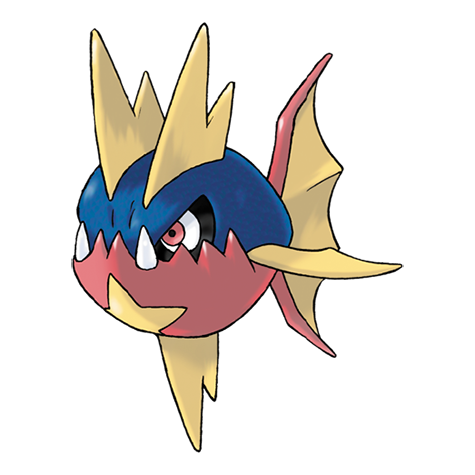
Carvanha is listed at 2' 7" (0.8 m) and shown in an in-chart visual comparison.

How is visual size determined?
Pokédex height is treated as the official listed measurement, but the chart uses pose-aware visual scaling so each sprite looks reasonable in a direct comparison.
For long or coiled Pokémon, the listed height may represent total body length rather than upright height. For Pokémon with floppy ears, leaves, feathers, antennae, wings, or other flexible features, the chart usually measures to the top of the solid, substantial part of the head or body instead of the tallest decorative feature.
The goal is not to replace the official height, but to make the artwork compare naturally at the size it appears to occupy.