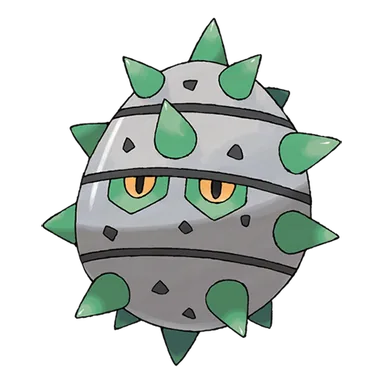
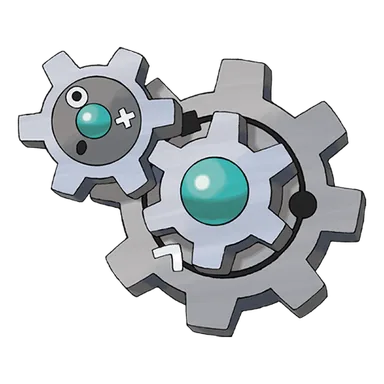
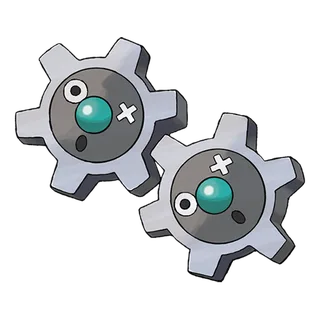
Klink is a Steel-type Pokémon introduced in Generation V and the first stage of its evolution line, with a base stat total of 300.
Klink

Abilities
Powers up with MINUS.
Powers up with PLUS.
Prevents ability reduction.
Hidden AbilityBase Stats
Klink's Weaknesses and Resistances





Evolution Chain
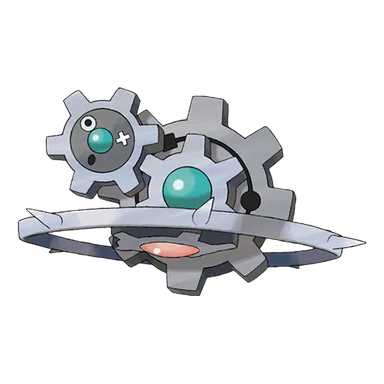
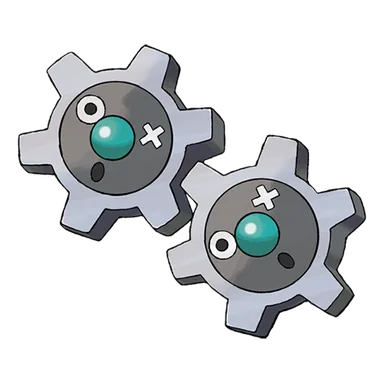
Klink evolves into Klang at level 38, and Klang evolves into Klinklang at level 49.
 Klink
 Klang
 Klinklang
Klink Playthrough, Competitive, and Nuzlocke Usage
Using Klink in a Playthrough
Klink evolves into Klang at level 38 and Klang evolves into Klinklang at level 49, making the family slow to mature but eventually rewarding the player with a physically sturdy pure Steel setup attacker. Klinklang has base 100 Attack, 115 Defense, 85 Special Defense, and 90 Speed, with Shift Gear as its defining setup move because one use raises Attack by one stage and Speed by two. Gear Grind is a two-hit Steel STAB move with 50 base power per hit, letting Klinklang break Substitute, Focus Sash, and Sturdy while dealing strong total damage, although its 85 percent accuracy creates meaningful risk. Wild Charge, Return in older generations, Magnet Rise, Substitute, and limited utility provide most of its additional options, and the line's narrow movepool is its greatest practical drawback. Clear Body prevents opposing stat drops and is usually the most useful ability in singles, while Plus and Minus raise Special Attack when paired with an ally using the complementary ability and are mainly relevant in doubles. Adamant is usually best for sweeping after Shift Gear, while Jolly can improve some pre-setup Speed matchups.
Klink in Competitive Pokémon
Klinklang was a BW RU Pokemon built almost entirely around Shift Gear and Gear Grind. Base 115 Defense and Steel typing create setup opportunities against weaker physical or resisted attacks, and after one Shift Gear its base 90 Speed becomes extremely difficult for unboosted opponents to match while base 100 Attack rises to threatening levels. Gear Grind is particularly useful competitively because the two hits break Substitute and Focus Sash, but Klinklang's tiny coverage pool leaves it vulnerable to bulky Steel-, Water-, Ground-, and Fire-types depending on the exact generation. Magnet Rise can temporarily remove its Ground weakness and create setup opportunities against some Ground-types, while Wild Charge and Return historically supplied the limited neutral coverage available. Klinklang remained a legitimate NU threat in later generations, including SM, but its viability has consistently depended on whether its few checks have been weakened enough for a late-game Shift Gear sweep.
Klink in Nuzlockes
Klinklang's pure Steel typing and base 115 Defense make it a useful Nuzlocke Pokemon once the line finally reaches its last evolution at level 49. Shift Gear can turn a slow or middling matchup into a clean sweep, but using a setup turn is only safe when the opponent cannot threaten with Fire, Fighting, or Ground coverage. Gear Grind's ability to break Sturdy and Focus Sash is valuable, yet 85 percent accuracy is a real permadeath concern; a more accurate move is preferable when one is available and already sufficient. Clear Body adds reliability by preventing enemy Intimidate, Sticky Web, or other stat-lowering effects from ruining a setup plan. The biggest story drawback is simply timing: Klink and Klang are much less impressive than the final form, so the family can feel underpowered for a long portion of the game.
Learnsets
14 moves · Sword Shield
Level Up — Sword Shield




Pokédex Entries
5 entries
The two minigears that mesh together are predetermined. Each will rebound from other minigears without meshing.
Interlocking two bodies and spinning around generates the energy they need to live.
Two bodies comprise a fixed pair. They spin around each other to generate energy.
The two minigears that compose this Pokémon are closer than twins. They mesh well only with each other.
It’s suspected that Klink were the inspiration behind ancient people’s invention of the first gears.
Where To Find Klink
5 locations
Hau'oli City · AlolaIsland Scan · version details vary
Hauoli City Main
Route 3 · GalarWalking · version details vary
Route 3 (East)
Mirage Cave · HoennWalking · version details vary
Mirage Cave (North of Fortree)
Mirage Cave (North of Route 124)
Mirage Cave (West of Rustboro)
Chargestone Cave · UnovaWalking · version details vary
Chargestone Cave (1F)
Chargestone Cave (B1F)
Chargestone Cave (B2F)
P2 Laboratory · UnovaWalking · version details vary
P2 Laboratory
Additional Images
PokeAPI sprites
Open this section to load extra PokeAPI sprite images.
Klink Biology and Behavior
Klink consists of two living gears permanently interlocked as a pair. Once two gear bodies join, they cannot freely substitute different partners without separating, and their rotation generates the energy that sustains them. Klink usually inhabits caves, with the earliest recorded modern sightings associated with Chargestone Cave. There is an apparent historical contradiction around the species: some researchers believe it appeared suddenly only about a century ago, while other traditions claim ancient humans based the invention of mechanical gears on Klink.
Klink Biological Data
- National Pokédex
- #599
- Species
- Gear Pokémon
- Height
- 1' 0" (0.3 m)
- Weight
- 46.3 lbs (21.0 kg)
- Habitat
- Currently Unknown
- Color
- Gray
- Body Style
- Heads
- Gender
- Genderless
Misc
Catch Rate: 130
Base Experience: 60 Exp
Hatch Counter: 20
Klink Size Comparison: BETA
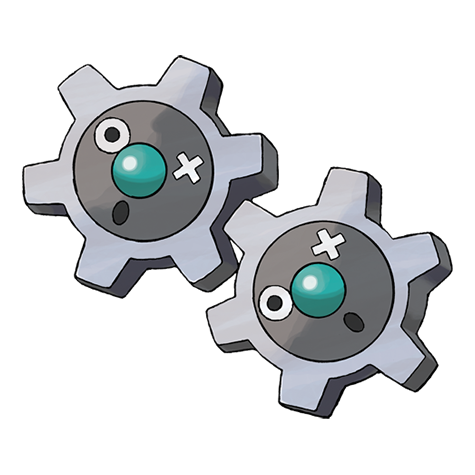
Klink is listed at 1' 0" (0.3 m) and shown in an in-chart visual comparison.

How is visual size determined?
Pokédex height is treated as the official listed measurement, but the chart uses pose-aware visual scaling so each sprite looks reasonable in a direct comparison.
For long or coiled Pokémon, the listed height may represent total body length rather than upright height. For Pokémon with floppy ears, leaves, feathers, antennae, wings, or other flexible features, the chart usually measures to the top of the solid, substantial part of the head or body instead of the tallest decorative feature.
The goal is not to replace the official height, but to make the artwork compare naturally at the size it appears to occupy.