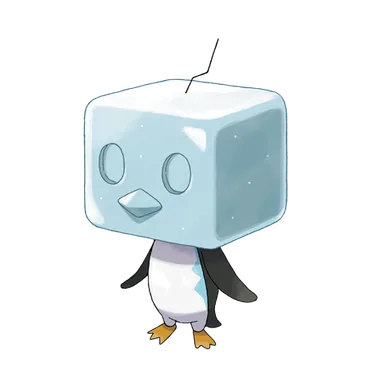
Snom is an Ice/Bug-type Pokémon introduced in Generation VIII and the first stage of its evolution line, with a base stat total of 185.

Snom


Abilities
Prevents added effects.
The Pokémon is protected by ice scales, which halve the damage taken from special moves.
Hidden AbilityBase Stats
Snom's Weaknesses and Resistances



Evolution Chain
Snom evolves into Frosmoth by leveling up high friendship during the night.
 Snom
 Frosmoth
Snom Playthrough, Competitive, and Nuzlocke Usage
Using Snom in a Playthrough
Snom evolves into Frosmoth when it levels up with high friendship at night, so the family can reach its final stage at almost any level once the player has deliberately built friendship and satisfies the nighttime requirement. Frosmoth is a special attacker with base 125 Special Attack and 90 Special Defense but only 65 Speed and 60 Defense, making it much better at exploiting special opponents than taking physical hits. Its Hidden Ability Ice Scales is exceptional because it halves damage from special attacks, effectively making Frosmoth far bulkier on the special side than the raw stat suggests, while Shield Dust instead prevents secondary effects from opposing attacks. Quiver Dance raises Special Attack, Special Defense, and Speed simultaneously and is the line's defining setup move, while Ice Beam, Bug Buzz, Giga Drain, and Hurricane provide strong special offense and recovery or coverage. Ice/Bug is the major drawback: it grants useful Grass, Ground, and Ice resistances but is weak to Flying and Steel and 4× weak to both Fire and Rock, making Stealth Rock particularly punishing in formats where hazards are common. In Scarlet/Violet, snow also boosts the physical Defense of Ice-types by 50%, giving Frosmoth more setup opportunities than its base 60 Defense alone would imply when weather is controlled. Timid is normally the safest Nature because Quiver Dance appreciates every additional Speed benchmark, while Modest is reasonable when the player can reliably find setup turns and wants maximum special damage.
Snom in Competitive Pokémon
Frosmoth has remained a lower-tier specialist, but its actual influence has sometimes been much greater than a simple tier label implies because Quiver Dance and Ice Scales create a very specific setup profile. In Sword/Shield ZU, it became an influential and at times dominant setup sweeper: Ice Scales let it use many special attackers and passive Pokémon as setup opportunities, while Quiver Dance, Ice Beam, Giga Drain, Substitute, and Hurricane could dismantle teams lacking a prepared Fire- or Steel-type answer. Smogon ZU discussion explicitly described Frosmoth as a major offensive presence and ranked it highly once important checks disappeared, although mediocre base 65 Speed and weak physical bulk still left it vulnerable to Choice Scarf users and priority. Heavy-Duty Boots were nearly mandatory because losing half of maximum HP to Stealth Rock made repeated entry impossible otherwise, and Knock Off could therefore remove the item that enabled its most consistent role. Scarlet/Violet currently classifies Frosmoth as ZUBL, with PU and draft analyses continuing to treat it as a threatening Quiver Dance sweeper; Terastallization is especially valuable because it can escape the disastrous Ice/Bug defensive typing while preserving Ice Scales. Modern snow also raises Ice-type Defense by 50%, giving Frosmoth another way to patch its weak physical side before or during setup. Its historical ceiling remains limited by the same structural flaws—4× Fire and Rock weaknesses, limited coverage into Steel-types, mediocre unboosted Speed, and dependence on setup—but Ice Scales makes it genuinely distinctive rather than merely a weaker Volcarona imitation.
Snom in Nuzlockes
The Snom line can become very strong in a Nuzlocke, but Snom itself has extraordinarily low battle stats and must be protected until friendship and nighttime conditions allow it to evolve. Once evolved, Ice Scales can make Frosmoth exceptionally safe against special attackers by halving special damage, while Shield Dust offers a different form of consistency by preventing secondary effects such as flinches, burns, or stat drops from opposing attacks. Quiver Dance is attractive because one turn improves offense, special durability, and Speed simultaneously, but setting up against a physical attacker is risky because base 60 Defense remains poor outside snow. The 4× Fire and Rock weaknesses are the largest dangers, and Stealth Rock can remove half of Frosmoth's maximum HP upon entry if hazards are active, so hazard awareness is crucial even in story battles where hazards appear less often. Giga Drain provides useful healing while attacking, and Ice Beam is a safer primary STAB than lower-accuracy alternatives when the extra power is unnecessary. In Generation IX, snow's Defense boost can create safer setup turns, but it should supplement rather than replace careful matchup planning against physical threats. Frosmoth is best used as a specialized special tank and setup attacker, not as a general wall merely because Ice Scales makes one side of its defenses exceptional.
Learnsets
19 moves · Scarlet Violet
Level Up

Machine




Egg

Pokédex Entries
2 entries
It spits out thread imbued with a frigid sort of energy and uses it to tie its body to branches, disguising itself as an icicle while it sleeps.
It eats snow that piles up on the ground. The more snow it eats, the bigger and more impressive the spikes on its back grow.
Additional Images
PokeAPI sprites
Open this section to load extra PokeAPI sprite images.
Snom Biology and Behavior
Snom is a small larval Pokémon that feeds directly on snow, preferring soft, freshly fallen snow strongly enough that it may eat its way uphill toward a mountain peak. Its internal organs amplify the cold air obtained from that snow and use it to create the translucent icicle-like spikes covering its back; the more snow Snom eats, the larger and more impressive those spikes become. While sleeping, Snom extrudes frigid thread from its mouth and uses it to fasten itself to a branch, disguising its body as an icicle. If startled, it quickly burrows into snow rather than attempting to fight. Pokémon Camp also depicts Snom as an extremely enthusiastic eater, reinforcing that heavy food consumption is a major part of this larval stage.
Snom Biological Data
- National Pokédex
- #872
- Species
- Worm Pokémon
- Height
- 1' 0" (0.3 m)
- Weight
- 8.4 lbs (3.8 kg)
- Habitat
- Currently Unknown
- Color
- White
- Body Style
- Squiggle
- Gender
- 50% female / 50% male
Misc
Catch Rate: 190
Base Experience: 37 Exp
Hatch Counter: 20
Snom Size Comparison: BETA
Snom is listed at 1' 0" (0.3 m) and shown in an in-chart visual comparison.


How is visual size determined?
Pokédex height is treated as the official listed measurement, but the chart uses pose-aware visual scaling so each sprite looks reasonable in a direct comparison.
For long or coiled Pokémon, the listed height may represent total body length rather than upright height. For Pokémon with floppy ears, leaves, feathers, antennae, wings, or other flexible features, the chart usually measures to the top of the solid, substantial part of the head or body instead of the tallest decorative feature.
The goal is not to replace the official height, but to make the artwork compare naturally at the size it appears to occupy.