Timburr is a Fighting-type Pokémon introduced in Generation V and the first stage of its evolution line, with a base stat total of 305.
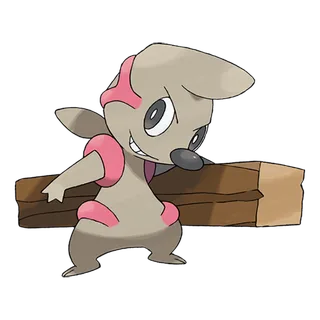
Timburr

Abilities
Ups ATTACK if suffering.
Removes added effects to increase move damage.
Boosts the power of punching moves.
Hidden AbilityBase Stats
Timburr's Weaknesses and Resistances


Evolution Chain
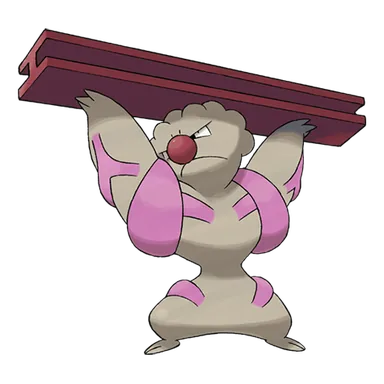
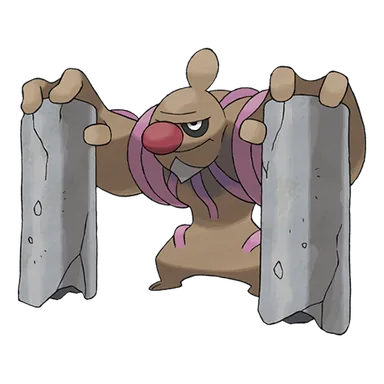
Timburr evolves into Gurdurr at level 25, and Gurdurr evolves into Conkeldurr by trading.
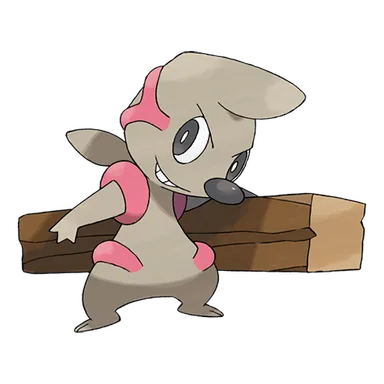 Timburr
 Gurdurr
 Conkeldurr
Timburr Playthrough, Competitive, and Nuzlocke Usage
Using Timburr in a Playthrough
Timburr evolves into Gurdurr at level 25 and Gurdurr evolves into Conkeldurr by trading, so players without access to trading may need to treat Gurdurr as the practical endpoint of the family. Conkeldurr is an extraordinarily strong but slow pure Fighting attacker with base 140 Attack, 105 HP, 95 Defense, and only base 45 Speed. Drain Punch combines reliable Fighting STAB with healing, Mach Punch provides priority, and Knock Off, Ice Punch, Thunder Punch, Rock Slide, Earthquake, Bulk Up, and other coverage let it pressure nearly anything that does not resist Fighting. Guts raises Attack by 50 percent while statused and ignores burn's normal Attack reduction, Sheer Force boosts moves with secondary effects while removing those effects, and the Hidden Ability Iron Fist boosts punching moves such as Drain Punch and Mach Punch. Adamant is ideal for straightforward offense, Careful can patch the weak Special Defense, and Brave is useful under Trick Room. Gurdurr itself remains very capable with Eviolite where available, so the trade requirement is inconvenient rather than completely crippling.
Timburr in Competitive Pokémon
Conkeldurr was a major BW OU Pokemon and one of the generation's defining bulky physical attackers. Base 140 Attack, 105 HP, Guts, Bulk Up, Drain Punch, Mach Punch, Payback, and later elemental punches let it pressure common sand staples such as Tyranitar and Ferrothorn while using priority to compensate for base 45 Speed. Guts made status dangerous to use against it because burns and poison could increase its Attack rather than neutralize it, while Iron Fist supported four-attacks sets centered on Drain Punch, Mach Punch, Ice Punch, and Thunder Punch. It remained a serious wallbreaker in later generations, including SS UU and modern SV UU, where Flame Orb Guts, Knock Off, Drain Punch, Facade, and Mach Punch continue to exploit the same enormous Attack stat. Gurdurr also developed its own lower-tier niche with Eviolite, which turns its already solid defenses into a sturdy bulky attacker when Conkeldurr is unavailable or inappropriate for the tier. Conkeldurr's enduring limitations are low Speed, mediocre Special Defense, and later Fairy weakness, but very few Fighting-types combine comparable immediate power, priority, status absorption, and healing.
Timburr in Nuzlockes
The Timburr family is highly reliable in Nuzlockes because it reaches Gurdurr at level 25 and both Gurdurr and Conkeldurr combine strong physical bulk with excellent Fighting damage. Drain Punch is one of the best moves the line can receive under permadeath rules because every successful attack simultaneously restores health, while Mach Punch can remove weakened faster threats before they act. Guts can turn an accidental burn or poison into an offensive advantage, but deliberately carrying damaging status throughout a run creates unnecessary chip and should only be considered when the payoff is controlled. Psychic and Flying are the original major weaknesses, with Fairy joining them from Generation VI onward, and the line's poor Speed means strong special attacks often land before it can respond. If trading is unavailable, Eviolite Gurdurr is still an excellent practical final form, making this family much less dependent on its trade evolution than many others.
Learnsets
57 moves · Scarlet Violet
Level Up



Machine









Egg
Pokédex Entries
5 entries
It fights by swinging a piece of lumber around. It is close to evolving when it can handle the lumber without difficulty.
These Pokémon appear at building sites and help out with construction. They always carry squared logs.
Always carrying squared logs, they help out with construction. As they grow, they carry bigger logs.
It loves helping out with construction projects. It loves it so much that if rain causes work to halt, it swings its log around and throws a tantrum.
Timburr that have started carrying logs that are about three times their size are nearly ready to evolve.
Where To Find Timburr
4 locations
Galar Mine · GalarOverworld · version details vary
Galar Mine
Cold Storage · UnovaDark Grass, Walking · version details vary
Cold Storage
Pinwheel Forest · UnovaDark Grass, Walking · version details vary
Pinwheel Forest (outside)
Relic Passage · UnovaWalking · version details vary
Relic Tunnel (Castelia Sewers entrance)
Additional Images
PokeAPI sprites
Open this section to load extra PokeAPI sprite images.
Timburr Biology and Behavior
Timburr always carries a squared wooden beam and uses it both for training and combat. It becomes strong enough to evolve when it can easily lift timber weighing nearly three times its own body weight. Timburr loves assisting human construction crews and is commonly found around building sites. If rain forces construction work to stop, it may throw a tantrum and swing its log in frustration.
Timburr Biological Data
- National Pokédex
- #532
- Species
- Muscular Pokémon
- Height
- 2' 0" (0.6 m)
- Weight
- 27.6 lbs (12.5 kg)
- Habitat
- Currently Unknown
- Color
- Gray
- Body Style
- Humanoid
- Gender
- 25% female / 75% male
Misc
Catch Rate: 180
Base Experience: 61 Exp
Hatch Counter: 20
Timburr Size Comparison: BETA
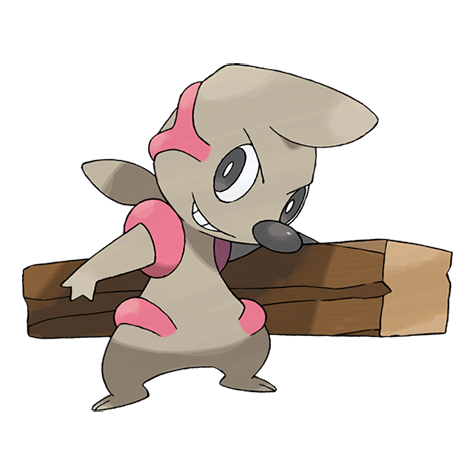
Timburr is listed at 2' 0" (0.6 m); this chart uses a pose-adjusted visual scale.

How is visual size determined?
Pokédex height is treated as the official listed measurement, but the chart uses pose-aware visual scaling so each sprite looks reasonable in a direct comparison.
For long or coiled Pokémon, the listed height may represent total body length rather than upright height. For Pokémon with floppy ears, leaves, feathers, antennae, wings, or other flexible features, the chart usually measures to the top of the solid, substantial part of the head or body instead of the tallest decorative feature.
The goal is not to replace the official height, but to make the artwork compare naturally at the size it appears to occupy.
Timburr currently uses a pose-adjusted visual scale.