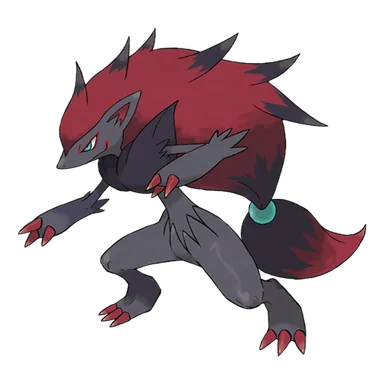
Zorua is a Dark-type Pokémon introduced in Generation V and the first stage of its evolution line, with a base stat total of 330.
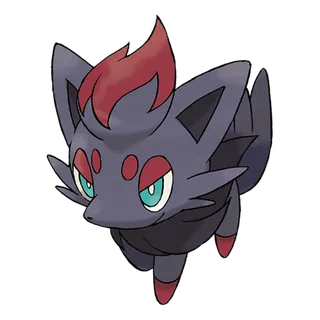
Zorua

Abilities
Comes out disguised as the Pokémon in back.
Base Stats
Zorua's Weaknesses and Resistances





Evolution Chain
Zorua evolves into Zoroark at level 30.
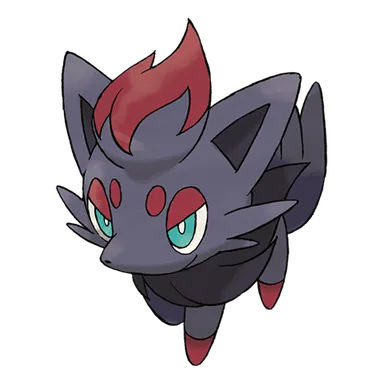 Zorua
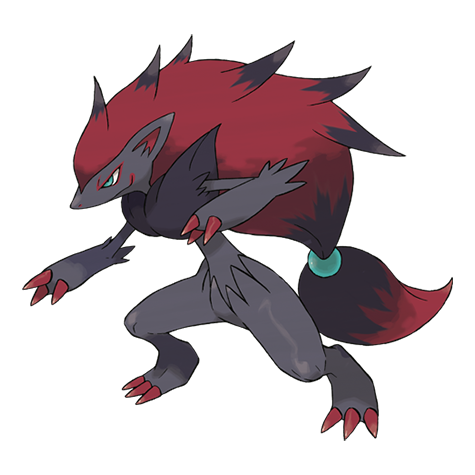 Zoroark
Forms
 Hisuian Zorua

Zorua Playthrough, Competitive, and Nuzlocke Usage
Using Zorua in a Playthrough
Unovan Zorua evolves into Zoroark at level 30, while Hisuian Zorua evolves into Hisuian Zoroark at the same level. Standard Zoroark is a pure Dark special attacker with base 120 Special Attack, 105 Attack, and 105 Speed, while Hisuian Zoroark shifts slightly toward special offense with base 125 Special Attack and 110 Speed. Both use Illusion, appearing as the last eligible Pokemon in the party until direct damage breaks the disguise, which can bait opponents into selecting ineffective or resisted moves if party order is planned carefully. Standard Zoroark uses Dark Pulse or Night Daze with Flamethrower, Focus Blast, U-turn, Nasty Plot, and physical coverage, while Hisuian Zoroark's Normal/Ghost typing gives it complete immunities to Normal, Fighting, and Ghost and only one conventional weakness, Dark. Bitter Malice is strongly associated with the Hisuian form in Legends: Arceus, while Shadow Ball, Hyper Voice, Flamethrower, Focus Blast, and Nasty Plot support modern special sets. Timid is excellent for either form because their low 60-range defenses make moving first far more important than trying to absorb damage.
Zorua in Competitive Pokémon
Standard Zoroark was a niche but dangerous BW UU wallbreaker because Illusion created unique information and prediction advantages. Its 120 Special Attack, 105 Speed, Nasty Plot, Dark Pulse or Night Daze, Flamethrower, Focus Blast, U-turn, and mixed options could punish opponents that selected moves based on the Pokemon Zoroark appeared to be, although entry-hazard damage and careful scouting often exposed the disguise. Its poor 60/60 defenses prevented it from functioning as a normal pivot, so Illusion was most valuable when it manufactured one crucial free turn. Hisuian Zoroark improved the underlying offensive profile with 125 Special Attack, 110 Speed, and an exceptional Normal/Ghost typing that grants three immunities and only a Dark weakness, and modern SV Smogon places it in RUBL with viable UU usage. Even there, Illusion remains stronger as a mind-game tool than as guaranteed deception because hazards, team preview, and damage calculations can reveal the disguise. Both forms therefore succeed through offensive pressure plus uncertainty rather than durability.
Zorua in Nuzlockes
Zoroark can be excellent in Nuzlockes when Illusion is deliberately planned rather than treated as a cosmetic gimmick. By placing a teammate with very different weaknesses in the final party slot, Zoroark can sometimes lure the AI into using a move that Zoroark resists or ignores, creating a free attack or setup turn; the disguise itself does not change Zoroark's real typing or defenses. Standard Zoroark has a Psychic immunity but is weak to Fighting, Bug, and later Fairy, while Hisuian Zoroark is considerably safer defensively because Normal/Ghost grants Normal, Fighting, and Ghost immunities and leaves Dark as its only ordinary weakness. Both forms are still physically and specially frail, so once Illusion breaks they should not remain in unfavorable matchups. Timid is especially useful, and direct reliable attacks are safer than betting a run on repeated Illusion mind games after the opponent has already revealed its moves.
Learnsets
65 moves · Scarlet Violet
Level Up



Machine





Egg
Pokédex Entries
8 entries
It changes into the forms of others to surprise them. Apparently, it often transforms into a silent child.
To protect themselves from danger, they hide their true identities by transforming into people and Pokémon.
It changes so it looks just like its foe, tricks it, and then uses that opportunity to flee.
This Pokémon has a cowardly disposition, so when it’s not around friends, it basically always stays transformed as something else.
If a normally talkative child suddenly stops talking, it may have been replaced by Zorua.
Zorua is a timid Pokémon. This disposition seems to be what led to the development of Zorua’s ability to take on the forms of other creatures.
Zorua sometimes transforms into a person and goes into cities to search for food. When Zorua does this, it usually takes on the form of a child.
A once-departed soul, returned to life in Hisui. Derives power from resentment, which rises as energy atop its head and takes on the forms of foes. In this way, Zorua vents lingering malice.
Where To Find Zorua
3 locations
Route 1 · AlolaWalking · version details vary
Alola Route 1 Trainers School
Castelia City · UnovaGift · version details vary
Game Freak HQ 1F (Castelia City)
Driftveil City · UnovaGift · version details vary
Driftveil City
Additional Images
PokeAPI sprites
Open this section to load extra PokeAPI sprite images.
Zorua Biology and Behavior
Unovan Zorua is a mischievous illusionist that disguises itself as other Pokemon and sometimes even as human children. It uses these disguises to surprise others, obtain food, or escape danger rather than physically transforming its body. Inexperienced Zorua may fail to hide the tail when imitating a human, and touching the tail can break the illusion. The species is playful and enjoys startling people.
Zorua Biological Data
- National Pokédex
- #570
- Species
- Tricky Fox Pokémon
- Height
- 2' 4" (0.7 m)
- Weight
- 27.6 lbs (12.5 kg)
- Habitat
- Currently Unknown
- Color
- Gray
- Body Style
- Quadruped
- Gender
- 12.5% female / 87.5% male
Misc
Catch Rate: 75
Base Experience: 66 Exp
Hatch Counter: 25
Zorua Size Comparison: BETA
Zorua is listed at 2' 4" (0.7 m) and shown in an in-chart visual comparison.
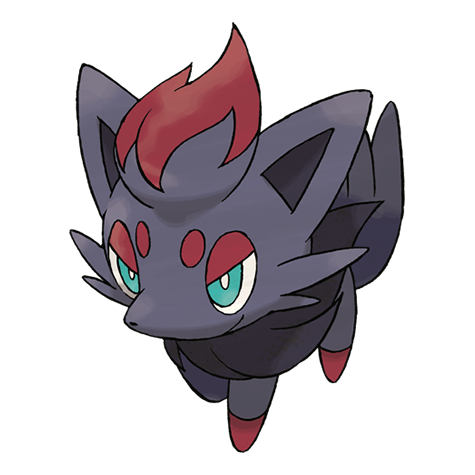

How is visual size determined?
Pokédex height is treated as the official listed measurement, but the chart uses pose-aware visual scaling so each sprite looks reasonable in a direct comparison.
For long or coiled Pokémon, the listed height may represent total body length rather than upright height. For Pokémon with floppy ears, leaves, feathers, antennae, wings, or other flexible features, the chart usually measures to the top of the solid, substantial part of the head or body instead of the tallest decorative feature.
The goal is not to replace the official height, but to make the artwork compare naturally at the size it appears to occupy.