Axew is a Dragon-type Pokémon introduced in Generation V and the first stage of its evolution line, with a base stat total of 320.
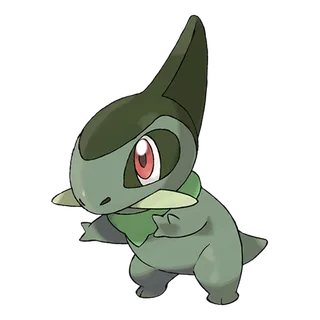
Axew

Abilities
Raises Attack if the foe is of the same gender.
Moves can be used regardless of abilities.
Makes the foe nervous and unable to eat Berries.
Hidden AbilityBase Stats
Axew's Weaknesses and Resistances






Evolution Chain
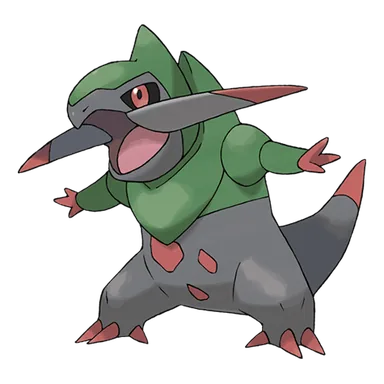
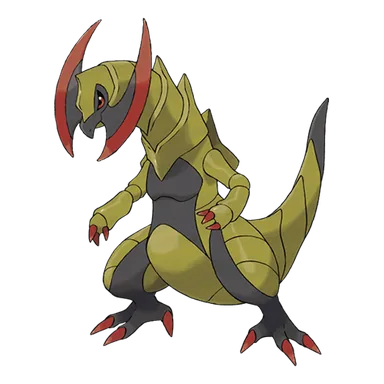
Axew evolves into Fraxure at level 38, and Fraxure evolves into Haxorus at level 48.
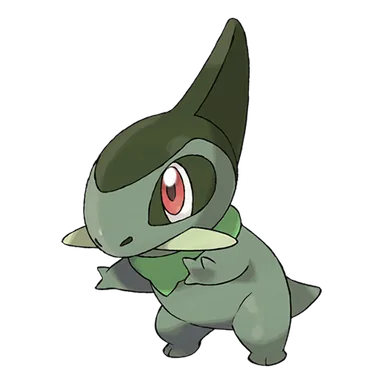 Axew
 Fraxure
 Haxorus
Axew Playthrough, Competitive, and Nuzlocke Usage
Using Axew in a Playthrough
Axew evolves into Fraxure at level 38 and Haxorus at level 48, so the family matures late but rewards the player with one of the strongest physical attackers in Unova. Haxorus has an enormous base 147 Attack and useful base 97 Speed, with Dragon Dance, Swords Dance, Dragon Claw or Outrage, Earthquake, Poison Jab, Brick Break or later Close Combat, and other coverage giving it several ways to sweep. Mold Breaker is usually the best general ability because it lets Haxorus ignore defensive abilities such as Levitate or Unaware when attacking, while Rivalry changes damage according to the target's gender and is much less reliable; the Hidden Ability Unnerve prevents opposing Berries from activating. Pure Dragon gives useful Fire, Water, Grass, and Electric resistances, but Ice and Dragon attacks are dangerous in every generation and Fairy joins those weaknesses from Generation VI onward. Jolly is often the safest nature because base 97 Speed sits just below many important fast threats, while Adamant makes the already exceptional Attack even more overwhelming. Outrage is extremely powerful but locks Haxorus in for multiple turns and causes confusion afterward in older mechanics, so Dragon Claw is often the safer story option.
Axew in Competitive Pokémon
Haxorus was an OU Pokemon in BW, but its position there was more nuanced than its base 147 Attack might suggest. It carved out a real niche on Dragon-heavy offensive teams, especially DragMag structures where Magnezone could remove Steel-types such as Skarmory and create openings for Dragon Dance or Swords Dance Haxorus. Mold Breaker is a major part of that identity because Earthquake can ignore abilities such as Levitate, and its combination of Dragon STAB, Fighting coverage, and setup gives defensive teams very little room once checks are weakened. At the same time, Smogon notes that Haxorus competes with faster or more defensively useful Dragons such as Garchomp, Dragonite, Salamence, and Kyurem-B, while base 97 Speed leaves it vulnerable to common revenge killers before or even after setup. Later generations preserved its role as a high-end physical breaker rather than a universal top-tier staple; current SV tiering places it in RUBL with viable UU and Battle Stadium roles. Its competitive identity is therefore remarkably consistent: colossal physical power and excellent setup potential held in check by middling Speed, modest special bulk, and fierce competition from other Dragons.
Axew in Nuzlockes
Haxorus is a powerful Nuzlocke Pokemon because base 147 Attack often ends favorable matchups immediately, reducing the number of turns in which something can go wrong. Mold Breaker is especially useful because it removes surprises from abilities that would normally block Earthquake or blunt a sweep, while Dragon Dance can create boss-fight sweeps if Haxorus has a genuinely safe setup turn. The family evolves late, however, and Axew and Fraxure are much less forgiving than the final form, so keeping them alive until level 48 can be the hardest part of using the line. Ice and Dragon coverage are dangerous throughout the line's original games, and Fairy becomes an additional weakness from Generation VI onward. Dragon Claw is usually safer than Outrage in permadeath play because it avoids move-locking and post-attack confusion, while Jolly can be safer than Adamant whenever the extra Speed prevents an incoming hit.
Learnsets
68 moves · Scarlet Violet
Level Up





Machine





Egg
Pokédex Entries
5 entries
They use their tusks to crush the berries they eat. Repeated regrowth makes their tusks strong and sharp.
They mark their territory by leaving gashes in trees with their tusks. If a tusk breaks, a new one grows in quickly.
Its large tusks have a tendency to break, but each time they grow back, they grow in harder and sturdier.
These Pokémon nest in the ground and use their tusks to crush hard berries. Crushing berries is also how they test each other’s strength.
They play with each other by knocking their large tusks together. Their tusks break sometimes, but they grow back so quickly that it isn’t a concern.
Where To Find Axew
4 locations
Mount Hokulani · AlolaIsland Scan · version details vary
Mount Hokulani Main
Connecting Cave · KalosHorde, Walking · version details vary
Connecting Cave
Guidance Chamber · UnovaWalking · version details vary
Guidance Chamber
Mistralton Cave · UnovaWalking · version details vary
Mistralton Cave
Additional Images
PokeAPI sprites
Open this section to load extra PokeAPI sprite images.
Axew Biology and Behavior
Axew uses its tusks to crush Berries, carve territorial marks into trees and boulders, and play with other members of its species. The tusks frequently break or fall out, but they regrow quickly and become harder and sharper each time. In ancient times, humans collected discarded Axew tusks and used them as cutting tools or cooking knives. Axew lives in ground nests and is also an agile climber despite its small size.
Axew Biological Data
- National Pokédex
- #610
- Species
- Tusk Pokémon
- Height
- 2' 0" (0.6 m)
- Weight
- 39.7 lbs (18.0 kg)
- Habitat
- Currently Unknown
- Color
- Green
- Body Style
- Upright
- Gender
- 50% female / 50% male
Misc
Catch Rate: 75
Base Experience: 64 Exp
Hatch Counter: 40
Axew Size Comparison: BETA
Axew is listed at 2' 0" (0.6 m) and shown in an in-chart visual comparison.
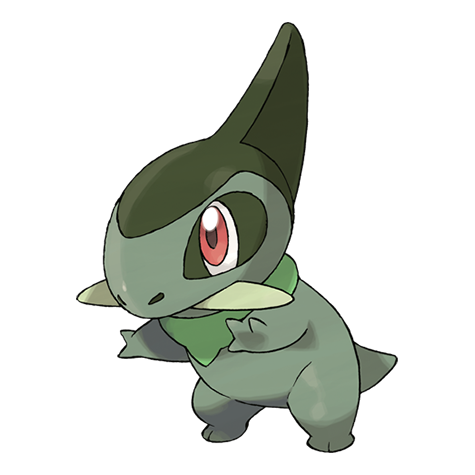

How is visual size determined?
Pokédex height is treated as the official listed measurement, but the chart uses pose-aware visual scaling so each sprite looks reasonable in a direct comparison.
For long or coiled Pokémon, the listed height may represent total body length rather than upright height. For Pokémon with floppy ears, leaves, feathers, antennae, wings, or other flexible features, the chart usually measures to the top of the solid, substantial part of the head or body instead of the tallest decorative feature.
The goal is not to replace the official height, but to make the artwork compare naturally at the size it appears to occupy.