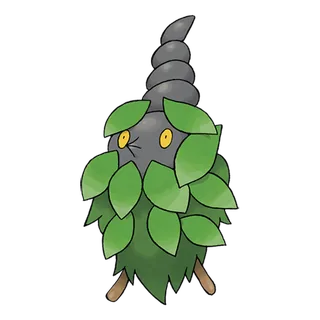
Burmy is a Bug-type Pokémon introduced in Generation IV and the first stage of its evolution line, with a base stat total of 224.
Burmy

Abilities
Base Stats
Burmy's Weaknesses and Resistances




Evolution Chain
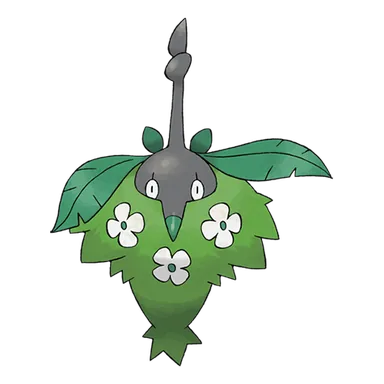
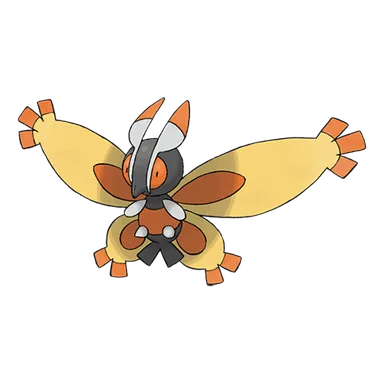
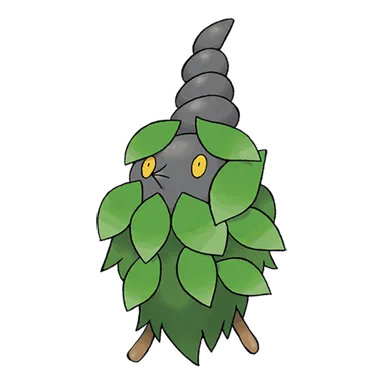
Burmy can evolve into Wormadam Plant by leveling up at level 20female only or Mothim by leveling up at level 20male only.
 Burmy
 Wormadam Plant

 Mothim

Burmy Playthrough, Competitive, and Nuzlocke Usage
Using Burmy in a Playthrough
Burmy has a gender-based split evolution at level 20: female Burmy become Wormadam, while male Burmy become Mothim, and a female's current cloak determines which permanent Wormadam form it receives. Plant Cloak Wormadam is Bug/Grass, Sandy Cloak is Bug/Ground, and Trash Cloak is Bug/Steel, so the same species can fill very different defensive roles; Trash Cloak is generally the safest defensively because Steel supplies numerous resistances and leaves only a quadruple Fire weakness. Wormadam is slow and modest offensively regardless of form, but moves such as Bug Buzz, Energy Ball, Earthquake or Ground coverage, Gyro Ball, Quiver Dance in newer movepools where available, and support options allow each form to contribute in specific matchups. Mothim is much more offensive, with base 94 in both Attack and Special Attack, and later generations give it Quiver Dance plus the Hidden Ability Tinted Lens, which makes resisted attacks deal much more meaningful damage. The entire family is hampered by low Speed and mediocre overall stats, and Mothim's Bug/Flying typing carries a quadruple Rock weakness, so the branch decision is more about choosing specialized utility or setup potential than obtaining a universally strong final evolution.
Burmy in Competitive Pokémon
The Burmy family has spent almost all of its competitive history in the lowest tiers, but its branches have developed several distinct niches. Wormadam's three forms have different stat distributions and typings, with Trash Cloak generally receiving the most attention because Bug/Steel grants a long resistance list and only a Fire weakness, while Plant and Sandy Cloaks are much easier to pressure through their weaknesses and low Speed. Even Trash Cloak remains passive and lacks the recovery, offensive pressure, or utility breadth needed to compete with stronger Steel-types, so Smogon has typically placed the Wormadam forms around ZU-level relevance. Mothim gained the family's clearest offensive strategy in Generation V with Quiver Dance, and Tinted Lens allows Bug Buzz and Flying STAB to remain threatening even when resisted; later lower-tier analyses also used Choice Specs to exploit the same ability. Its base 66 Speed, 50/50 defenses, and quadruple Stealth Rock weakness prevent consistent setup, however, so even the family's best sweeping branch remains a niche lower-tier choice rather than an established major threat.
Burmy in Nuzlockes
Burmy is initially fragile, but level 20 arrives early enough that a Nuzlocke can deliberately plan which branch and, for females, which Wormadam cloak best fits the surviving team. Trash Cloak Wormadam is normally the safest branch because Bug/Steel provides many resistances and a Poison immunity, although the quadruple Fire weakness must be scouted carefully; Sandy Cloak offers an Electric immunity, while Plant Cloak provides useful Grass-based resistances but dangerous quadruple Fire and Flying weaknesses. Mothim provides a Ground immunity and much more offensive momentum, yet its poor defenses and quadruple Rock weakness make blind switching extremely risky. Quiver Dance can let Mothim sweep but requires surviving the setup turn, while Wormadam's low Speed means even favorable defensive branches often absorb an attack before acting. The family's greatest Nuzlocke strength is therefore controlled specialization: choosing the appropriate cloak or male branch can patch a specific team need, but none of the forms has enough raw statistical margin to forgive repeated matchup mistakes.
Learnsets
1 moves · Legends Arceus
Level Up — Legends Arceus

Pokédex Entries
5 entries
To shelter itself from cold, wintry winds, it covers itself with a cloak made of twigs and leaves.
If its cloak is broken in battle, it quickly remakes the cloak with materials nearby.
Even if it is born where there are no cocooning materials, it somehow always ends up with a cloak.
It covers itself with a cloak to shelter from the cold. When it’s hot, its cloak is thinner.
If its cloak is even slightly damaged, Burmy will immediately repair it with whatever is close at hand. The Pokémon within the cloak is scrawny and vulnerable to the cold.
Where To Find Burmy
20 locations
Route 38 · JohtoHeadbutt · version details vary
Road 38
Route 3 · KalosWalking · version details vary
Road 3
Eterna Forest · SinnohHoney Tree · version details vary
Eterna Forest
Floaroma Meadow · SinnohHoney Tree · version details vary
Floaroma Meadow
Fuego Ironworks · SinnohHoney Tree · version details vary
Fuego Ironworks
Route 205 · SinnohHoney Tree · version details vary
Road 205 (east, towards Eterna City)
Road 205 (south, towards Floaroma Town)
Route 206 · SinnohHoney Tree · version details vary
Road 206
Route 207 · SinnohHoney Tree · version details vary
Road 207
Route 208 · SinnohHoney Tree · version details vary
Road 208
Route 209 · SinnohHoney Tree · version details vary
Road 209
Route 210 · SinnohHoney Tree · version details vary
Road 210 (south, towards Solaceon Town)
Road 210 (west, towards Celestic Town)
Route 211 · SinnohHoney Tree · version details vary
Road 211 (east, towards Celestic Town)
Route 212 · SinnohHoney Tree · version details vary
Road 212 (east, towards Pastoria City)
Road 212 (north, towards Hearthome City)
Route 213 · SinnohHoney Tree · version details vary
Road 213
Route 214 · SinnohHoney Tree · version details vary
Road 214
Route 215 · SinnohHoney Tree · version details vary
Road 215
Route 218 · SinnohHoney Tree · version details vary
Road 218
Route 221 · SinnohHoney Tree · version details vary
Road 221
Route 222 · SinnohHoney Tree · version details vary
Road 222
Valley Windworks · SinnohHoney Tree · version details vary
Valley Windworks
Additional Images
PokeAPI sprites
Open this section to load extra PokeAPI sprite images.
Burmy Biology and Behavior
Burmy protects its small, vulnerable body by building a mobile cloak from whatever materials surround it, using leaves and twigs, sand and mud bound with silk, or discarded human material depending on the environment. If that cloak is damaged or lost, Burmy immediately gathers nearby material and reconstructs it rather than remaining exposed. The shelter is primarily a temperature adaptation: it protects Burmy from cold winds, becomes thinner in hot weather, and the Sandy Cloak is vulnerable enough to wind and rain that individuals wearing it hide in caves during poor conditions. Even Burmy born in places that seem to lack useful cocoon material somehow obtain a cloak, making concealment effectively universal within the species. Remoraid is documented as a natural predator, reinforcing why this apparently simple covering is so important to survival.
Burmy Biological Data
- National Pokédex
- #412
- Species
- Bagworm Pokémon
- Height
- 0' 8" (0.2 m)
- Weight
- 7.5 lbs (3.4 kg)
- Habitat
- Currently Unknown
- Color
- Green
- Body Style
- Blob
- Gender
- 50% female / 50% male
Misc
Catch Rate: 120
Base Experience: 45 Exp
Hatch Counter: 15
Burmy Size Comparison: BETA
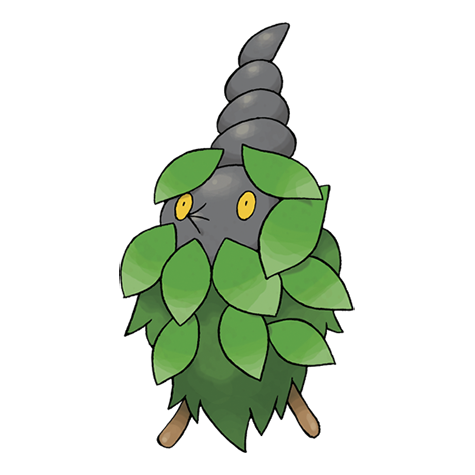
Burmy is listed at 0' 8" (0.2 m) and shown in an in-chart visual comparison.

How is visual size determined?
Pokédex height is treated as the official listed measurement, but the chart uses pose-aware visual scaling so each sprite looks reasonable in a direct comparison.
For long or coiled Pokémon, the listed height may represent total body length rather than upright height. For Pokémon with floppy ears, leaves, feathers, antennae, wings, or other flexible features, the chart usually measures to the top of the solid, substantial part of the head or body instead of the tallest decorative feature.
The goal is not to replace the official height, but to make the artwork compare naturally at the size it appears to occupy.