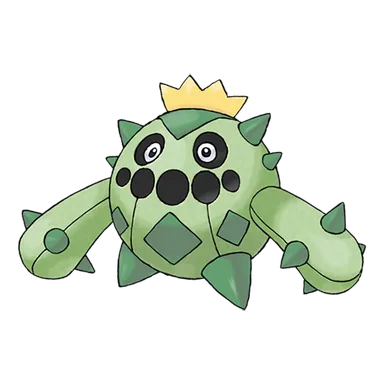
Cacturne is a Grass/Dark-type Pokémon introduced in Generation III and a final stage of its evolution line, with a base stat total of 475.
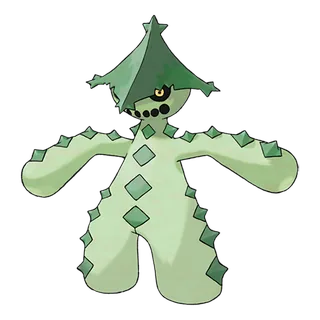
Cacturne


Abilities
Ups evasion in a sandstorm.
Changes water into HP.
Hidden AbilityBase Stats
Cacturne's Weaknesses and Resistances










Evolution Chain
Cacnea evolves into Cacturne at level 32.
 Cacnea
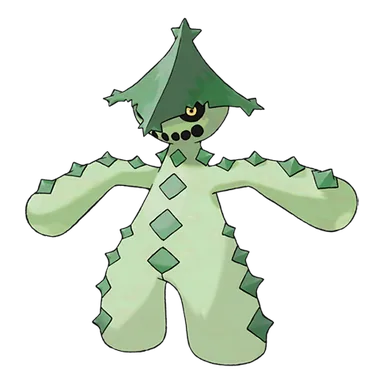 Cacturne
 Playthrough, Competitive, and Nuzlocke Usage
Using Cacturne in a Playthrough
Cacnea evolves into Cacturne at level 32, changing from pure Grass into Grass/Dark and gaining a Psychic immunity alongside very high base 115 Attack and Special Attack. In Generation III both Grass and Dark moves are special, so Cacturne's dual STAB initially relies on Special Attack even though its physical Attack is equally high; later physical Dark moves such as Sucker Punch and physical Grass options let it exploit either attacking stat far more naturally. Its movepool can include Needle Arm or Seed Bomb, Giga Drain or Energy Ball, Sucker Punch, Spikes, Leech Seed, Swords Dance, Nasty Plot, Destiny Bond, and broad utility depending on generation, giving it several offensive or support roles. Sand Veil traditionally supports desert teams and prevents sandstorm chip while raising evasion under sand in formats where that effect is active, while Water Absorb as a Hidden Ability can replace a Water resistance with a complete Water immunity and healing. Cacturne's great offense is balanced by base 55 Speed, 70/60/60 bulk, numerous weaknesses, and a quadruple Bug weakness, making it a dangerous attacker that prefers forcing switches rather than taking hits.
Cacturne in Competitive Pokémon
Cacturne has never been a top-tier competitive Pokemon, but its combination of Spikes and dual base-115 offenses gave it a real lower-tier identity from its debut. In ADV NU it was one of only a small number of practical Spikes setters, and its strong Grass/Dark offense meant opponents could not always remove or pressure it as easily as a passive hazard specialist. DPP strengthened the physical side of its game with STAB Sucker Punch and Swords Dance while preserving Spikes, allowing Cacturne to punish faster offensive Pokemon with priority and threaten defensive teams with either physical or special sets. Water Absorb in later generations gives it a valuable immunity and healing opportunity against Water attacks, while Nasty Plot, Swords Dance, Encore, Destiny Bond, and mixed coverage preserve its unpredictability. Its low Speed, poor defenses, many weaknesses, and quadruple Bug weakness prevent consistent high-level success, but Cacturne's combination of hazards, priority, and two equally strong attacking stats has repeatedly secured meaningful lower-tier niches.
Cacturne in Nuzlockes
Cacturne can be a powerful Nuzlocke attacker because both offensive stats reach base 115 and Grass/Dark typing gives useful coverage plus a complete Psychic immunity. The line's problem is safety: Cacturne is slow, physically and specially frail, and weak to Fighting, Fire, Flying, Ice, Poison, Fairy, and especially Bug, which deals quadruple damage. Sucker Punch can offset the low Speed by finishing attacking opponents with priority, while Water Absorb is excellent if legitimately available because it turns an already favorable Water matchup into complete immunity and healing. Spikes, Leech Seed, or setup moves can provide additional value, but spending turns on support is dangerous against opponents that may carry unexpected super-effective coverage. Cacturne is therefore best used as a carefully targeted offensive specialist rather than a defensive Grass-type, with its Psychic immunity and Water matchup exploited only when the opposing moveset is understood.
Learnsets
77 moves · Scarlet Violet
Level Up





Machine
Pokédex Entries
8 entries
During the daytime, CACTURNE remains unmoving so that it does not lose any moisture to the harsh desert sun. This POKéMON becomes active at night when the temperature drops.
If a traveler is going through a desert in the thick of night, CACTURNE will follow in a ragtag group. The POKéMON are biding their time, waiting for the traveler to tire and become incapable of moving.
After spending thousands of years in harsh deserts, its blood transformed into the same substances as sand. It is nocturnal, so it hunts at night.
It lives in deserts. It becomes active at night when it hunts for prey exhausted from the desert’s heat.
It becomes active at night, seeking prey that is exhausted from the day’s desert heat.
Packs of them follow travelers through the desert until the travelers can no longer move.
During the daytime, Cacturne remains unmoving so that it does not lose any moisture to the harsh desert sun. This Pokémon becomes active at night when the temperature drops.
If a traveler is going through a desert in the thick of night, Cacturne will follow in a ragtag group. The Pokémon are biding their time, waiting for the traveler to tire and become incapable of moving.
Where To Find Cacturne
2 locations
Friend Safari · KalosWalking · version details vary
Friend Safari (Dark)
Route 228 · SinnohWalking · version details vary
Road 228
Held Items
2 items
- Ruby: 5% chance
- Sapphire: 5% chance
- Emerald: 5% chance
- Firered: 5% chance
- Leafgreen: 5% chance
- Diamond: 5% chance
- Pearl: 5% chance
- Platinum: 5% chance
- Heartgold: 5% chance
- Soulsilver: 5% chance
- Black: 5% chance
- White: 5% chance
- Black 2: 5% chance
- White 2: 5% chance
- X: 5% chance
- Y: 5% chance
- Omega Ruby: 5% chance
- Alpha Sapphire: 5% chance
- Sun: 5% chance
- Moon: 5% chance
- Ultra Sun: 5% chance
- Ultra Moon: 5% chance
Additional Images
PokeAPI sprites
Open this section to load extra PokeAPI sprite images.
Cacturne Biology and Behavior
Cacturne is a nocturnal desert predator that remains almost completely still during the heat of the day so that its body loses as little moisture as possible. After sunset it becomes active and follows desert travelers from a distance, waiting patiently until exhaustion and dehydration leave the target too weak to escape. Pokedex accounts describe the species as having lived in arid environments for so long that its blood has transformed into sand, an extreme expression of its adaptation to desert life. Groups may form around exhausted travelers in the darkness, giving Cacturne the frightening reputation of a scarecrow that silently stalks anyone unfortunate enough to cross the desert at night. Evolution therefore shifts the family from a stationary ambush cactus into an active endurance predator that uses the desert itself - heat, thirst, and fatigue - as part of its hunting strategy.
Cacturne Biological Data
- National Pokédex
- #332
- Species
- Scarecrow Pokémon
- Height
- 4' 3" (1.3 m)
- Weight
- 170.6 lbs (77.4 kg)
- Habitat
- Rough Terrain
- Color
- Green
- Body Style
- Humanoid
- Gender
- 50% female / 50% male
Misc
Catch Rate: 60
Base Experience: 166 Exp
Hatch Counter: 20
Cacturne Size Comparison: BETA
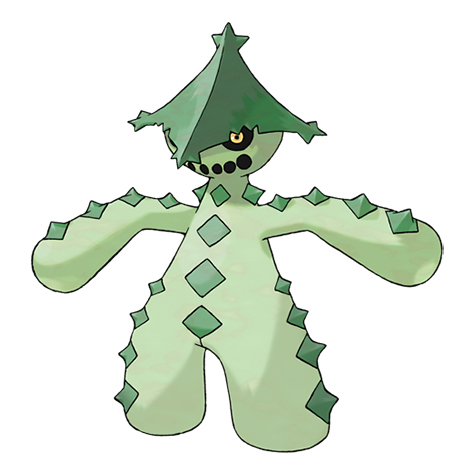
Cacturne is listed at 4' 3" (1.3 m) and shown in an in-chart visual comparison.

How is visual size determined?
Pokédex height is treated as the official listed measurement, but the chart uses pose-aware visual scaling so each sprite looks reasonable in a direct comparison.
For long or coiled Pokémon, the listed height may represent total body length rather than upright height. For Pokémon with floppy ears, leaves, feathers, antennae, wings, or other flexible features, the chart usually measures to the top of the solid, substantial part of the head or body instead of the tallest decorative feature.
The goal is not to replace the official height, but to make the artwork compare naturally at the size it appears to occupy.