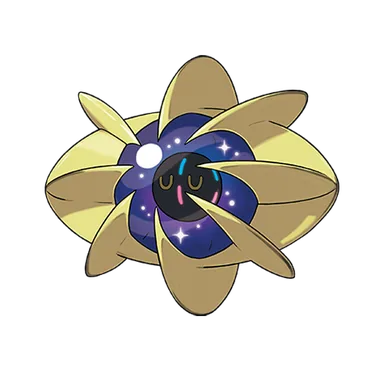
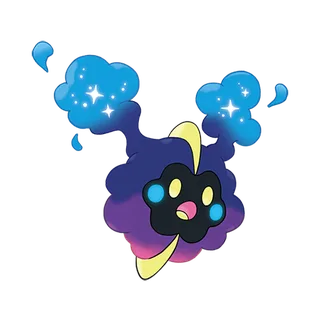
Cosmog is a Psychic-type Pokémon introduced in Generation VII and the first stage of its evolution line, with a base stat total of 200.
Cosmog

Abilities
Ignores any change in ability by the foe.
Base Stats
Cosmog's Weaknesses and Resistances



Evolution Chain
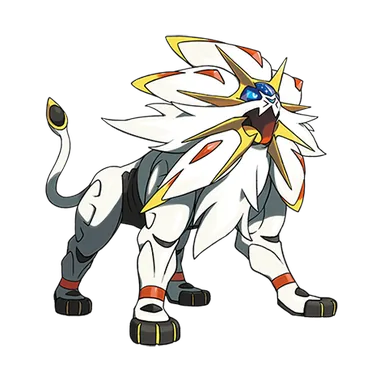
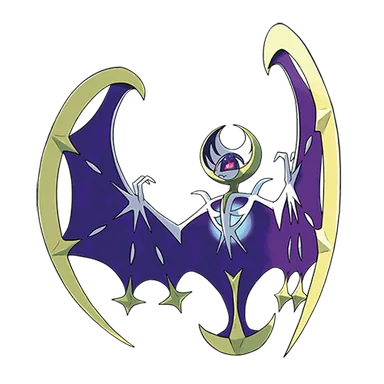
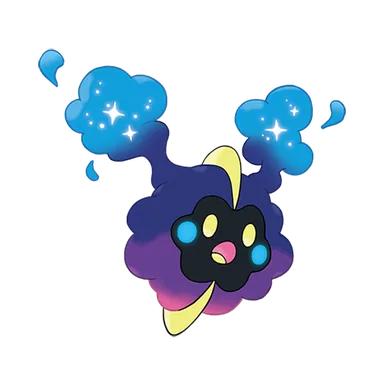
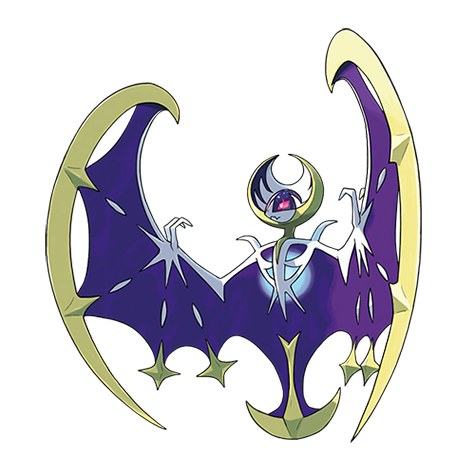
Cosmog evolves into Cosmoem at level 43, and Cosmoem can then evolve into Solgaleo at level 53 in Sun, Ultra Sun, Sword, or Scarlet or Lunala at level 53 in Moon, Ultra Moon, Shield, or Violet.
 Cosmog
 Cosmoem
 Solgaleo

 Lunala

Cosmog Playthrough, Competitive, and Nuzlocke Usage
Using Cosmog in a Playthrough
The Cosmog family is unique among Legendary Pokémon because it contains two genuine evolution stages and then branches into one of two box Legendary final forms: Cosmog evolves into Cosmoem at level 43, and Cosmoem evolves at level 53 into Solgaleo in Sun, Ultra Sun, Sword, and Scarlet or Lunala in Moon, Ultra Moon, Shield, and Violet. Training the early stages normally is extremely impractical because Cosmog has extraordinarily low battle stats and almost no offensive presence, while Cosmoem has enormous 131 Defense and Special Defense but still cannot contribute meaningful damage; in Sun and Moon, the player's usable Cosmog is also obtained after the main story, although the story itself provides the corresponding Solgaleo or Lunala before the League. Solgaleo becomes a 680-BST Psychic/Steel physical powerhouse with base 137 Attack, 137 HP, and 107 Defense; Sunsteel Strike is accurate, strong, and ignores the target's Ability, while Full Metal Body prevents opposing effects from lowering Solgaleo's stats. Lunala instead becomes a Psychic/Ghost special attacker with base 137 Special Attack, 137 HP, and 107 Special Defense; Moongeist Beam likewise ignores the target's Ability, while Shadow Shield halves damage from attacks taken at full HP. Solgaleo has ten resistances or immunities but weaknesses to Fire, Ground, Ghost, and Dark, while Lunala has useful Normal and Fighting immunities but disastrous 4× weaknesses to Ghost and Dark, so the two branches demand very different defensive planning despite nearly mirrored statistics. Adamant or Jolly are strong Solgaleo Natures depending on whether power or Speed is more valuable, while Modest or Timid perform the corresponding roles for Lunala; neither final evolution needs elaborate optimization to overwhelm ordinary story opponents once legally obtained.
Cosmog in Competitive Pokémon
Cosmog and Cosmoem have essentially no conventional competitive role because their developmental movepools and offensive statistics make them incapable of meaningful pressure, so the family's competitive history belongs almost entirely to Solgaleo and Lunala. Both final evolutions have always been classified as Ubers-level Pokémon, but their historical success is not equal: Generation VII Solgaleo struggled to distinguish itself because Necrozma-Dusk-Mane performed many Steel-type roles more efficiently, leaving Solgaleo with niches such as Choice Scarf speed control and specific checks to threats including Xerneas. Lunala was much more individually distinctive in Generation VII Ubers because Shadow Shield gave it an exceptionally safe first hit and Moongeist Beam, Calm Mind, Roost, broad coverage, and Lunalium Z supported both wallbreaking and defensive sets. Sword and Shield improved Solgaleo's utility through tools such as Teleport and Future Sight, giving it a defined defensive-pivot niche even though Necrozma-DM still competed heavily for the Steel-type slot. Lunala remained an Ubers mainstay in Generation VIII, where Shadow Shield and enormous mixed stats allowed it to participate in sturdy defensive cores while still threatening major damage; both Solgaleo and Lunala also appeared in restricted VGC formats such as 2019 and 2022. Their signature Abilities are especially valuable in high-power formats: Full Metal Body prevents stat reductions from effects such as Intimidate and Sticky Web, while Shadow Shield can halve otherwise enormous damage at full HP, although hazards and chip damage are therefore especially important against Lunala.
Cosmog in Nuzlockes
If a ruleset actually requires the player to raise Cosmog from its first stage, the family presents an unusually dangerous development period because Cosmog is almost incapable of fighting and Cosmoem, while extraordinarily bulky, remains effectively unable to defeat normal opponents on its own. Cosmoem's huge defenses can survive attacks far better than Cosmog, but its extreme passivity means experience sharing or carefully controlled switch training is far safer than expecting it to battle directly until level 53. Solgaleo is generally the safer final form for blind physical combat because Psychic/Steel supplies numerous resistances and an immunity to poison, while Full Metal Body prevents enemy stat drops and Sunsteel Strike is accurate without recoil or defensive penalties. Lunala's Shadow Shield is outstanding emergency insurance at full HP because the first damaging attack is halved, but maintaining that protection requires avoiding hazards and chip, and its 4× Dark and Ghost weaknesses can still turn an unexpected coverage move into catastrophic damage once Shadow Shield is broken. Moongeist Beam and Sunsteel Strike are both excellent Nuzlocke attacks because they are accurate and ignore defensive Abilities without imposing recoil or self-debuffs, while more extreme options such as Draco Meteor or risky coverage should be used only when the extra power is required. The family is therefore extraordinarily strong once fully evolved but has one of the least practical pre-evolution periods in the series, making the route from Cosmog to level 53 far more dangerous than the final Legendary statistics imply.


Pokédex Entries
6 entries
Its body is gaseous and frail. It slowly grows as it collects dust from the atmosphere.
In ages past, it was called the child of the stars. It’s said to be a Pokémon from another world, but no specific details are known.
Even though its helpless, gaseous body can be blown away by the slightest breeze, it doesn’t seem to care.
Whether or not it’s a Pokémon from this world is a mystery. When it’s in a jam, it warps away to a safe place to hide.
This Pokémon came from another universe. Its gaseous body is so light that even a gentle breeze can blow it away.
Cosmog is very curious but not very cautious, often placing itself in danger. If things start to look dicey, it teleports away.
Where To Find Cosmog
2 locations
Lake of the Moone · AlolaGift · version details vary
Lake Of The Moone Area
Lake of the Sunne · AlolaGift · version details vary
Lake Of The Sunne Area
Additional Images
PokeAPI sprites
Open this section to load extra PokeAPI sprite images.
Cosmog Biology and Behavior
Cosmog is an extremely light, gaseous Pokémon resembling a small nebula, and its fragile body can be blown away by ordinary winds without appearing to trouble it very much. It gradually grows by collecting dust from the atmosphere and is naturally curious, trusting, and dangerously incautious, quickly becoming attached to anyone who shows it kindness even when that individual has harmful intentions. Cosmog can teleport itself and nearby companions, and under severe stress it can open Ultra Wormholes; using that power is extremely taxing and can leave it immobile for long periods or even kill it if forced too far. The Aether Foundation studied Cosmog closely and theorized that it might be related to Ultra Beasts, although it is not formally classified as one. Ancient Alolans called it the 'child of the stars,' and Alolan tradition holds that Solgaleo and Lunala can create Cosmog and entrust the young Pokémon to the guardian deities until it matures and returns to Ultra Space.
Cosmog Biological Data
- National Pokédex
- #789
- Species
- Nebula Pokémon
- Height
- 0' 8" (0.2 m)
- Weight
- 0.2 lbs (0.1 kg)
- Habitat
- Currently Unknown
- Color
- Blue
- Body Style
- Ball
- Gender
- Genderless
Misc
Catch Rate: 45
Base Experience: 40 Exp
Hatch Counter: 120
Cosmog Size Comparison: BETA
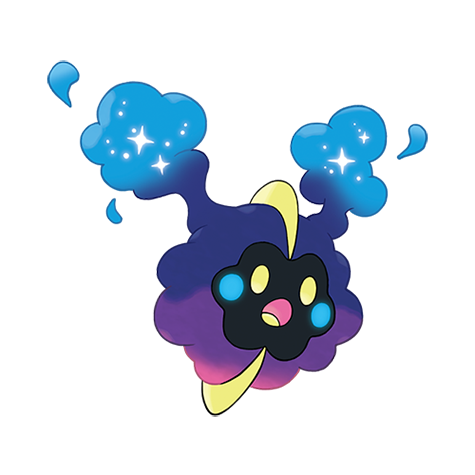
Cosmog is listed at 0' 8" (0.2 m) and shown in an in-chart visual comparison.

How is visual size determined?
Pokédex height is treated as the official listed measurement, but the chart uses pose-aware visual scaling so each sprite looks reasonable in a direct comparison.
For long or coiled Pokémon, the listed height may represent total body length rather than upright height. For Pokémon with floppy ears, leaves, feathers, antennae, wings, or other flexible features, the chart usually measures to the top of the solid, substantial part of the head or body instead of the tallest decorative feature.
The goal is not to replace the official height, but to make the artwork compare naturally at the size it appears to occupy.