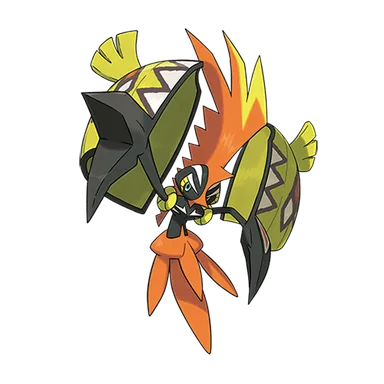
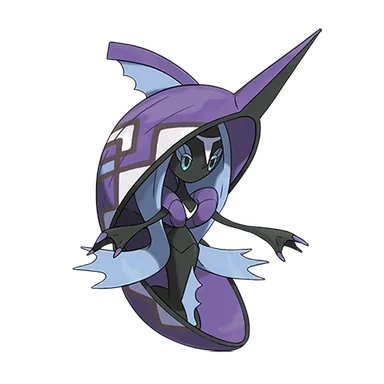
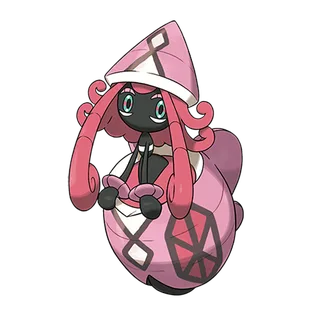
Tapu Lele is a Psychic/Fairy-type Pokémon introduced in Generation VII, with a base stat total of 570 and no standard evolutions.
Tapu Lele


Abilities
Turns the ground into Psychic Terrain when the Pokémon enters a battle.
Anticipates an ally’s attack and dodges it.
Hidden AbilityBase Stats
Tapu Lele's Weaknesses and Resistances




Evolution Chain
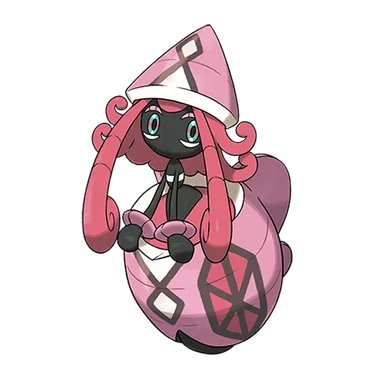
Tapu Lele does not evolve into or from any other Pokémon.
 Tapu Lele
 Playthrough, Competitive, and Nuzlocke Usage
Using Tapu Lele in a Playthrough
Tapu Lele is a single-stage Psychic/Fairy Legendary whose ordinary Alola availability is postgame, so like the other guardian deities it is generally more relevant to optional content, rematches, or transferred playthroughs than to the initial island challenge. Base 130 Special Attack and 115 Special Defense make it an exceptionally powerful special attacker, while Psychic Surge automatically creates Psychic Terrain, strengthening grounded Psychic-type attacks and protecting grounded Pokémon from opposing priority moves. Psychic or Psyshock and Moonblast provide outstanding dual STAB, with Focus Blast commonly supplying coverage against Steel-types that resist both; Calm Mind can turn Tapu Lele into a setup sweeper, while Choice Specs or Choice Scarf offer immediate power or speed control. Its base 95 Speed is good but not elite, and base 70 HP with 75 Defense means strong physical attackers can overwhelm it if it does not move first. Generation VIII reduced Psychic Terrain's power boost from 50% to 30%, lowering the absurd peak of its Psychic attacks without removing the priority-blocking utility that makes the terrain so valuable. Timid is useful when maximizing Speed matters, while Modest is genuinely valuable on Choice Scarf or wallbreaking sets because Tapu Lele's terrain-enhanced special attacks benefit enormously from additional raw power.
Tapu Lele in Competitive Pokémon
Tapu Lele was an elite OU wallbreaker in both Generation VII and Sword and Shield, with Psychic Surge turning already enormous base 130 Special Attack into one of the most punishing offensive packages available outside the restricted Legendary tiers. In Sun and Moon, terrain-boosted Psychic or Psyshock combined with Moonblast forced defensive teams to rely heavily on Steel-types and specially prepared checks, while Choice Specs could 2HKO many otherwise sturdy neutral targets. Psychic Terrain also blocked opposing priority against grounded Pokémon, making Tapu Lele itself harder to revenge kill and supporting fragile offensive teammates that feared moves such as Bullet Punch, Extreme Speed, or Sucker Punch. Choice Scarf traded some wallbreaking force for speed control, while Calm Mind and Z-Move sets added further set diversity and made scouting its item important. Generation VIII reduced Psychic Terrain's offensive multiplier from 1.5× to 1.3×, but Tapu Lele remained OU because Choice Specs, Choice Scarf, Future Sight, Psyshock, and its nearly unresisted Psychic/Fairy pressure still made it one of the generation's most feared special attackers. Its consistent flaws are only average physical bulk, a Speed tier that requires a Scarf against the fastest offensive teams, and imperfect Focus Blast as its most direct answer to several Steel-types.
Tapu Lele in Nuzlockes
Tapu Lele is extremely powerful but less forgiving than its Special Defense suggests because its physical bulk is only moderate and base 95 Speed does not guarantee the first move against every dangerous opponent. Psychic Terrain provides valuable safety by preventing opposing priority moves from striking grounded Pokémon, eliminating many surprise revenge kills while it remains active. Psychic/Fairy also grants a Dragon immunity, a 4× Fighting resistance, and a Psychic resistance, creating excellent entries against correctly identified attacks, although Ghost-, Poison-, and Steel-type coverage remains dangerous. Psyshock and Psychic are both accurate and reliable, while Moonblast provides dependable Fairy damage; Focus Blast should be avoided as a survival-critical answer whenever a safer move can accomplish the same job because its 70% accuracy creates substantial variance. Calm Mind can make Tapu Lele extremely difficult for special attackers to stop, but setting up repeatedly against physical opponents creates unnecessary critical-hit exposure. A Choice Scarf set is often safer for permadeath play than a pure wallbreaking set because it converts more matchups into guaranteed first attacks rather than relying on Tapu Lele to absorb physical damage.
Learnsets
17 moves · Sword Shield
Level Up — Sword Shield






Pokédex Entries
4 entries
This guardian deity of Akala is guilelessly cruel. The fragrant aroma of flowers is the source of its energy.
As it flutters about, it scatters its strangely glowing scales. Touching them is said to restore good health on the spot.
It heals the wounds of people and Pokémon by sprinkling them with its sparkling scales. This guardian deity is worshiped on Akala.
Although called a guardian deity, Tapu Lele is devoid of guilt about its cruel disposition and can be described as nature incarnate.
Where To Find Tapu Lele
1 locations
Ruins of Life · AlolaOne-time · version details vary
Ruins Of Life Area
Additional Images
PokeAPI sprites
Open this section to load extra PokeAPI sprite images.
Tapu Lele Biology and Behavior
Tapu Lele is the guardian deity of Akala Island and resides at the Ruins of Life, drawing strength from both the vital energy stored within its shell and the fragrance of flowers. It scatters glowing scales that stimulate the bodies of people and Pokémon and can rapidly heal wounds or restore health, but exposure to too many of the scales is dangerous rather than purely beneficial. This dual nature contributes to Tapu Lele's reputation for guileless cruelty: it may weaken others with its scales for amusement and is described as acting without guilt, leading some Alolan accounts to portray it as nature itself rather than a conventionally benevolent guardian. An old story credits Tapu Lele with ending a war between Alola's islands by healing exhausted warriors, although other traditions imply that the true events may have been less gentle than the popular version suggests. Its closed shell resembles an insect-like head, and like the other tapu it is known to defend its island from Ultra Beasts and participate in the guardianship surrounding Cosmog.
Tapu Lele Biological Data
- National Pokédex
- #786
- Species
- Land Spirit Pokémon
- Height
- 3' 11" (1.2 m)
- Weight
- 41.0 lbs (18.6 kg)
- Habitat
- Currently Unknown
- Color
- Pink
- Body Style
- Arms
- Gender
- Genderless
Misc
Catch Rate: 3
Base Experience: 257 Exp
Hatch Counter: 15
Tapu Lele Size Comparison: BETA
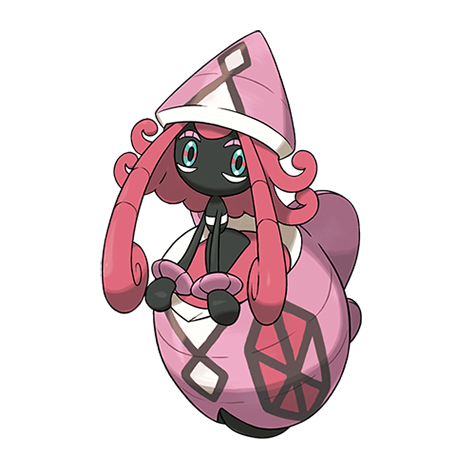
Tapu Lele is listed at 3' 11" (1.2 m) and shown in an in-chart visual comparison.

How is visual size determined?
Pokédex height is treated as the official listed measurement, but the chart uses pose-aware visual scaling so each sprite looks reasonable in a direct comparison.
For long or coiled Pokémon, the listed height may represent total body length rather than upright height. For Pokémon with floppy ears, leaves, feathers, antennae, wings, or other flexible features, the chart usually measures to the top of the solid, substantial part of the head or body instead of the tallest decorative feature.
The goal is not to replace the official height, but to make the artwork compare naturally at the size it appears to occupy.