Jumpluff is a Grass/Flying-type Pokémon introduced in Generation II and a final stage of its evolution line, with a base stat total of 460.
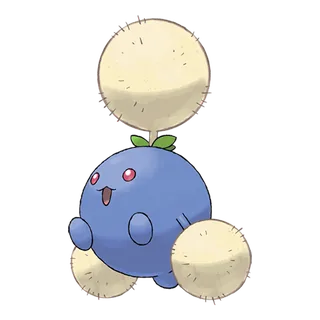
Jumpluff


Abilities
Boosts the Pokémon’s Speed in sunshine.
Prevents status problems in sunny weather.
Passes through the foe’s barrier and strikes.
Hidden AbilityBase Stats
Jumpluff's Weaknesses and Resistances





Evolution Chain
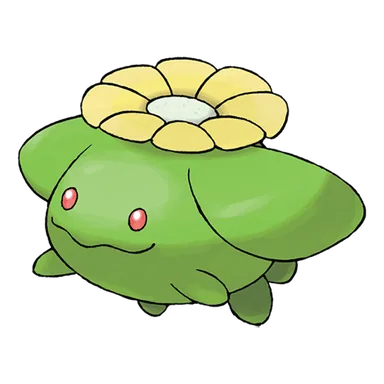
Hoppip evolves into Skiploom at level 18, and Skiploom evolves into Jumpluff at level 27.
 Hoppip
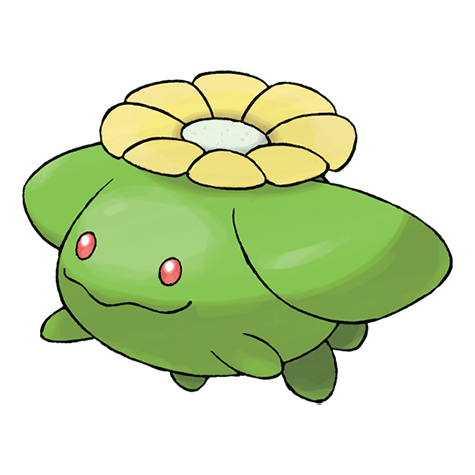 Skiploom
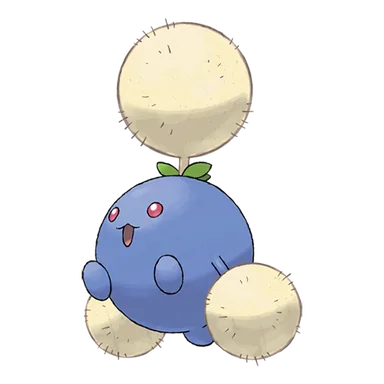 Jumpluff
 Playthrough, Competitive, and Nuzlocke Usage
Using Jumpluff in a Playthrough
The Hoppip line is an unusual early Grass/Flying family whose main value comes from speed, status, and support rather than direct damage. Hoppip evolves into Skiploom at level 18 and Jumpluff at level 27, so the line reaches its final stage relatively early, but even Jumpluff has only modest offensive stats and usually performs best by enabling the rest of the team. Its base 110 Speed lets it use moves such as Sleep Powder, Stun Spore, Leech Seed, Encore, Synthesis, and later U-turn or Acrobatics before many opponents can act, while Grass/Flying typing gives it a Ground immunity and strong resistances to Grass and Fighting. The tradeoff is a dangerous defensive profile that includes weaknesses to Fire, Flying, Poison, and Rock plus a quadruple Ice weakness, so Jumpluff should not be mistaken for a conventional wall despite its useful resistances. In ordinary story play, the line is most rewarding for players willing to exploit status and tempo rather than simply choosing the strongest available attack each turn.
Jumpluff in Competitive Pokémon
Jumpluff has had a surprisingly durable competitive identity as a fast support Pokemon despite very low offensive stats. In Generation II it was already considered one of the better support options in UU because base 110 Speed combined with Encore, Sleep Powder, Stun Spore, Leech Seed, Synthesis, and Reflect let it interrupt setup and create favorable positions for teammates. Later generations preserved that identity and added abilities such as Chlorophyll, Leaf Guard, and Infiltrator along with tools like U-turn, Memento, and Acrobatics, allowing Jumpluff to function as a disruptive pivot, sun support Pokemon, or fast utility lead in lower tiers. Its greatest strengths are speed and move utility rather than damage, while mediocre bulk, poor offenses, a Stealth Rock weakness, and a quadruple Ice weakness make it easy to punish when its support move is predicted. Jumpluff therefore remains a specialist whose competitive value comes from denying the opponent turns rather than overpowering them.
Jumpluff in Nuzlockes
The Hoppip line can be valuable in a Nuzlocke because very high Speed and access to sleep, paralysis, Leech Seed, and Encore can neutralize dangerous opponents without relying on raw damage. Jumpluff's Ground immunity and strong resistances to Grass and Fighting also create useful switching opportunities, and its relatively early level-27 evolution means the player does not have to carry weak early stages for most of the run. The risk is that its defensive weaknesses are severe: Ice attacks are especially dangerous because of the quadruple weakness, while Rock, Fire, Flying, and Poison coverage can also produce sudden losses. Sleep Powder and other status moves are powerful safety tools but imperfect accuracy means they should never be treated as guaranteed emergency buttons in a permadeath format. Jumpluff is therefore safest as a fast controller brought into favorable matchups rather than as a Pokemon expected to trade neutral hits.
Learnsets
58 moves · Scarlet Violet
Level Up






Machine

Pokédex Entries
11 entries
Once it catches the wind, it deftly controls its cotton-puff spores to float, even around the world.
Drifts on seasonal winds and spreads its cotton-like spores all over the world to make more offspring.
Even in the fiercest wind, it can control its fluff to make its way to any place in the world it wants.
JUMPLUFF rides warm southern winds to cross the sea and fly to foreign lands. The POKéMON descends to the ground when it encounters cold air while it is floating.
JUMPLUFF ride warm southern winds to cross the sea and fly to foreign lands. This POKéMON lands when it encounters cold air while it is floating.
It drifts on seasonal winds and spreads its cotton-like spores all over the world to make more offspring.
Once it catches the wind, it deftly controls its cotton-puff spores to float, even around the world.
Blown by seasonal winds, it circles the globe, scattering cotton spores as it goes.
Once it catches the wind, it deftly controls its cotton-puff spores-- it can even float around the world.
Even in the fiercest wind, it can control its fluff to make its way to any place in the world it wants.
Jumpluff rides warm southern winds to cross the sea and fly to foreign lands. The Pokémon descends to the ground when it encounters cold air while it is floating.
Additional Images
PokeAPI sprites
Open this section to load extra PokeAPI sprite images.
Jumpluff Biology and Behavior
Jumpluff uses the three large cotton masses on its body to ride seasonal winds and can control its movement with remarkable precision even in extremely strong weather. It may drift around the globe while scattering cotton spores that contribute to reproduction, although inhaling those spores can cause coughing and itching in people or Pokemon nearby. Cold air currents force Jumpluff to descend, so its long-distance journeys are closely tied to warm seasonal winds and open grassland environments. The species has an unusually finite life cycle: once a Jumpluff has exhausted the cotton spores it carries, its journey is described as ending along with its life.
Jumpluff Biological Data
- National Pokédex
- #189
- Species
- Cottonweed Pokémon
- Height
- 2' 7" (0.8 m)
- Weight
- 6.6 lbs (3.0 kg)
- Habitat
- Grassland
- Color
- Blue
- Body Style
- Upright
- Gender
- 50% female / 50% male
Misc
Catch Rate: 45
Base Experience: 207 Exp
Hatch Counter: 20
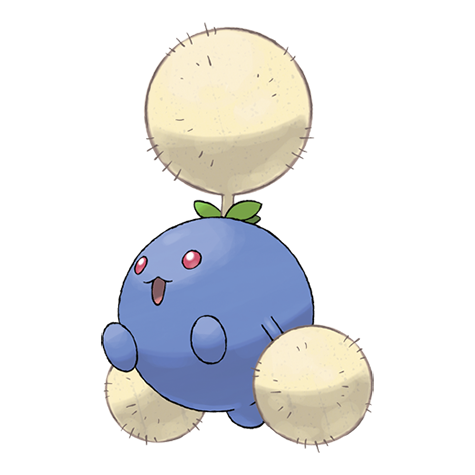
Jumpluff Size Comparison: BETA
Jumpluff is listed at 2' 7" (0.8 m); this chart uses a pose-adjusted visual scale.

How is visual size determined?
Pokédex height is treated as the official listed measurement, but the chart uses pose-aware visual scaling so each sprite looks reasonable in a direct comparison.
For long or coiled Pokémon, the listed height may represent total body length rather than upright height. For Pokémon with floppy ears, leaves, feathers, antennae, wings, or other flexible features, the chart usually measures to the top of the solid, substantial part of the head or body instead of the tallest decorative feature.
The goal is not to replace the official height, but to make the artwork compare naturally at the size it appears to occupy.
Jumpluff currently uses a pose-adjusted visual scale.