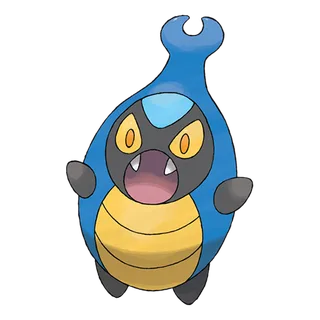
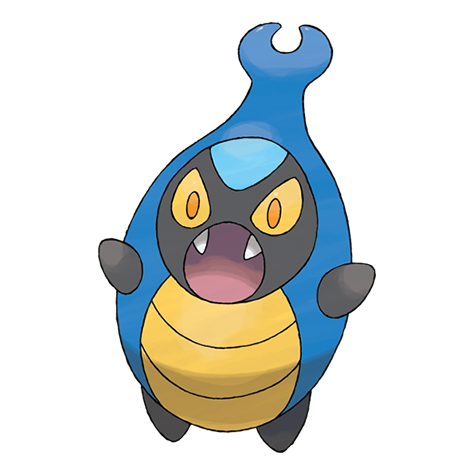
Karrablast is a Bug-type Pokémon introduced in Generation V and the first stage of its evolution line, with a base stat total of 315.
Karrablast

Abilities
Base Stats
Karrablast's Weaknesses and Resistances





Evolution Chain
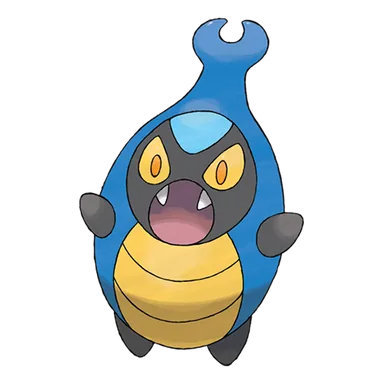
Karrablast evolves into Escavalier by trading with Shelmet.
 Karrablast
 Escavalier

Karrablast Playthrough, Competitive, and Nuzlocke Usage
Using Karrablast in a Playthrough
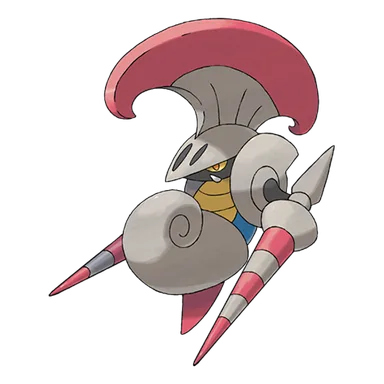
Karrablast evolves into Escavalier only when traded specifically for a Shelmet, which evolves into Accelgor at the same time. This makes Escavalier powerful but potentially inconvenient in a normal playthrough because the evolution depends on access to trading and the correct partner species. Once evolved, Escavalier is a Bug/Steel physical tank with base 135 Attack, 105 Defense, 105 Special Defense, and only base 20 Speed. Megahorn and Iron Head provide extremely strong physical STAB, while Drill Run, Knock Off in later generations, Razor Shell, Swords Dance, and other coverage or utility give it enough flexibility to break bulky targets. Shell Armor prevents critical hits, Swarm strengthens Bug attacks at low HP, and Overcoat protects from weather damage and, from Generation VI onward, powder and spore moves. Bug/Steel gives Escavalier a huge resistance list and only one conventional weakness, but Fire deals quadruple damage, so even mediocre Fire coverage must be treated as a major threat. Adamant maximizes damage, while Brave is especially natural on Trick Room teams because Escavalier is so slow that lowering Speed is usually beneficial rather than harmful.
Karrablast in Competitive Pokémon
Escavalier was one of the defining tanks of BW RU. Its Bug/Steel typing, 70/105/105 bulk, enormous base 135 Attack, and access to Megahorn made it extraordinarily difficult to switch into while also letting it absorb a wide range of resisted attacks. Smogon specifically describes Escavalier as one of the best Pokemon in BW RU, where Choice Band Megahorn, Iron Head, Pursuit, and coverage allowed it to trap Psychic- and Ghost-types and force so much respect that Fire coverage became more common partly because of Escavalier's presence. Its base 20 Speed also gives it a strong Trick Room niche in singles and doubles, turning a severe normal disadvantage into an advantage under reversed turn order. The quadruple Fire weakness and total dependence on taking hits before moving are the major limitations, and stronger generations have gradually pushed it lower, but its combination of huge Attack, excellent mixed bulk, and unusually efficient defensive typing has given it a genuine long-term lower-tier identity rather than a one-generation gimmick.
Karrablast in Nuzlockes
Escavalier is exceptionally safe against many physical and special opponents because Bug/Steel supplies numerous resistances and Shell Armor can eliminate critical hits entirely. Its 105 Defense and 105 Special Defense are excellent, but base 20 Speed means it almost always has to absorb an attack before retaliating, making matchup knowledge essential. Fire is the overwhelming danger because it deals quadruple damage, and even weak or unexpected Fire coverage can bypass Escavalier's otherwise impressive defenses. Overcoat becomes especially useful from Generation VI onward because it prevents powder and spore effects in addition to weather damage, giving the family another layer of reliability. The biggest practical obstacle is the evolution itself: if trading for a Shelmet is impossible under the run's rules, Karrablast cannot reach Escavalier and the line loses most of its value.
Learnsets
14 moves · Sword Shield
Level Up — Sword Shield




Pokédex Entries
5 entries
These mysterious Pokémon evolve when they receive electrical stimulation while they are in the same place as Shelmet.
When they feel threatened, they spit an acidic liquid to drive attackers away. This Pokémon targets Shelmet.
For some reason they evolve when they receive electrical energy while they are attacking Shelmet.
Its strange physiology reacts to electrical energy in interesting ways. The presence of a Shelmet will cause this Pokémon to evolve.
It spits a liquid from its mouth to melt through Shelmet’s shell. Karrablast doesn’t eat the shell— it eats only the contents.
Where To Find Karrablast
7 locations
Route 14 · KalosRough Terrain, Walking · version details vary
Road 14
Route 19 · KalosPurple Flowers, Rough Terrain, Yellow Flowers · version details vary
Road 19
Icirrus City · UnovaWalking · version details vary
Icirrus City
Moor of Icirrus · UnovaWalking · version details vary
Moor of Icirrus
Route 11 · UnovaDark Grass, Walking · version details vary
Road 11
Route 6 · UnovaDark Grass, Walking · version details vary
Road 6
Route 8 · UnovaWalking · version details vary
Road 8
Additional Images
PokeAPI sprites
Open this section to load extra PokeAPI sprite images.
Karrablast Biology and Behavior
Karrablast lives in forests and fields and often hides in trees or tall grass when threatened. When danger becomes unavoidable, it sprays an acidic liquid from its mouth. Shelmet is both its preferred prey and its evolutionary counterpart: Karrablast can melt through Shelmet's shell and eat the creature inside, while the unusual exchange of energy that occurs when the two species are traded causes both to evolve.
Karrablast Biological Data
- National Pokédex
- #588
- Species
- Clamping Pokémon
- Height
- 1' 8" (0.5 m)
- Weight
- 13.0 lbs (5.9 kg)
- Habitat
- Currently Unknown
- Color
- Blue
- Body Style
- Humanoid
- Gender
- 50% female / 50% male
Misc
Catch Rate: 200
Base Experience: 63 Exp
Hatch Counter: 15
Karrablast Size Comparison: BETA
Karrablast is listed at 1' 8" (0.5 m) and shown in an in-chart visual comparison.

How is visual size determined?
Pokédex height is treated as the official listed measurement, but the chart uses pose-aware visual scaling so each sprite looks reasonable in a direct comparison.
For long or coiled Pokémon, the listed height may represent total body length rather than upright height. For Pokémon with floppy ears, leaves, feathers, antennae, wings, or other flexible features, the chart usually measures to the top of the solid, substantial part of the head or body instead of the tallest decorative feature.
The goal is not to replace the official height, but to make the artwork compare naturally at the size it appears to occupy.