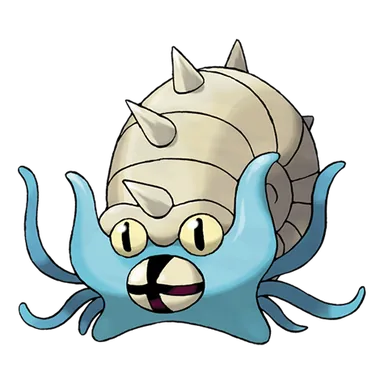
Omanyte is a Rock/Water-type Pokémon introduced in Generation I and the first stage of its evolution line, with a base stat total of 355.
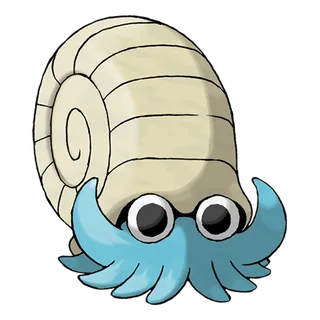
Omanyte


Abilities
Raises SPEED in rain.
Blocks critical hits.
Physical attacks lower Defense and raise Speed.
Hidden AbilityBase Stats
Omanyte's Weaknesses and Resistances






Evolution Chain
Omanyte evolves into Omastar at level 40.
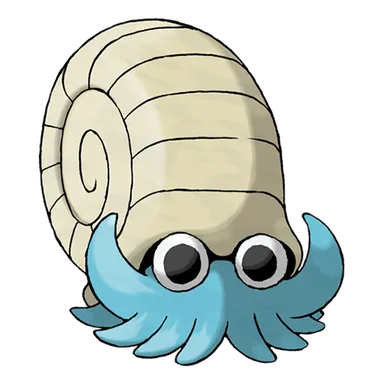 Omanyte
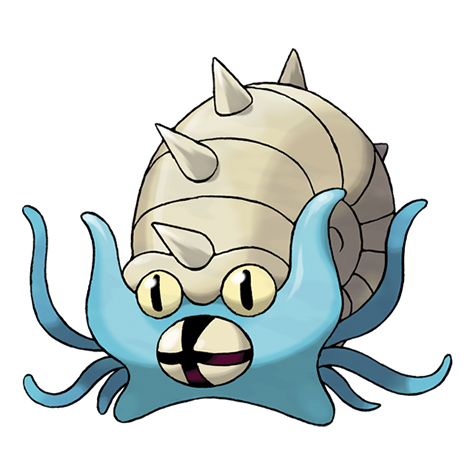 Omastar
Omanyte Playthrough, Competitive, and Nuzlocke Usage
Using Omanyte in a Playthrough
The Omanyte line develops into Omastar, a slow Water/Rock Pokemon with enormous physical Defense and strong Special Attack. Water STAB uses Omastar's better attacking stat even in pre-split generations, while Ice coverage and Rock attacks provide useful additional matchups; from Generation V onward, Shell Smash can turn Omastar from a slow tank into a dangerous sweeper. Its quadruple Grass weakness and additional Electric, Fighting, and Ground weaknesses make some matchups extremely unsafe. Fossil revival timing is the main playthrough drawback, especially in Kanto where Omanyte arrives late and requires substantial leveling before evolving at level 40.
Omanyte in Competitive Pokémon
Omastar has two major competitive identities: hazard support and Shell Smash offense. High Defense and useful resistances can create opportunities to establish Stealth Rock or Spikes in formats where available, while Shell Smash sharply raises its offenses and Speed and lets its high Special Attack threaten sweeps. Swift Swim provides a separate rain-based route. The quadruple Grass weakness and low unboosted Speed remain easy points of exploitation.
Omanyte in Nuzlockes
Omastar can be useful in late Kanto Nuzlockes because its physical bulk and strong special Water offense give it favorable matchups against selected remaining bosses, but the fossil is revived late and at a low level, creating a significant training cost. Its quadruple Grass weakness and poor Speed mean the wrong matchup can still be fatal despite excellent Defense. Later generations improve its sweeping potential with Shell Smash but also introduce setup-related risk. Omastar is therefore powerful when deliberately prepared but not an effortless late-game addition.
Learnsets
14 moves · Brilliant Diamond Shining Pearl
Level Up — Brilliant Diamond Shining Pearl



Pokédex Entries
19 entries
Although long extinct, in rare cases, it can be genetically resurrected from fossils.
An ancient POKéMON that was recovered from a fossil. It swims by cleverly twisting its 10 tentacles about.
Revived from an ancient fossil, this POKéMON uses air stored in its shell to sink and rise in water.
This POKéMON from ancient times is said to have navigated the sea by adeptly twisting its 10 tentacles.
In prehistoric times, it swam on the sea floor, eating plankton. Its fossils are sometimes found.
OMANYTE is one of the ancient and long- since-extinct POKéMON that have been regenerated from fossils by people. If attacked by an enemy, it withdraws itself inside its hard shell.
One of the ancient and long-since-extinct POKéMON that have been regenerated from fossils by humans. If attacked, it withdraws into its hard shell.
A prehistoric POKéMON that lived in the primordial sea, it swims by twisting its 10 tentacles about.
Although long extinct, in rare cases, it can be genetically regenerated from fossils.
A Pokémon that was resurrected from a fossil using modern science. It swam in ancient seas.
Revived from an ancient fossil, this Pokémon uses air stored in its shell to sink and rise in water.
This Pokémon from ancient times is said to have navigated the sea by adeptly twisting its 10 tentacles.
A prehistoric Pokémon that lived in the primordial sea, it swims by twisting its 10 tentacles about.
Omanyte is one of the ancient and long-since-extinct Pokémon that have been regenerated from fossils by people. If attacked by an enemy, it withdraws itself inside its hard shell.
Omanyte lived in the seas of antiquity. Its fossils have been found bearing bite marks from Archeops, so apparently Archeops preyed on it.
It was restored from an ancient fossil. Those Helix Fossils are excavated from areas that were once oceans long, long ago.
An ancient Pokémon that was recovered from a fossil. It swam by cleverly twisting its 10 tentacles about.
Because some Omanyte manage to escape after being restored or are released into the wild by people, this species is becoming a problem.
This Pokémon is a member of an ancient, extinct species. Omanyte paddles through water with its 10 tentacles, looking like it’s just drifting along.
Where To Find Omanyte
4 locations
Route 8 · AlolaGift · version details vary
Alola Route 8 Fossil Restoration Center
Cinnabar Island · KantoGift · version details vary
Cinnabar Lab (Cinnabar Island)
Pewter City · KantoGift · version details vary
Pewter Museum of Science
Oreburgh City · SinnohGift · version details vary
Oreburgh Mining Museum
Additional Images
PokeAPI sprites
Open this section to load extra PokeAPI sprite images.
Omanyte Biology and Behavior
Omanyte is an extinct marine Pokemon restored from fossils, although isolated living populations have also been discovered. It regulates buoyancy by controlling air within its shell and steers through the water with tentacles. Omanyte feeds primarily on plankton and can retract into its shell for protection.
Omanyte Biological Data
- National Pokédex
- #138
- Species
- Spiral Pokémon
- Height
- 1' 4" (0.4 m)
- Weight
- 16.5 lbs (7.5 kg)
- Habitat
- Sea
- Color
- Blue
- Body Style
- Tentacles
- Gender
- 12.5% female / 87.5% male
Misc
Catch Rate: 45
Base Experience: 71 Exp
Hatch Counter: 30
Omanyte Size Comparison: BETA
Omanyte is listed at 1' 4" (0.4 m) and shown in an in-chart visual comparison.
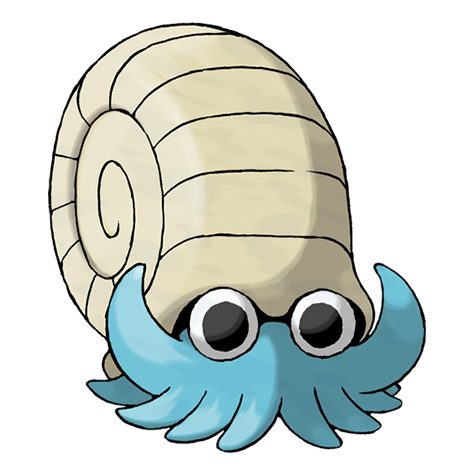

How is visual size determined?
Pokédex height is treated as the official listed measurement, but the chart uses pose-aware visual scaling so each sprite looks reasonable in a direct comparison.
For long or coiled Pokémon, the listed height may represent total body length rather than upright height. For Pokémon with floppy ears, leaves, feathers, antennae, wings, or other flexible features, the chart usually measures to the top of the solid, substantial part of the head or body instead of the tallest decorative feature.
The goal is not to replace the official height, but to make the artwork compare naturally at the size it appears to occupy.