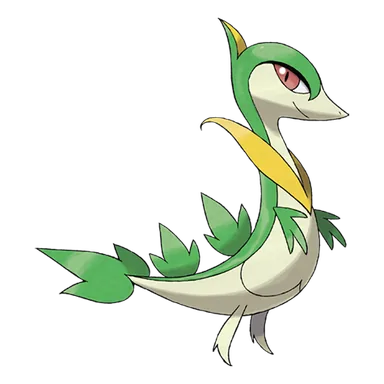
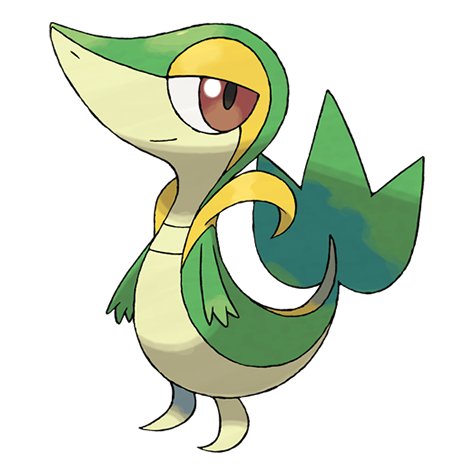
Snivy is a Grass-type Pokémon introduced in Generation V and the first stage of its evolution line, with a base stat total of 308.
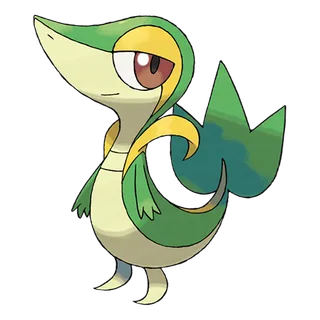
Snivy

Abilities
Base Stats
Snivy's Weaknesses and Resistances





Evolution Chain
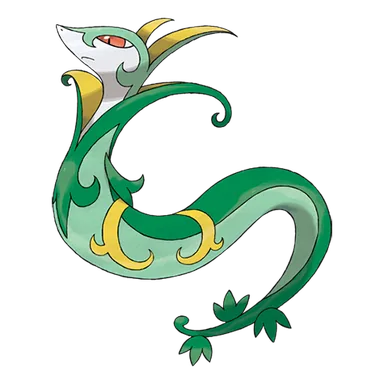
Snivy evolves into Servine at level 17, and Servine evolves into Serperior at level 36.
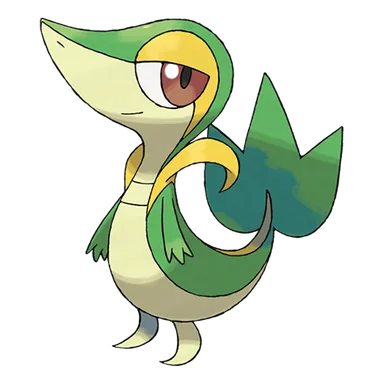 Snivy
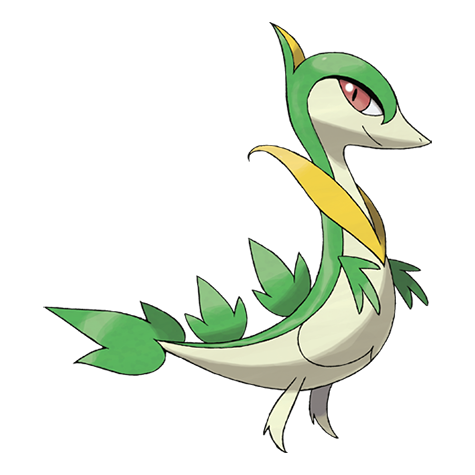 Servine
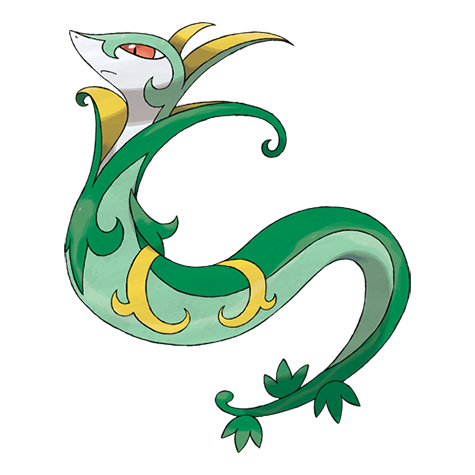 Serperior
Snivy Playthrough, Competitive, and Nuzlocke Usage
Using Snivy in a Playthrough
Snivy evolves into Servine at level 17 and Serperior at level 36, producing a fast and defensively respectable pure Grass starter whose base 113 Speed is its defining natural stat. In the original Black, White, Black 2, and White 2 games the line normally uses Overgrow, so Serperior's base 75 Attack and Special Attack are modest and it relies on Speed, 95/95 defenses, Coil, Leech Seed, Giga Drain, Leaf Blade, Glare in later movepools, and utility rather than overwhelming raw damage. The Hidden Ability Contrary completely changes the line in games where it is legitimately available: Leaf Storm normally lowers Special Attack by two stages, but Contrary reverses that into a two-stage boost, allowing Serperior to become stronger every time it uses its strongest Grass attack. Contrary Snivy was not officially distributed until Generation VI in 2015, so this famous strategy was not available to an ordinary Unova starter in the original Generation V games. Grass typing provides useful Water, Ground, Grass, and Electric resistances but leaves weaknesses to Fire, Ice, Flying, Bug, and Poison, and Serperior's shallow coverage can make resistant opponents frustrating even after setup. Timid is ideal for most Contrary sets because preserving base 113 Speed is central to the strategy, while Jolly or Careful can make sense for physical Coil or defensive playthrough sets.
Snivy in Competitive Pokémon
Serperior's competitive history is divided almost perfectly by the release of Contrary. In BW, where its Hidden Ability was not legally distributed, Serperior was an NU Pokemon that relied on base 113 Speed, surprisingly good 75/95/95 bulk, Calm Mind or Coil, Substitute, Leech Seed, Taunt, and ordinary Grass STAB; it could clean weakened teams but its base 75 offenses and limited coverage kept its ceiling modest. The 2015 release of Contrary transformed the species completely because every Leaf Storm now raises Special Attack by two stages instead of lowering it, turning the attack itself into both damage and setup. By SM, Smogon classified Serperior in OU and described it as a major snowballing threat supported by Glare, Substitute, Leech Seed, Taunt, Defog, and Hidden Power coverage, with even nominal checks vulnerable to paralysis or repeated Special Defense pressure. Modern SV Smogon places it in RUBL while still supporting OU usage, and Contrary Leaf Storm remains the entire foundation of its offensive identity. The limitation has also stayed consistent: outside Grass STAB its coverage is relatively poor, so Steel-, Fire-, Dragon-, and other Grass-resistant Pokemon can contain it if they avoid paralysis and are not worn down enough for boosted Leaf Storm to break through.
Snivy in Nuzlockes
The Snivy line is safer than its mediocre offensive stats initially suggest because Serperior's base 113 Speed and 95 in both defenses let it avoid or survive many attacks that would threaten slower starters. In the original Unova games, Coil is a particularly Nuzlocke-friendly setup option because it raises Attack, Defense, and accuracy together, allowing physical Leaf Blade sets to become both stronger and harder to kill rather than sacrificing defenses for offense. Later Contrary sets can end fights rapidly with repeated Leaf Storm boosts, but Leaf Storm is only 90 percent accurate and therefore introduces a failure chance that matters under permadeath rules; a more reliable Grass move can be safer when no boost is needed. Glare is valuable in later games because it provides accurate paralysis even against many targets that resist Grass, but Serperior still has five common weaknesses and should not be treated as a universal tank. Timid Contrary Serperior is excellent for controlling tempo, while a defensive or Coil-oriented Serperior can be safer in generations where the Hidden Ability is unavailable.
Learnsets
53 moves · Scarlet Violet
Level Up




Machine


Egg


Pokédex Entries
3 entries
It is very intelligent and calm. Being exposed to lots of sunlight makes its movements swifter.
They photosynthesize by bathing their tails in sunlight. When they are not feeling well, their tails droop.
Being exposed to sunlight makes its movements swifter. It uses vines more adeptly than its hands.
Where To Find Snivy
3 locations
Route 101 · HoennGift · version details vary
Road 101
Aspertia City · UnovaGift · version details vary
Aspertia City
Nuvema Town · UnovaGift · version details vary
Nuvema Town
Additional Images
PokeAPI sprites
Open this section to load extra PokeAPI sprite images.
Snivy Biology and Behavior
Snivy performs photosynthesis through the large leaf at the end of its tail, gaining energy that improves its speed and physical performance. The tail visibly droops when Snivy is low on energy, making it a clear external indicator of the Pokemon's condition. Because its arms are short, Snivy compensates by manipulating vines with exceptional dexterity. It is intelligent, calm, and generally solitary, preferring to avoid groups when possible.
Snivy Biological Data
- National Pokédex
- #495
- Species
- Grass Snake Pokémon
- Height
- 2' 0" (0.6 m)
- Weight
- 17.9 lbs (8.1 kg)
- Habitat
- Currently Unknown
- Color
- Green
- Body Style
- Upright
- Gender
- 12.5% female / 87.5% male
Misc
Catch Rate: 45
Base Experience: 62 Exp
Hatch Counter: 20
Snivy Size Comparison: BETA
Snivy is listed at 2' 0" (0.6 m) and shown in an in-chart visual comparison.

How is visual size determined?
Pokédex height is treated as the official listed measurement, but the chart uses pose-aware visual scaling so each sprite looks reasonable in a direct comparison.
For long or coiled Pokémon, the listed height may represent total body length rather than upright height. For Pokémon with floppy ears, leaves, feathers, antennae, wings, or other flexible features, the chart usually measures to the top of the solid, substantial part of the head or body instead of the tallest decorative feature.
The goal is not to replace the official height, but to make the artwork compare naturally at the size it appears to occupy.