Snover is a Grass/Ice-type Pokémon introduced in Generation IV and the first stage of its evolution line, with a base stat total of 334.
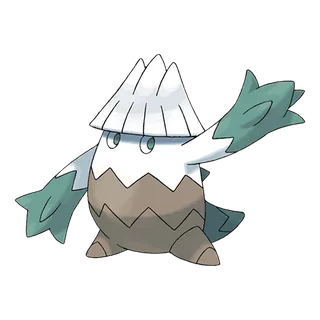
Snover


Abilities
The Pokémon summons a hailstorm in battle.
Avoids sound-based moves.
Hidden AbilityBase Stats
Snover's Weaknesses and Resistances








Evolution Chain
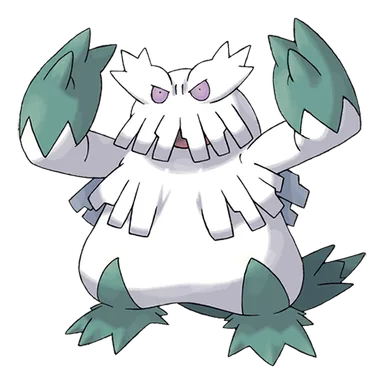
Snover evolves into Abomasnow at level 40.
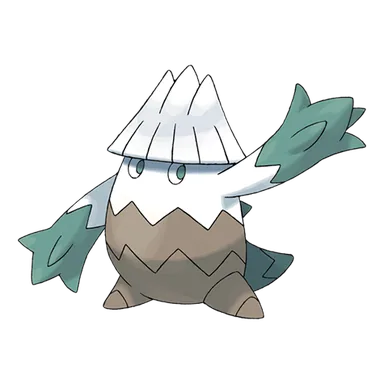 Snover
 Abomasnow
Snover Playthrough, Competitive, and Nuzlocke Usage
Using Snover in a Playthrough
Snover evolves into Abomasnow at level 40, producing a Grass/Ice Pokemon with balanced base 92 Attack and Special Attack, good 90 HP, and useful STAB against Water-, Ground-, Grass-, Flying-, and Dragon-type opponents. Snow Warning is the family's defining ability: in Generations IV through VIII it automatically summons hail, making Blizzard perfectly accurate and dealing residual damage to most non-Ice Pokemon, while from Generation IX onward it summons snow instead, which no longer causes chip damage but raises the Defense of Ice-types and enables Aurora Veil. Abomasnow can attack physically with Wood Hammer, Ice Punch, Ice Shard, and Earthquake, specially with Blizzard, Giga Drain, Energy Ball, and Earth Power, or mix both sides effectively because its offenses are identical. The defensive typing is the major drawback, creating seven weaknesses including a quadruple Fire weakness, and base 60 Speed means Abomasnow frequently takes a hit before acting; Soundproof as a Hidden Ability can provide a useful sound immunity but gives up automatic weather. Mega Abomasnow greatly increases both offenses and defenses to 132/105/132/105 while dropping Speed to 30, making Brave or Quiet especially sensible on Trick Room teams and Adamant, Modest, or mixed natures useful elsewhere depending on which attacks the player wants to emphasize.
Snover in Competitive Pokémon
Abomasnow was classified in DPP UUBL and maintained a legitimate OU niche because Snow Warning made it the only practical permanent hail setter, allowing teams to exploit perfect-accuracy Blizzard, residual weather damage, and anti-weather pressure while Abomasnow itself threatened bulky Water-, Ground-, and Grass-types with powerful mixed STAB. Wood Hammer, Blizzard, Ice Shard, Earthquake, Focus Punch, Leech Seed, and Substitute gave it enough variety to wallbreak or support dedicated hail structures, but its seven weaknesses, quadruple Fire weakness, low Speed, and Stealth Rock vulnerability prevented it from becoming a universally splashable OU Pokemon. In later generations its usage shifted downward, but weather control continued to distinguish it; modern SV Smogon places base Abomasnow in ZU, where Snow Warning plus Aurora Veil, Blizzard, Giga Drain, and offensive coverage make it a viable snow setter and offensive tank. Mega Abomasnow developed a separate niche as a brutally strong mixed or physical wallbreaker, with base 132 in both attacking stats and only base 30 Speed making it especially effective under Trick Room; SM analyses placed the Mega in NU and emphasized Blizzard, Wood Hammer or Giga Drain, Ice Shard, and broad coverage. Its competitive history is therefore unusually weather-dependent: Abomasnow has rarely been dominant on raw stats, but automatic hail or snow has repeatedly made it strategically relevant in formats where weather support matters.
Snover in Nuzlockes
Abomasnow has excellent offensive matchups but is one of the more dangerous bulky-looking Pokemon to use carelessly in a Nuzlocke because its Grass/Ice typing carries seven weaknesses and a quadruple weakness to Fire. Snow Warning can be very useful, especially from Generation IX onward when snow boosts the physical Defense of Ice-types without slowly damaging non-Ice teammates, while Aurora Veil can dramatically reduce teamwide damage if it is available and snow is active. In older generations, permanent or extended hail can instead chip much of the player's own team, so weather management needs to be considered before simply treating Snow Warning as a free benefit. Ice Shard is excellent under permadeath rules because priority can remove weakened threats before they attack, while Wood Hammer's recoil, inaccurate Blizzard outside weather, and setup such as Swords Dance create additional risk that should be avoided when safer damage already secures the knockout. Mega Abomasnow is far bulkier and stronger but drops to base 30 Speed, making it likely to take a hit first; a Brave or Quiet nature can be beneficial when deliberately using Trick Room, but in ordinary runs the line is safest when brought into known Water, Ground, Grass, or Electric attacks rather than attempting to absorb arbitrary neutral coverage.
Learnsets
53 moves · Scarlet Violet
Level Up




Machine


Egg
Pokédex Entries
7 entries
It lives on snowy mountains. Having had little contact with humans, it is boldly inquisitive.
In the spring, it grows berries with the texture of frozen treats around its belly.
Seemingly curious about people, they gather around footsteps they find on snowy mountains.
During cold seasons, it migrates to the mountain’s lower reaches. It returns to the snow-covered summit in the spring.
It lives on snowy mountains. It sinks its legs into the snow to absorb water and keep its own temperature down.
The berries that grow around its belly are like ice pops. Galarian Darumaka absolutely love these berries.
One is likely to encounter this Pokémon while out in the snow. There are stories of Snover appearing in human settlements but doing no harm—rather, they bond with the children.
Where To Find Snover
7 locations
Friend Safari · KalosWalking · version details vary
Friend Safari (Ice)
Route 17 · KalosRough Terrain · version details vary
Road 17
Acuity Lakefront · SinnohWalking · version details vary
Acuity Lakefront
Lake Acuity · SinnohWalking · version details vary
Lake Acuity
Mt. Coronet · SinnohWalking · version details vary
Mount Coronet (exterior blizzard)
Mount Coronet (exterior snowfall)
Route 216 · SinnohWalking · version details vary
Road 216
Route 217 · SinnohWalking · version details vary
Road 217
Held Items
1 items
- Diamond: 5% chance
- Pearl: 5% chance
- Platinum: 5% chance
- Heartgold: 5% chance
- Soulsilver: 5% chance
- Black: 5% chance
- White: 5% chance
- Black 2: 5% chance
- White 2: 5% chance
- X: 5% chance
- Y: 5% chance
- Omega Ruby: 5% chance
- Alpha Sapphire: 5% chance
- Sun: 5% chance
- Moon: 5% chance
- Ultra Sun: 5% chance
- Ultra Moon: 5% chance
Additional Images
PokeAPI sprites
Open this section to load extra PokeAPI sprite images.
Snover Biology and Behavior
Snover is a snow-covered, tree-like Pokemon that grows edible white Berries around its midsection as spring approaches. In Galar, packs of Galarian Darumaka actively hunt for these frozen-treat-like Berries, making Snover an important food source for another cold-adapted species and giving Abomasnow a reason to defend it. Snover spends warmer seasons on snowy mountain peaks but migrates to lower elevations as the weather becomes colder, and it can sink its feet into snow to absorb water and regulate its body temperature. It is unusually curious about humans for a mountain Pokemon, investigating footprints in fresh snow and sometimes visiting settlements where stories describe it peacefully befriending children. Sleeping Snover may be raided by other Pokemon that eat the Berries growing from its body without waking it.
Snover Biological Data
- National Pokédex
- #459
- Species
- Frost Tree Pokémon
- Height
- 3' 3" (1.0 m)
- Weight
- 111.3 lbs (50.5 kg)
- Habitat
- Currently Unknown
- Color
- White
- Body Style
- Upright
- Gender
- 50% female / 50% male
Misc
Catch Rate: 120
Base Experience: 67 Exp
Hatch Counter: 20
Snover Size Comparison: BETA
Snover is listed at 3' 3" (1.0 m) and shown in an in-chart visual comparison.
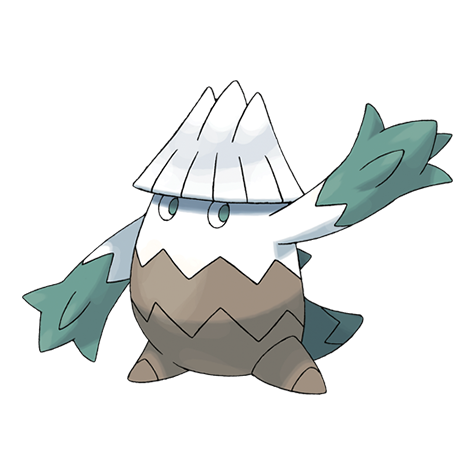

How is visual size determined?
Pokédex height is treated as the official listed measurement, but the chart uses pose-aware visual scaling so each sprite looks reasonable in a direct comparison.
For long or coiled Pokémon, the listed height may represent total body length rather than upright height. For Pokémon with floppy ears, leaves, feathers, antennae, wings, or other flexible features, the chart usually measures to the top of the solid, substantial part of the head or body instead of the tallest decorative feature.
The goal is not to replace the official height, but to make the artwork compare naturally at the size it appears to occupy.