Tangrowth is a Grass-type Pokémon introduced in Generation IV and a final stage of its evolution line, with a base stat total of 535.
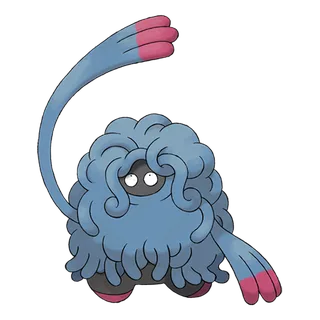
Tangrowth

Abilities
Boosts the Pokémon’s Speed in sunshine.
Prevents status problems in sunny weather.
Restores a little HP when withdrawn from battle.
Hidden AbilityBase Stats
Tangrowth's Weaknesses and Resistances





Evolution Chain
Tangela evolves into Tangrowth by leveling up knowing Ancient Power.
 Tangela
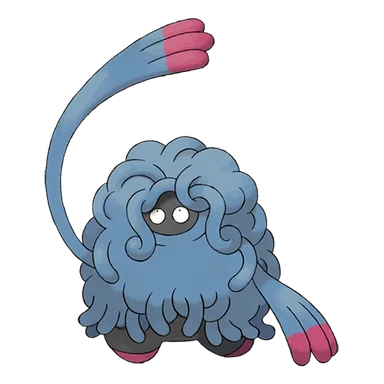 Tangrowth
 Playthrough, Competitive, and Nuzlocke Usage
Using Tangrowth in a Playthrough
Tangela is a physically durable pure Grass-type with strong Special Attack but extremely poor Special Defense, making it effective against known physical Water-, Ground-, and Rock-type opponents while vulnerable to many special attackers. Sleep Powder and other status options can give it utility beyond direct Grass damage, but before Generation IV the absence of an evolution and inconsistent movepools often left Tangela competing poorly with more versatile Grass-types. Tangrowth substantially improves the line with 100 HP, 125 Defense, 100 Attack, and 110 Special Attack, allowing physical, special, or mixed approaches while maintaining exceptional physical durability. It evolves when Tangela levels up while knowing Ancient Power, so its availability depends on whether that evolution exists and is accessible in the game. Tangrowth's low Speed and Special Defense remain important weaknesses despite its excellent overall physical profile.
Tangrowth in Competitive Pokémon
Tangrowth has an established competitive identity as a physically bulky pivot, with Regenerator allowing it to recover one third of its maximum HP whenever it switches out. Its enormous Defense, good HP, Knock Off, Sleep Powder, Grass STAB, and broad offensive stats allow it to check physical attackers without becoming completely passive, while Rocky Helmet sets emphasize physical punishment and Assault Vest sets can compensate for its weak Special Defense. Tangela itself has also found lower-tier defensive niches through the combination of Eviolite and Regenerator, producing exceptional physical bulk while retaining utility such as Sleep Powder and Knock Off. Both remain vulnerable to powerful special attacks and the many weaknesses inherent to pure Grass typing, but Regenerator gives the family unusually strong long-term pivoting ability.
Tangrowth in Nuzlockes
Tangela is highly game-dependent in Nuzlockes. In FireRed and LeafGreen it arrives late, has weak Special Defense, faces strong competition from other Grass-types already available, and community analysis generally considers it a niche answer to favorable Water-, Ground-, and Rock-type matchups rather than a core team member. Games that allow Tangrowth dramatically improve the family's value because the evolution adds HP, offensive power, and even greater physical durability without changing the straightforward pure Grass typing. Status moves can create safe turns and Tangrowth can absorb many physical attacks extremely well, but its Special Defense remains mediocre enough that unexpected Ice, Fire, Flying, Poison, or other special coverage can be dangerous. Regenerator makes the line even safer where that ability is legitimately obtainable, but should not be assumed for every individual.
Learnsets
9 moves · Legends Arceus
Level Up — Legends Arceus





Pokédex Entries
8 entries
It ensnares prey by extending arms made of vines. Losing arms to predators does not trouble it.
Its arms are made of plants that bind themselves to things. They grow back right away if cut.
When it remains still, it appears to be a large shrub. Unsuspecting prey that wander near get ensnared by its vines.
Its vines grow so profusely that, in the warm season, you can’t even see its eyes.
Even if one of its arms is eaten, it’s fine. The Pokémon regenerates quickly and will go right back to normal.
Tangrowth has two arms that it can extend as it pleases. Recent research has shown that these arms are, in fact, bundles of vines.
Vine growth is accelerated for Tangrowth living in warm climates. If the vines grow long, Tangrowth shortens them by tearing parts of them off.
Draped with long vines, it resembles a shrub in appearance. It swings bundles of vines as though they were arms, wrapping them around prey to ensnare them.
Where To Find Tangrowth
3 locations
Giant Chasm · UnovaGrass Spots · version details vary
Giant Chasm (outside)
Humilau City · UnovaNpc Trade · version details vary
Humilau City
Route 13 · UnovaGrass Spots · version details vary
Road 13
Additional Images
PokeAPI sprites
Open this section to load extra PokeAPI sprite images.
Tangrowth Biology and Behavior
Tangrowth possesses a dense mass of vines along with long boneless arms composed of bundled plant growth, and losing one of these arms causes little concern because it quickly regenerates. It hunts by remaining motionless and disguising itself as an ordinary shrub before suddenly extending its vines to capture approaching prey, although it is also documented eating fruit. Warm weather greatly accelerates its vine growth, sometimes covering even its eyes, and Tangrowth manages excessive growth by tearing off unneeded sections itself. Its vines are also eaten by natural predators.
Tangrowth Biological Data
- National Pokédex
- #465
- Species
- Vine Pokémon
- Height
- 6' 7" (2.0 m)
- Weight
- 283.5 lbs (128.6 kg)
- Habitat
- Currently Unknown
- Color
- Blue
- Body Style
- Humanoid
- Gender
- 50% female / 50% male
Misc
Catch Rate: 30
Base Experience: 187 Exp
Hatch Counter: 20
Tangrowth Size Comparison: BETA
Tangrowth is listed at 6' 7" (2.0 m); this chart uses a pose-adjusted visual scale.


How is visual size determined?
Pokédex height is treated as the official listed measurement, but the chart uses pose-aware visual scaling so each sprite looks reasonable in a direct comparison.
For long or coiled Pokémon, the listed height may represent total body length rather than upright height. For Pokémon with floppy ears, leaves, feathers, antennae, wings, or other flexible features, the chart usually measures to the top of the solid, substantial part of the head or body instead of the tallest decorative feature.
The goal is not to replace the official height, but to make the artwork compare naturally at the size it appears to occupy.
Tangrowth currently uses a pose-adjusted visual scale.