Tarountula is a Bug-type Pokémon introduced in Generation IX and the first stage of its evolution line, with a base stat total of 210.
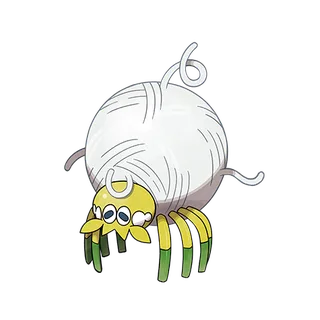
Tarountula

Abilities
Base Stats
Tarountula's Weaknesses and Resistances





Evolution Chain
Tarountula evolves into Spidops at level 15.
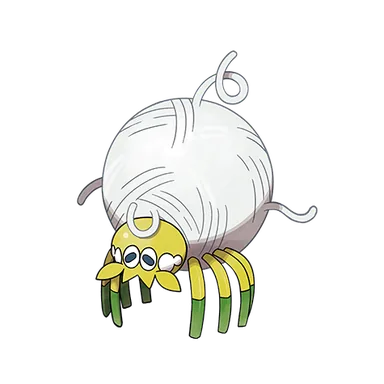 Tarountula
 Spidops
Tarountula Playthrough, Competitive, and Nuzlocke Usage
Using Tarountula in a Playthrough
Tarountula is available near the beginning of Scarlet and Violet and evolves into Spidops at level 15, so the family reaches its final stage earlier than almost any other new Paldean line. Spidops is a pure Bug type with respectable base 92 Defense and 86 Special Defense but only 60 HP, 79 Attack, and an extremely low base 35 Speed, which makes it much better at utility than at sweeping story battles. Its signature Silk Trap functions as a protective move that also lowers the Speed of an opponent that makes contact, and it can combine that with Sticky Web, Spikes, Toxic Spikes, U-turn, Memento, Circle Throw, or Taunt to shape battles rather than simply trade damage. In a normal playthrough, however, enemy trainers switch infrequently and most ordinary encounters reward direct offense, so setting multiple hazards is rarely as efficient as using a stronger attacker; First Impression and Leech Life help Spidops contribute damage without pretending its offensive stats are better than they are. Stakeout can punish opponents that switch into its attacks, but story AI does not switch consistently enough to make the Ability a dependable centerpiece, while Insomnia is situational protection from sleep. Defensive or Attack-boosting Natures such as Impish, Careful, or Adamant can each be justified depending on whether the player wants a dedicated support lead or simply the most damage possible from a low-powered early Bug type.
Tarountula in Competitive Pokémon
Spidops has one of the clearest examples in Generation IX of a good utility movepool failing to overcome poor base stats, and Smogon's current Scarlet/Violet Pokédex places it in ZU. Its theoretical selling point is exceptional hazard compression: Sticky Web, Spikes, and Toxic Spikes can all fit on the same species, with Taunt, Memento, U-turn, Circle Throw, Lunge, Pounce, and Knock Off offering additional ways to support an offensive team. Silk Trap adds a species-specific Protect variant that punishes contact by lowering Speed, but the move does not solve Spidops's central problem of base 35 Speed and only modest 60/92/86 bulk, which means it often struggles to act repeatedly against competent offensive teams. In practice, its most defensible role is a dedicated entry-hazard lead that tries to establish Sticky Web and perhaps another layer before leaving the field through U-turn or Memento. Stakeout sounds threatening on paper, but Spidops lacks the raw Attack and Speed to capitalize on forced switches as consistently as stronger Stakeout users, while Insomnia offers only narrow defensive utility. Smogon's draft analysis similarly treats it as a late, very low-cost selection whose value comes from Webs and utility rather than battle-to-battle power, so describing Spidops as anything more than a specialized support Pokémon would overstate its actual competitive standing.
Tarountula in Nuzlockes
Tarountula's early availability and level-15 evolution make the family easy to obtain and develop in a Nuzlocke, but Spidops's survival profile is mixed rather than simply good because of its respectable defensive stats. Base 60 HP and base 35 Speed mean it commonly takes a hit before moving, and weaknesses to Fire, Flying, and Rock include several attack types that appear frequently enough to punish careless use. Silk Trap is more valuable in permadeath play than in many ordinary story battles because it can scout a damaging move while lowering the Speed of a contact attacker, potentially turning an unsafe matchup into one a teammate can control. First Impression gives Spidops immediate priority damage on the first turn after entering, while U-turn can reduce exposure by getting it out after making progress; Leech Life supplies some recovery without requiring a passive turn. Entry hazards are less universally valuable in a Nuzlocke because most in-game opponents do not switch often, although Sticky Web can still matter in important battles with multiple Pokémon by reducing the Speed of later grounded opponents. Spidops is therefore usable as a tactical support Pokémon, but it should not be mistaken for a tank: slow turns, mediocre HP, and common weaknesses make repeated neutral hits dangerous, and its safest value comes from scouting, priority, pivoting, and controlled utility rather than prolonged face-to-face exchanges.
Learnsets
49 moves · Scarlet Violet
Level Up






Machine



Egg
Pokédex Entries
2 entries
The ball of threads wrapped around its body is elastic enough to deflect the scythes of Scyther, this Pokémon’s natural enemy.
The thread it secretes from its rear is as strong as wire. The secret behind the thread’s strength is the topic of ongoing research.
Additional Images
PokeAPI sprites
Open this section to load extra PokeAPI sprite images.
Tarountula Biology and Behavior
Tarountula is a small green arachnid Pokémon whose body is wrapped in a ball of white thread secreted from its rear, with the abdomen visible when it ejects or loosens that covering. Its silk is both elastic and extraordinarily strong, described as being as tough as wire and capable of deflecting attacks from its natural enemy, Scyther. The mechanism behind that silk's strength is still an active subject of research within the setting. Tarountula can hang upside down from trees by its thread, making its webbing both protective covering and climbing apparatus rather than a purely decorative cocoon.
Tarountula Biological Data
- National Pokédex
- #917
- Species
- String Ball Pokémon
- Height
- 1' 0" (0.3 m)
- Weight
- 8.8 lbs (4.0 kg)
- Habitat
- Currently Unknown
- Color
- White
- Body Style
- Armor
- Gender
- 50% female / 50% male
Misc
Catch Rate: 255
Base Experience: 42 Exp
Hatch Counter: 15
Tarountula Size Comparison: BETA
Tarountula is listed at 1' 0" (0.3 m) and shown in an in-chart visual comparison.
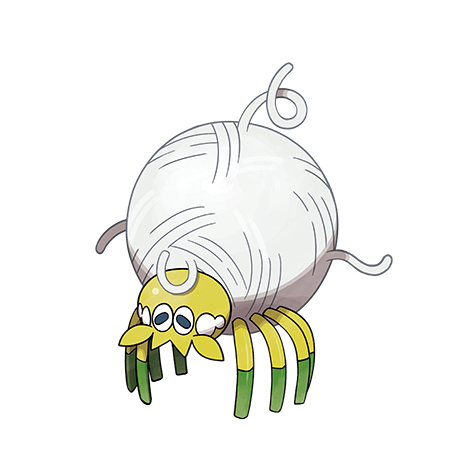

How is visual size determined?
Pokédex height is treated as the official listed measurement, but the chart uses pose-aware visual scaling so each sprite looks reasonable in a direct comparison.
For long or coiled Pokémon, the listed height may represent total body length rather than upright height. For Pokémon with floppy ears, leaves, feathers, antennae, wings, or other flexible features, the chart usually measures to the top of the solid, substantial part of the head or body instead of the tallest decorative feature.
The goal is not to replace the official height, but to make the artwork compare naturally at the size it appears to occupy.