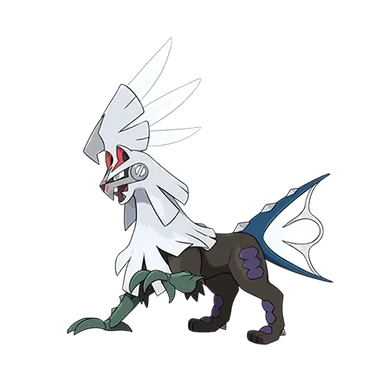
Type Null is a Normal-type Pokémon introduced in Generation VII and the first stage of its evolution line, with a base stat total of 534.
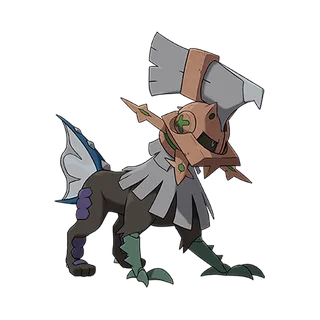
Type Null

Abilities
Blocks critical hits.
Base Stats
Type Null's Weaknesses and Resistances


Evolution Chain
Type Null evolves into Silvally by leveling up high friendship.
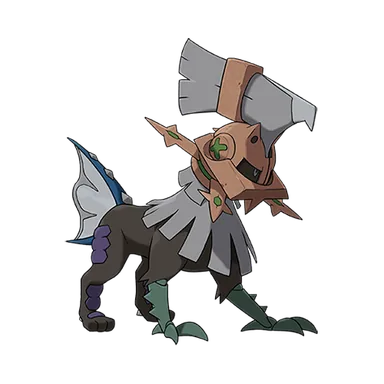 Type Null
 Silvally
Type Null Playthrough, Competitive, and Nuzlocke Usage
Using Type Null in a Playthrough
Type: Null and Silvally are unusual to evaluate for a normal playthrough because Type: Null is only given to the player after becoming Champion in Sun, Moon, Ultra Sun, Ultra Moon, and Sword/Shield, so the family is effectively postgame-only unless it is traded in from elsewhere. Type: Null has an exceptional 95/95/95 defensive profile and Battle Armor prevents critical hits, but its heavy control mask leaves it with only base 59 Speed; because it can still evolve, Eviolite can make the unevolved form dramatically bulkier than Silvally and genuinely preferable for a defensive role. It evolves after leveling up with high friendship, and Silvally raises Speed to 95 while leaving every other base stat at 95, creating an unusually balanced 570-BST attacker, pivot, or utility Pokémon. RKS System lets Silvally become any one of the eighteen types by holding the corresponding Memory, while Multi-Attack changes to match that type, so the same individual can be reconfigured around the team's current weaknesses rather than being locked into a single matchup profile. Multi-Attack was only 90 base power in Generation VII but rose to 120 in Generation VIII, making physical Memory sets substantially stronger in Sword and Shield. Silvally can also use Swords Dance, U-turn or Parting Shot, and broad physical or special coverage depending on the game; Jolly is a strong default for physical sets that want to exploit base 95 Speed, while Adamant can be justified when maximum Multi-Attack damage is more important.
Type Null in Competitive Pokémon
The Type: Null family developed two distinct competitive identities: unevolved Type: Null became a specialized Eviolite wall and slow pivot, while Silvally's eighteen type forms filled a large number of offensive and utility niches across the lower tiers. In Generation VII, Type: Null was classified ZUBL and received substantial PU use because Eviolite multiplied its already excellent mixed defenses, Battle Armor removed critical-hit variance, and slow U-turn, Rest, Sleep Talk, Iron Defense, or Swords Dance let it compress several defensive jobs into one slot. Silvally's base Normal form was only ZU, but individual Memory forms could be much more valuable because typing determined both defensive utility and the type of Multi-Attack; Fighting, Dark, Fairy, Water, and other forms found different niches as Defog users, pivots, or setup sweepers. Generation VIII materially strengthened the entire Silvally concept by increasing Multi-Attack from 90 to 120 power, and PU in particular featured strong Silvally-Fairy, Silvally-Ghost, and Silvally-Steel variants, with Steel serving as an especially useful hazard remover and glue Pokémon. The Memory requirement is also a built-in competitive cost: every typed Silvally must devote its item slot to the Memory, preventing Heavy-Duty Boots, Leftovers, Choice items, or other conventional equipment even when those would otherwise fit the set. Neither Type: Null nor Silvally is available in standard Generation IX play, so their established competitive history currently ends with the Generation VIII and National Dex ecosystems rather than extending into ordinary Scarlet/Violet usage tiers.
Type Null in Nuzlockes
This family is rarely relevant to a standard main-story Nuzlocke because every ordinary core-series gift of Type: Null is obtained after the Champion, but it becomes interesting in postgame or traded-in challenge rulesets. Type: Null is extraordinarily safe with Eviolite because its 95 HP and balanced 95 defenses are further amplified and Battle Armor completely eliminates critical hits, one of the most dangerous sources of unexpected permadeath variance. The tradeoff is low Speed and dependence on Rest for substantial self-healing, so battles can become long and expose it to status, Knock Off, strong Fighting attacks, and repeated damage while it waits to act. Evolving to Silvally sacrifices Eviolite bulk but raises Speed from 59 to 95 and gives access to RKS System, allowing the player to choose a type specifically suited to an upcoming boss and potentially create useful resistances or immunities on demand. Parting Shot or U-turn can reduce switching risk by generating momentum, while accurate 120-power Multi-Attack in Generation VIII is particularly attractive because it combines strong damage with no recoil, defensive drop, or accuracy gamble. For survival-focused runs, there is a legitimate decision between keeping Type: Null as an Eviolite tank or evolving into the faster and far more adaptable Silvally rather than assuming evolution is automatically the safer option.
Learnsets
13 moves · Sword Shield
Level Up — Sword Shield







Pokédex Entries
6 entries
The heavy control mask it wears suppresses its intrinsic capabilities. This Pokémon has some hidden special power.
Due to the danger that this synthetic Pokémon may go on a rampage, it wears a control mask to restrain its power.
A Pokémon weapon developed for a specific mission, it went berserk during an experiment, so it was cryogenically frozen.
There’s danger of its going on a rampage, so its true power is sealed away beneath its control mask.
Rumor has it that the theft of top-secret research notes led to a new instance of this Pokémon being created in the Galar region.
It was modeled after a mighty Pokémon of myth. The mask placed upon it limits its power in order to keep it under control.
Where To Find Type Null
2 locations
Aether Paradise · AlolaGift · version details vary
Aether Paradise 2f
Ancient Poni Path · AlolaGift · version details vary
Ancient Poni Path Area
Additional Images
PokeAPI sprites
Open this section to load extra PokeAPI sprite images.
Type Null Biology and Behavior
Type: Null is an artificial chimeric Pokémon created by the Aether Foundation as part of the Beast Killer project, an attempt to produce an anti-Ultra Beast life-form using cells associated with all known Pokémon types. Its original design, called Type: Full, was intended to shift between types through the RKS System, a mechanism inspired by a mythical Pokémon described in research connected with Canalave Library. The three original specimens rejected the system and went berserk, so heavy control helmets were fitted to suppress their power and agility, after which the project was declared a failure and the creatures were renamed Type: Null. The helmet is therefore not a natural anatomical structure but an artificial limiter physically restraining the creature's senses and movement. Gladion freed one of the Alolan specimens, while Sword and Shield reveal that another Type: Null was later created in Galar from stolen research notes, showing that the technology did not remain unique to the original Aether Foundation project. Type: Null has also been depicted sensing the appearance of Ultra Beasts and the opening of Ultra Wormholes, consistent with the purpose for which it was engineered.
Type Null Biological Data
- National Pokédex
- #772
- Species
- Synthetic Pokémon
- Height
- 6' 3" (1.9 m)
- Weight
- 265.7 lbs (120.5 kg)
- Habitat
- Currently Unknown
- Color
- Gray
- Body Style
- Quadruped
- Gender
- Genderless
Misc
Catch Rate: 3
Base Experience: 107 Exp
Hatch Counter: 120
Type Null Size Comparison: BETA
Type Null is listed at 6' 3" (1.9 m) and shown in an in-chart visual comparison.
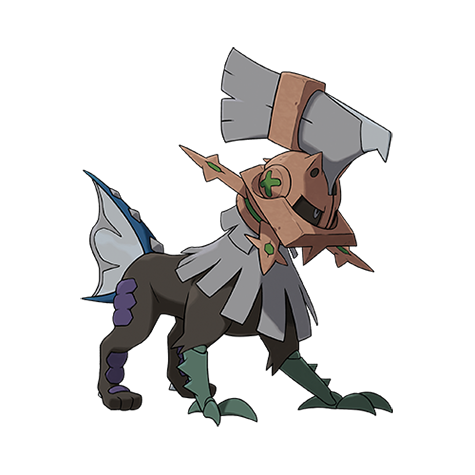

How is visual size determined?
Pokédex height is treated as the official listed measurement, but the chart uses pose-aware visual scaling so each sprite looks reasonable in a direct comparison.
For long or coiled Pokémon, the listed height may represent total body length rather than upright height. For Pokémon with floppy ears, leaves, feathers, antennae, wings, or other flexible features, the chart usually measures to the top of the solid, substantial part of the head or body instead of the tallest decorative feature.
The goal is not to replace the official height, but to make the artwork compare naturally at the size it appears to occupy.