Minior Red Meteor is a Rock/Flying-type Pokémon introduced in Generation VII, with a base stat total of 440 and no standard evolutions.
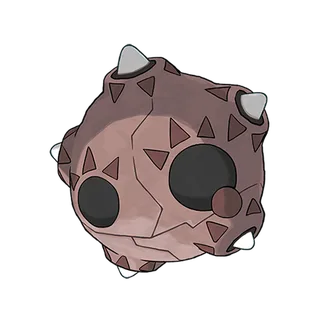
Minior Red Meteor


Abilities
When its HP becomes half or less, the Pokémon’s shell breaks and it becomes aggressive.
Base Stats
Minior Red Meteor's Weaknesses and Resistances







Evolution Chain
Minior Red Meteor does not evolve into or from any other Pokémon.
Forms
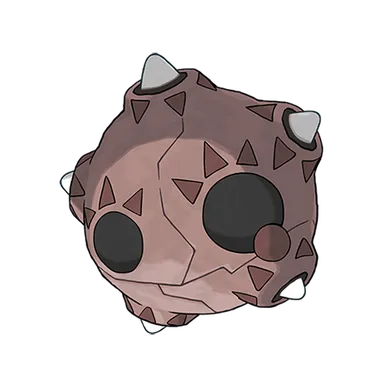 Minior Red Meteor #10130
 Minior Orange Meteor #10131
 Minior Yellow Meteor #10132
 Minior Green Meteor #10133
 Minior Blue Meteor #10134
 Minior Indigo Meteor #10135
 Minior Violet Meteor #10136
 Minior Red #10137
 Minior Orange #10138
 Minior Yellow #10139
 Minior Green #10140
 Minior Blue #10141
 Minior Indigo #10142
 Minior Violet
Minior Red Meteor Playthrough, Competitive, and Nuzlocke Usage
Using Minior Red Meteor in a Playthrough
Minior does not evolve, but Shields Down makes it function almost like two different Pokémon during battle: above half HP it is in Meteor Form with base 100 Defense and Special Defense, while at half HP or below its shell breaks and Core Form shifts those strengths into base 100 Attack and Special Attack plus base 120 Speed. Meteor Form is also immune to non-volatile status conditions and Yawn-induced drowsiness, making it much easier to find a safe setup opportunity than its 60 HP might otherwise suggest. Shell Smash is the line's defining offensive tool because one turn can raise both attacking stats and Speed by two stages, after which Core Form becomes extremely fast and can sweep with Acrobatics, Rock STAB, Earthquake, or special alternatives. A White Herb pairs naturally with Shell Smash by removing the defensive drops and then disappearing, which simultaneously activates Acrobatics' doubled power if the move is being used. Rock/Flying gives Minior a Ground immunity and useful resistances to Normal, Fire, Flying, Bug, and Poison, but weaknesses to Water, Electric, Ice, Rock, and Steel can force the transformation at unsafe times or simply knock it out before it capitalizes on Core Form. Adamant is useful for maximizing physical Shell Smash sets, while Jolly is genuinely beneficial when the player wants better unboosted Speed or additional insurance before Shields Down activates.
Minior Red Meteor in Competitive Pokémon
Minior has consistently been a specialized Shell Smash sweeper whose value comes from the interaction between Shields Down, White Herb, Acrobatics, and its dramatic stat redistribution rather than from broadly useful defensive utility. In Generation VII it appeared in RU and NU analyses as a late-game cleaner: Meteor Form's 100/100 defenses and status immunity created setup opportunities, Shell Smash doubled its offenses and Speed, and dropping below half HP activated a 120-Speed Core Form that could clean weakened teams. White Herb was particularly synergistic because it erased Shell Smash's defensive penalties and was then consumed, turning Acrobatics into a 110-power Flying STAB without requiring another item-management step. The strategy has always been fragile, however, because Core Form falls to only base 60 Defense and Special Defense and is susceptible to priority, Stealth Rock, and bulky opponents that can survive its boosted attacks. After being absent from Sword and Shield, Minior returned in Scarlet/Violet's Blueberry Academy content and is currently classified ZU, although it has received PU analysis using essentially the same Shell Smash, Acrobatics, Earthquake, and White Herb formula. Terastallization gives modern Minior additional ways to alter defensive matchups or strengthen coverage, but it has not changed the species' fundamental identity as a dangerous yet matchup-dependent late-game setup sweeper.
Minior Red Meteor in Nuzlockes
Minior is inherently risky in a Nuzlocke because its offensive transformation requires reaching half HP or lower, exactly the range in which an unexpected critical hit, priority attack, or damage roll becomes much more threatening. Meteor Form is the safer state for entering battle: its defenses are substantially higher and Shields Down prevents ordinary status conditions and Yawn, removing several forms of disruptive variance. Shell Smash can create enormous offensive momentum, but lowering both defenses while deliberately moving toward Core Form compounds the consequences of a mistake, so it is safest against an opponent that cannot meaningfully damage Minior or while using White Herb to cancel the drops. Once Core Form is active, base 120 Speed can let Minior finish encounters without taking another hit, but its defenses fall to base 60 and common priority attacks can bypass that Speed advantage entirely. Accurate moves such as Acrobatics and Earthquake are preferable to relying on Stone Edge when the additional Rock damage is unnecessary, because an 80% accurate attack is a significant permadeath risk. Explosion is normally inappropriate despite its competitive utility, since sacrificing Minior directly contradicts the objective of preserving the encounter.
Learnsets
54 moves · Scarlet Violet
Level Up





Machine


Pokédex Entries
4 entries
Originally making its home in the ozone layer, it hurtles to the ground when the shell enclosing its body grows too heavy.
Strong impacts can knock it out of its shell. This Pokémon was born from mutated nanoparticles.
It lives in the ozone layer, where it becomes food for stronger Pokémon. When it tries to run away, it falls to the ground.
Although its outer shell is uncommonly durable, the shock of falling to the ground smashes the shell to smithereens.
Where To Find Minior Red Meteor
1 locations
Mount Hokulani · AlolaWalking · version details vary
Mount Hokulani East
Mount Hokulani Main
Mount Hokulani West
Held Items
1 items
- Sun: 5% chance
- Moon: 5% chance
- Ultra Sun: 5% chance
- Ultra Moon: 5% chance
Additional Images
PokeAPI sprites
Open this section to load extra PokeAPI sprite images.
Minior Red Meteor Biology and Behavior
Minior originate in the stratosphere from aggregations of mutated nanoparticles and feed on atmospheric dust, gradually accumulating particulate matter into both a central core and a durable rocky outer shell. As the shell becomes heavier, Minior eventually fall toward the planet, and Alola is one of relatively few places where these falls commonly occur. While they remain in the ozone layer, stronger Pokémon prey upon them, so the shell functions as protection as well as the structure whose increasing mass eventually forces them downward. Meteor Form Minior slowly spin even while apparently resting and react when touched or called, though Pokédex material explicitly leaves uncertain whether those responses indicate true consciousness. A sufficiently strong impact can shatter the outer shell, revealing the much lighter Core Form inside.
Minior Red Meteor Biological Data
- National Pokédex
- #774
- Species
- Meteor Pokémon
- Height
- 1' 0" (0.3 m)
- Weight
- 88.2 lbs (40.0 kg)
- Habitat
- Currently Unknown
- Color
- Brown
- Body Style
- Ball
- Gender
- Genderless
Misc
Catch Rate: 30
Base Experience: 154 Exp
Hatch Counter: 25
Minior Red Meteor Size Comparison: BETA
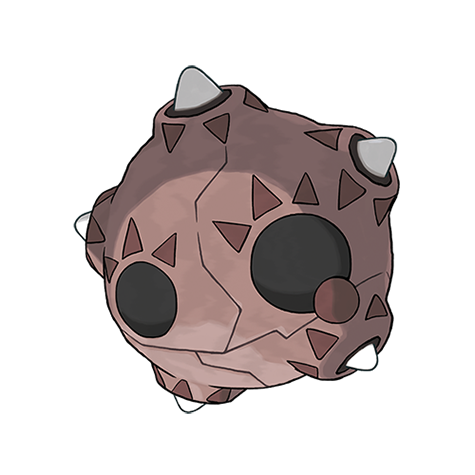
Minior Red Meteor is listed at 1' 0" (0.3 m) and shown in an in-chart visual comparison.

How is visual size determined?
Pokédex height is treated as the official listed measurement, but the chart uses pose-aware visual scaling so each sprite looks reasonable in a direct comparison.
For long or coiled Pokémon, the listed height may represent total body length rather than upright height. For Pokémon with floppy ears, leaves, feathers, antennae, wings, or other flexible features, the chart usually measures to the top of the solid, substantial part of the head or body instead of the tallest decorative feature.
The goal is not to replace the official height, but to make the artwork compare naturally at the size it appears to occupy.