Glalie is an Ice-type Pokémon introduced in Generation III and a final stage of its evolution line, with a base stat total of 480.
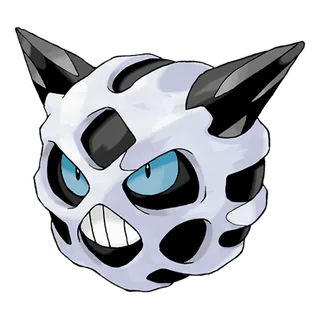
Glalie

Abilities
Prevents flinching.
The Pokémon regains HP in a hailstorm.
Raises one stat and lowers another.
Hidden AbilityBase Stats
Glalie's Weaknesses and Resistances



Evolution Chain
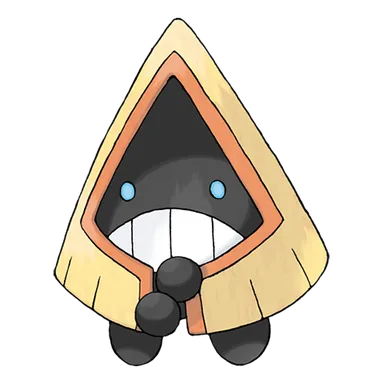
Snorunt can evolve into Glalie at level 42 or Froslass with a Dawn Stone female only.
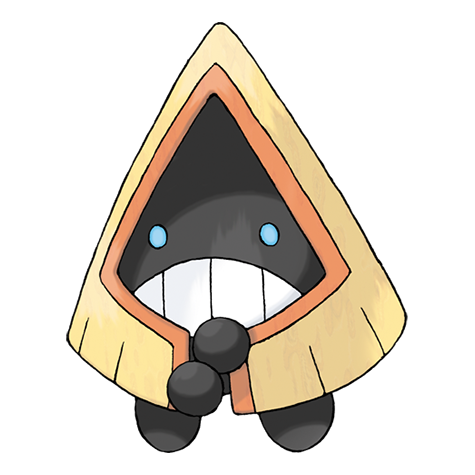 Snorunt
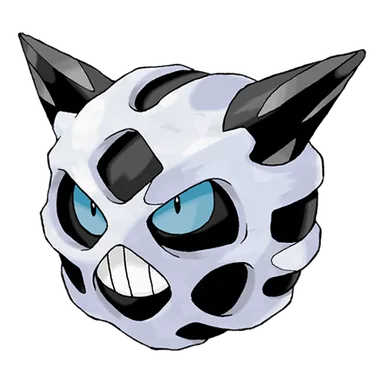 Glalie
 Froslass

Forms
 Mega Glalie
Glalie Playthrough, Competitive, and Nuzlocke Usage
Using Glalie in a Playthrough
Snorunt has two final evolutions: any Snorunt can evolve into pure Ice-type Glalie at level 42, while a female Snorunt can instead use a Dawn Stone to become the faster Ice/Ghost Froslass. Glalie is statistically balanced at base 80 in every stat, which makes it flexible but rarely exceptional; Ice Beam, Crunch, Earthquake, Spikes, Ice Shard, and other coverage or utility let it fill several roles without a dominant specialty. Froslass trades some of that neutrality for base 110 Speed and two immunities to Normal and Fighting, but its 70/70/70 bulk means it relies on moving first, status, Spikes, or offensive pressure rather than taking repeated hits. Mega Glalie raises both offenses to 120 and Speed to 100, with Refrigerate in traditional ability-based formats turning Normal attacks into stronger Ice-type moves, while the newer Mega Froslass reaches base 140 Special Attack and 120 Speed and uses Snow Warning in current ability-based formats to summon snow immediately. Every branch retains Ice's difficult weakness profile—Glalie fears Fire, Fighting, Rock, and Steel, while Froslass also adds Ghost and Dark weaknesses—so the family rewards offense and matchup knowledge far more than defensive switching.
Glalie in Competitive Pokémon
Glalie and Froslass developed very different competitive identities despite sharing Snorunt as a pre-evolution. Glalie's most persistent niche has been entry-hazard support: in DPP lower tiers, base 80 Speed, Spikes, Taunt, Ice Shard, and Explosion allowed it to function as an aggressive lead, while Mega Glalie later became a potent wallbreaker and Spikes setter through base 120 mixed offenses, base 100 Speed, and Refrigerate-boosted Normal attacks. Froslass has the stronger historical support résumé: base 110 Speed, Spikes, Taunt, Destiny Bond, and Ghost typing let it set hazards while simultaneously blocking Rapid Spin, and it was effective enough to earn UUBL status in DPP while even receiving a documented Ubers lead niche. The newer Mega Froslass shifts dramatically toward special offense with base 140 Special Attack and 120 Speed; current official competitive coverage also highlights Snow Warning as a weather-setting tool, letting it establish snow immediately for Blizzard accuracy or team support in ability-based formats. All forms remain vulnerable to common super-effective attacks and entry-hazard pressure, but this family has produced several unusually effective lead, hazard, and offensive roles from otherwise modest base forms.
Glalie in Nuzlockes
Snorunt can be awkward in a Nuzlocke because it remains relatively weak until a late level-42 evolution into Glalie unless the player has a female individual and access to a Dawn Stone for Froslass. Glalie's perfectly balanced base-80 stats provide reasonable consistency, and Inner Focus prevents flinching while Ice Body can supply passive recovery in snow, but pure Ice typing offers very few defensive opportunities and several common weaknesses. Froslass is much faster and gains Normal and Fighting immunities, creating excellent planned switches, but its low bulk means Fire, Rock, Ghost, Dark, and Steel coverage can be lethal; Destiny Bond is generally undesirable when the goal is keeping every team member alive. Mega Glalie can shorten fights dramatically through stronger Refrigerate offense, while Mega Froslass's high Special Attack, base 120 Speed, and immediate snow can reduce the number of turns an opponent gets to act. Neither Mega form fixes the fundamental fragility of Ice-based defensive typing, so the safest choice depends on whether the run values Glalie's steadier all-around stats or Froslass's speed and immunities.
Learnsets
57 moves · Scarlet Violet
Level Up





Machine




Pokédex Entries
15 entries
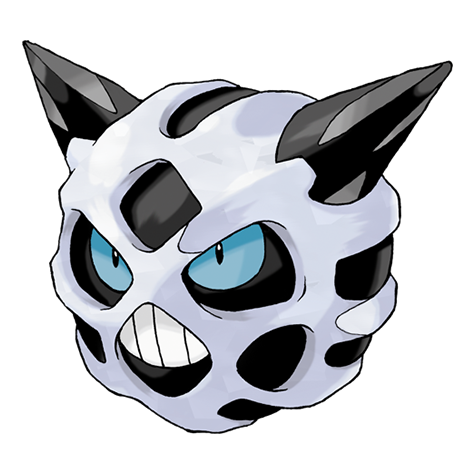
GLALIE has a body made of rock, which it hardens with an armor of ice. This POKéMON has the ability to freeze moisture in the atmosphere into any shape it desires.
GLALIE has the ability to freely control ice. For example, it can instantly freeze its foe solid. After immobilizing its foe in ice, this POKéMON enjoys eating it in leisurely fashion.
A GLALIE has the power to instantaneously freeze moisture in the atmosphere. A dazzling cloud of diamondlike ice crystals forms around its body.
It has a body of ice that won’t melt, even with fire. It can instantly freeze moisture in the atmosphere.
To protect itself, it clads its body in an armor of ice, made by freezing moisture in the air.
It prevents prey from escaping by instantaneously freezing moisture in the air.
It can instantly freeze moisture in the atmosphere. It uses this power to freeze its foes.
To protect itself, it clad its body in an armor of ice, made by freezing moisture in the air.
Glalie has a body made of rock, which it hardens with an armor of ice. This Pokémon has the ability to freeze moisture in the atmosphere into any shape it desires.
Glalie has the ability to freely control ice. For example, it can instantly freeze its prey solid. After immobilizing its prey in ice, this Pokémon enjoys eating it in leisurely fashion.
Legend says a boulder on an icy mountain absorbed the distress and regrets of a stranded mountaineer, giving rise to Glalie.
Its prey is instantaneously frozen stiff by the cold air it exhales from its huge mouth. While they’re in that frozen state, it gobbles them up.
It freezes its prey and chews them whole. However, it prefers to eat Pokémon like Vanillite that are already frozen.
Its actual body is a rock that isn’t particularly hard. Glalie absorbs moisture from the air and drapes itself in an armor of ice.
It covers its body with an armor of ice harder than steel. Uses its breath to freeze prey, which it then devours as if they were frozen desserts.
Where To Find Glalie
1 locations
Mount Lanakila · AlolaSOS Encounter, Walking · version details vary
Mount Lanakila Cave
Mount Lanakila Outside
Held Items
2 items
- Diamond: 5% chance
- Pearl: 5% chance
- Platinum: 5% chance
- Heartgold: 5% chance
- Soulsilver: 5% chance
- Black: 5% chance
- White: 5% chance
- Black 2: 5% chance
- White 2: 5% chance
- Ruby: 5% chance
- Sapphire: 5% chance
- Emerald: 5% chance
- Firered: 5% chance
- Leafgreen: 5% chance
Additional Images
PokeAPI sprites
Open this section to load extra PokeAPI sprite images.
Glalie Biology and Behavior
Glalie consists of a dark rock core enclosed in ice armor formed by instantly freezing moisture from the surrounding air into whatever shape it requires. The underlying rock is not exceptionally hard, but once coated in this self-generated ice the body becomes harder than steel and can remain frozen without melting even under intense heat. Glalie hunts by freezing prey solid and swallowing it whole, showing a particular preference for creatures that are already frozen, such as Vanillite. A mountain legend claims the species began when a boulder absorbed the distress and regrets of lost mountaineers and came to life, giving its otherwise physical ice-control biology a supernatural origin tradition. Mega Evolution violently dislocates and breaks Glalie's jaw, causing endless blizzards to pour from its mouth; although this makes Mega Glalie much more dangerous, the damaged jaw prevents it from eating normally and leaves the Pokemon perpetually irritated.
Glalie Biological Data
- National Pokédex
- #362
- Species
- Face Pokémon
- Height
- 4' 11" (1.5 m)
- Weight
- 565.5 lbs (256.5 kg)
- Habitat
- Cave
- Color
- Gray
- Body Style
- Ball
- Gender
- 50% female / 50% male
Misc
Catch Rate: 75
Base Experience: 168 Exp
Hatch Counter: 20
Glalie Size Comparison: BETA
Glalie is listed at 4' 11" (1.5 m); this chart uses a pose-adjusted visual scale.

How is visual size determined?
Pokédex height is treated as the official listed measurement, but the chart uses pose-aware visual scaling so each sprite looks reasonable in a direct comparison.
For long or coiled Pokémon, the listed height may represent total body length rather than upright height. For Pokémon with floppy ears, leaves, feathers, antennae, wings, or other flexible features, the chart usually measures to the top of the solid, substantial part of the head or body instead of the tallest decorative feature.
The goal is not to replace the official height, but to make the artwork compare naturally at the size it appears to occupy.
Glalie currently uses a pose-adjusted visual scale.