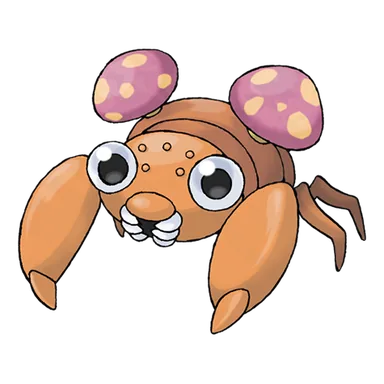
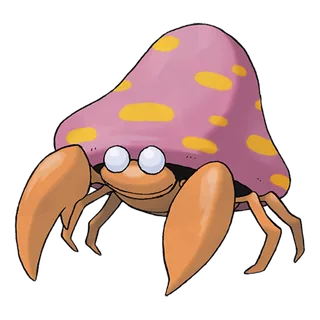
Parasect is a Bug/Grass-type Pokémon introduced in Generation I and a final stage of its evolution line, with a base stat total of 405.
Parasect


Abilities
Leaves spores on contact.
Reduces HP if it is hot. Water restores HP.
Prevents self-destruction.
Hidden AbilityBase Stats
Parasect's Weaknesses and Resistances






Evolution Chain
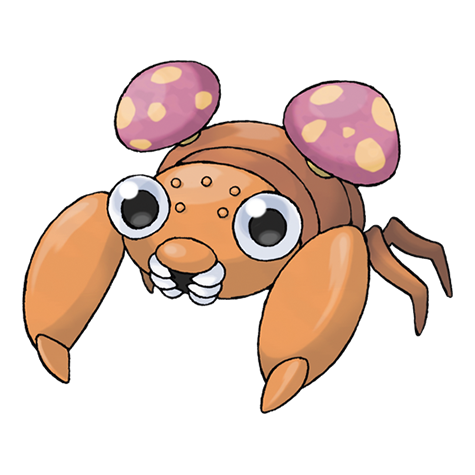
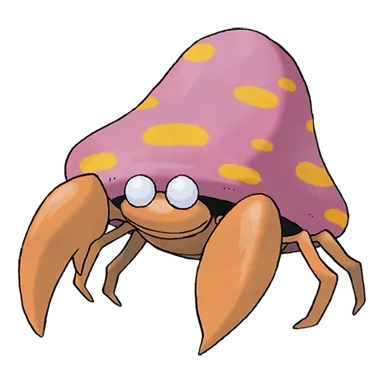
Paras evolves into Parasect at level 24.
 Paras
 Parasect
 Playthrough, Competitive, and Nuzlocke Usage
Using Parasect in a Playthrough
The Paras line is a slow Bug/Grass line whose main distinguishing feature is access to Spore, one of the most reliable sleep moves in the series. Parasect has usable physical Attack and can contribute against Water- and Ground-types, while Dry Skin in later generations can provide additional utility against Water attacks where that ability is available. Its major problem is its defensive profile: Bug/Grass gives it severe Fire and Flying weaknesses alongside several other common weaknesses, and its very low Speed often forces it to take a hit before acting. As a result, Parasect can provide valuable status support and selected favorable matchups, but it is difficult to use as a general-purpose story Pokemon without careful positioning.
Parasect in Competitive Pokémon
Parasect has historically occupied a highly specialized lower-tier support niche centered on Spore. Dry Skin can give it useful recovery and Water immunity in rain-based environments, while Effect Spore offers an alternative way to punish contact, but neither ability compensates fully for its low Speed and poor defensive typing. Smogon analyses repeatedly identify Spore as Parasect's primary reason for use, with additional utility depending on the generation and format. Its quadruple weaknesses to both Fire and Flying, limited overall stats, and heavy competition from stronger Grass- and Bug-types have prevented it from becoming a broadly successful competitive Pokemon.
Parasect in Nuzlockes
Parasect's Nuzlocke value is concentrated heavily in Spore, since guaranteed sleep can neutralize a dangerous opponent or make difficult captures substantially safer. FireRed and LeafGreen community analyses consistently acknowledge that this utility is powerful while also criticizing Parasect's low Speed, mediocre overall durability, and two quadruple weaknesses. Its Grass typing can create useful Water- and Ground-type matchups, but sending it into an unknown moveset is risky because common Fire and Flying coverage can cause catastrophic damage. Parasect is therefore most useful as a planned status specialist rather than as a Pokemon expected to switch freely or carry large portions of a run.
Learnsets
8 moves · Legends Arceus
Level Up — Legends Arceus




Pokédex Entries
20 entries
A host-parasite pair in which the parasite mushroom has taken over the host bug. Prefers damp places.
The bug host is drained of energy by the mushrooms on its back. They appear to do all the thinking.
It stays mostly in dark, damp places, the preference not of the bug, but of the big mushrooms on its back.
The larger the mushroom on its back grows, the stronger the mushroom spores it scatters.
When nothing's left to extract from the bug, the mushrooms on its back leave spores on the bug's egg.
PARASECT is known to infest large trees en masse and drain nutrients from the lower trunk and roots. When an infested tree dies, they move onto another tree all at once.
PARASECT are known to infest the roots of large trees en masse and drain nutrients. When an infested tree dies, they move onto another tree all at once.
It scatters toxic spores from the mushroom cap. In China, the spores are used as herbal medicine.
A mushroom grown larger than the host’s body controls PARASECT. It scatters poisonous spores.
It is controlled by a mushroom grown larger than the bug body. It is said to prefer damp places.
It stays mostly in dark, damp places, the preference not of the bug, but of the big mushroom on its back.
The larger the mushroom on its back grows, the stronger the mushroom spores it scatters.
A mushroom grown larger than the host’s body controls Parasect. It scatters poisonous spores.
Parasect is known to infest large trees en masse and drain nutrients from the lower trunk and roots. When an infested tree dies, they move onto another tree all at once.
The large mushroom on its back controls it. It often fights over territory with Shiinotic.
It scatters toxic spores from its mushroom cap. Once harvested, these spores can be steeped and boiled down to prepare herbal medicines.
The bug is mostly dead, with the mushroom on its back having become the main body. If the mushroom comes off, the bug stops moving.
Its poisonous spores are also used in traditional medicine. Apparently, spores produced in Alola are not of very good quality.
The bug host is drained of energy by the mushroom on its back. The mushroom appears to do all the thinking.
Mushroom-lacking specimens of this Pokémon lie unmoving in the forest, lending credence to the hypothesis that the large mushroom is in control of Parasect's actions.
Where To Find Parasect
5 locations
Route 11 · AlolaWalking · version details vary
Alola Route 11 Area
Mt. Silver · JohtoWalking · version details vary
Mount Silver (2F)
Cerulean Cave · KantoWalking · version details vary
Cerulean Cave (1F)
Cerulean Cave (2F)
Cerulean Cave (B1F)
Route 18 · KantoNpc Trade · version details vary
Road 18
Safari Zone · KantoWalking · version details vary
Safari Zone (Area 1, east)
Safari Zone (middle)
Held Items
3 items
- Black: 1% chance
- White: 1% chance
- Black 2: 1% chance
- White 2: 1% chance
- Ruby: 5% chance
- Sapphire: 5% chance
- Emerald: 5% chance
- Firered: 5% chance
- Leafgreen: 5% chance
- Diamond: 5% chance
- Pearl: 5% chance
- Platinum: 5% chance
- Heartgold: 5% chance
- Soulsilver: 5% chance
- Black: 5% chance
- White: 5% chance
- Black 2: 5% chance
- White 2: 5% chance
- X: 5% chance
- Y: 5% chance
- Omega Ruby: 5% chance
- Alpha Sapphire: 5% chance
- Sun: 5% chance
- Moon: 5% chance
- Ultra Sun: 5% chance
- Ultra Moon: 5% chance
- Ruby: 50% chance
- Sapphire: 50% chance
- Emerald: 50% chance
- Firered: 50% chance
- Leafgreen: 50% chance
- Diamond: 50% chance
- Pearl: 50% chance
- Platinum: 50% chance
- Heartgold: 50% chance
- Soulsilver: 50% chance
- Black: 50% chance
- White: 50% chance
- Black 2: 50% chance
- White 2: 50% chance
- X: 50% chance
- Y: 50% chance
- Omega Ruby: 50% chance
- Alpha Sapphire: 50% chance
- Sun: 50% chance
- Moon: 50% chance
- Ultra Sun: 50% chance
- Ultra Moon: 50% chance
Additional Images
PokeAPI sprites
Open this section to load extra PokeAPI sprite images.
Parasect Biology and Behavior
By the time Paras evolves into Parasect, the parasitic mushroom has completely overtaken the insect host and controls its actions. The insect itself has been drained of nutrients, and removing the mushroom causes Parasect to stop moving. Groups of Parasect infest trees and extract nutrients until the tree dies, after which they move together to another host tree. They favor dark, humid forests suitable for fungal growth and have also been documented competing with Shiinotic for territory.
Parasect Biological Data
- National Pokédex
- #47
- Species
- Mushroom Pokémon
- Height
- 3' 3" (1.0 m)
- Weight
- 65.0 lbs (29.5 kg)
- Habitat
- Forest
- Color
- Red
- Body Style
- Armor
- Gender
- 50% female / 50% male
Misc
Catch Rate: 75
Base Experience: 142 Exp
Hatch Counter: 20
Parasect Size Comparison: BETA
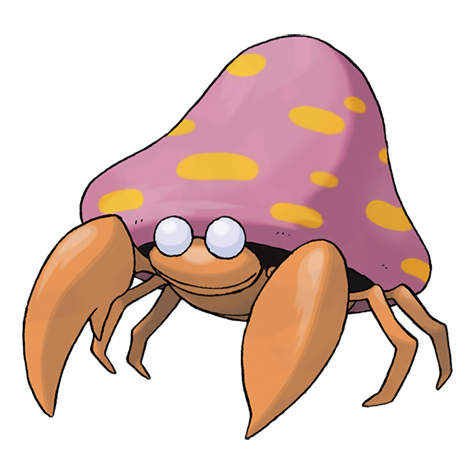
Parasect is listed at 3' 3" (1.0 m) and shown in an in-chart visual comparison.

How is visual size determined?
Pokédex height is treated as the official listed measurement, but the chart uses pose-aware visual scaling so each sprite looks reasonable in a direct comparison.
For long or coiled Pokémon, the listed height may represent total body length rather than upright height. For Pokémon with floppy ears, leaves, feathers, antennae, wings, or other flexible features, the chart usually measures to the top of the solid, substantial part of the head or body instead of the tallest decorative feature.
The goal is not to replace the official height, but to make the artwork compare naturally at the size it appears to occupy.