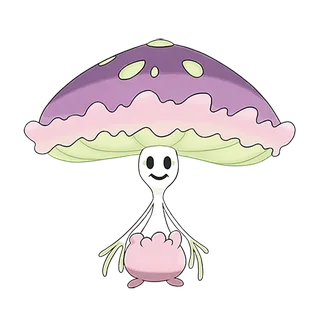
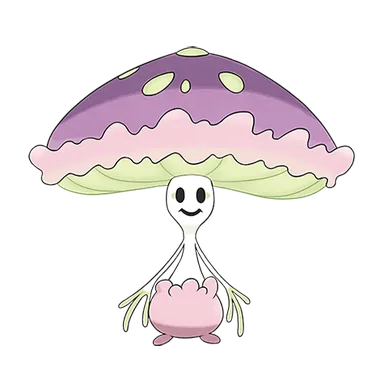
Shiinotic is a Grass/Fairy-type Pokémon introduced in Generation VII and a final stage of its evolution line, with a base stat total of 405.
Shiinotic


Abilities
Encounter rate increases.
Leaves spores on contact.
Slight HP recovery in rain.
Hidden AbilityBase Stats
Shiinotic's Weaknesses and Resistances







Evolution Chain
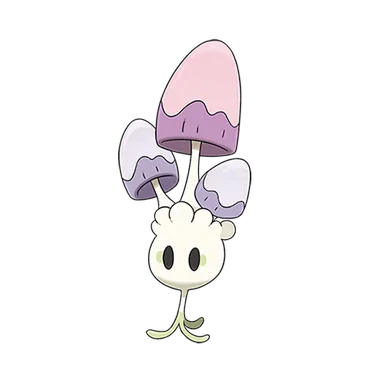
Morelull evolves into Shiinotic at level 24.
 Morelull
 Shiinotic
 Playthrough, Competitive, and Nuzlocke Usage
Using Shiinotic in a Playthrough
Morelull evolves into Shiinotic at level 24, so the line reaches its final stage early enough to contribute through most of an Alola playthrough rather than requiring a prolonged weak middle stage. Shiinotic is a very slow special attacker and support Pokémon with base 30 Speed, but its 90 Special Attack, 100 Special Defense, and Grass/Fairy typing give it useful matchups against Water-, Ground-, Fighting-, Dark-, and Dragon-type opponents. Its most valuable tools are often defensive rather than purely offensive: Spore provides perfectly accurate sleep against targets that are not immune, Strength Sap heals Shiinotic while lowering the target's Attack, and Giga Drain can restore additional HP while dealing damage. Effect Spore is generally more useful in battle than Illuminate in the generations where Shiinotic is normally available, since contact can inflict sleep, paralysis, or poison, while Rain Dish is a more specialized Hidden Ability for rain teams. The typing also carries a severe 4× Poison weakness along with weaknesses to Fire, Flying, Ice, and Steel, and Shiinotic's low HP and Speed mean it can be overwhelmed quickly if it is sent into the wrong matchup. A Calm or Bold Nature can reinforce its special or physical defensive role, while Modest is reasonable when a normal playthrough values stronger Moonblast and Giga Drain damage over further bulk.
Shiinotic in Competitive Pokémon
Shiinotic has historically been a lower-tier defensive specialist rather than a broadly successful competitive Pokémon, with its most clearly established singles role appearing in Generation VII ZU and occasional PU use. Grass/Fairy typing, Spore, Strength Sap, Moonblast, and Giga Drain gave it a real niche against Water-, Ground-, and Fighting-types, while Effect Spore could punish physical contact and add another layer of status pressure. Morelull itself also had a small Little Cup niche for similar reasons, using Spore, Strength Sap, respectable special bulk, and Fairy typing as a defensive pivot, though Foongus and other bulky Grass-types usually outclassed it. Shiinotic's limitations are substantial: base 30 Speed forces it to take hits first, base 60 HP makes its defenses less impressive than the raw Defense and Special Defense numbers suggest, and a 4× Poison weakness is especially troublesome in tiers where Poison-types are common. Its modest base 90 Special Attack can pressure frailer targets but does not prevent dedicated special walls from exploiting it, and faster Grass-types often offer more immediate offensive value. As a result, Shiinotic is best understood historically as a legitimate low-tier sleep-and-recovery specialist rather than an overlooked high-tier threat.
Shiinotic in Nuzlockes
Shiinotic can be excellent in a Nuzlocke when used deliberately because Spore and Strength Sap directly reduce battle variance instead of requiring risky offensive setup. A successful Spore can create a safe healing or switching turn, while Strength Sap simultaneously restores HP and lowers a physical opponent's Attack, allowing Shiinotic to become progressively safer against many physical enemies. Its Grass/Fairy typing also supplies a Dragon immunity and useful resistances to Fighting, Ground, Water, Electric, Dark, and Grass, creating several good switch opportunities when the opponent's moveset is known. The major warning is its 4× weakness to Poison; even moderate Poison coverage can be fatal, and weaknesses to Fire, Flying, Ice, and Steel are also dangerous because Shiinotic's base 30 Speed rarely lets it escape by attacking first. Effect Spore can provide valuable emergency status against contact moves, but the random status should be treated as a bonus rather than part of a guaranteed plan. Because its offensive damage is only moderate, long fights can expose Shiinotic to additional critical hits, so using sleep, Attack reduction, and recovery to control the battle is usually safer than simply trading neutral attacks.
Learnsets
13 moves · Sword Shield
Level Up — Sword Shield





Pokédex Entries
6 entries
Forests where Shiinotic live are treacherous to enter at night. People confused by its strange lights can never find their way home again.
It emits flickering spores that cause drowsiness. When its prey succumb to sleep, this Pokémon feeds on them by sucking in their energy.
It puts its prey to sleep and siphons off their vitality through the tip of its arms. If one of its kind is weakened, it helps by sending it vitality.
When it starts fighting for territory with Parasect, the entire area gets completely coated in spores!
Its flickering spores lure in prey and put them to sleep. Once this Pokémon has its prey snoozing, it drains their vitality with its fingertips.
If you see a light deep in a forest at night, don’t go near. Shiinotic will make you fall fast asleep.
Where To Find Shiinotic
1 locations
Route 11 · AlolaWalking · version details vary
Alola Route 11 Area
Held Items
2 items
- Sun: 5% chance
- Moon: 5% chance
- Ultra Sun: 5% chance
- Ultra Moon: 5% chance
- Sun: 50% chance
- Moon: 50% chance
- Ultra Sun: 50% chance
- Ultra Moon: 50% chance
Additional Images
PokeAPI sprites
Open this section to load extra PokeAPI sprite images.
Shiinotic Biology and Behavior
Shiinotic lives in dark forests and produces strange light from its mushroom cap and gills, confusing travelers and causing them to lose their way. Its flickering spores induce sleep, after which Shiinotic drains vitality from sleeping prey through the tips of its arms. The same structures can also transfer energy in the opposite direction, allowing Shiinotic to restore weakened members of its own species or provide vitality to other Pokémon, humans, and even vegetation. Shiinotic competes with Parasect for forest territory, and conflicts between the two species can leave the surrounding area completely coated in spores. These behaviors make its bioluminescence both a hunting adaptation and a means of manipulating energy within its forest environment.
Shiinotic Biological Data
- National Pokédex
- #756
- Species
- Illuminating Pokémon
- Height
- 3' 3" (1.0 m)
- Weight
- 25.4 lbs (11.5 kg)
- Habitat
- Currently Unknown
- Color
- Purple
- Body Style
- Humanoid
- Gender
- 50% female / 50% male
Misc
Catch Rate: 75
Base Experience: 142 Exp
Hatch Counter: 20
Shiinotic Size Comparison: BETA
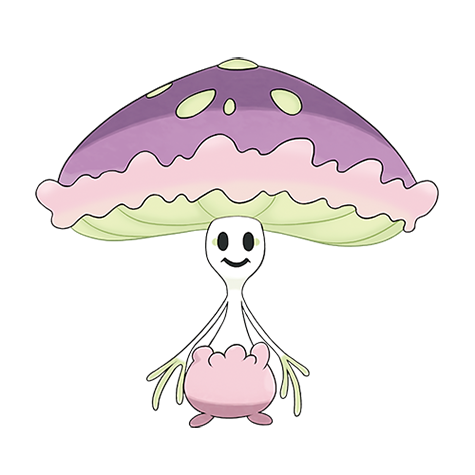
Shiinotic is listed at 3' 3" (1.0 m) and shown in an in-chart visual comparison.

How is visual size determined?
Pokédex height is treated as the official listed measurement, but the chart uses pose-aware visual scaling so each sprite looks reasonable in a direct comparison.
For long or coiled Pokémon, the listed height may represent total body length rather than upright height. For Pokémon with floppy ears, leaves, feathers, antennae, wings, or other flexible features, the chart usually measures to the top of the solid, substantial part of the head or body instead of the tallest decorative feature.
The goal is not to replace the official height, but to make the artwork compare naturally at the size it appears to occupy.