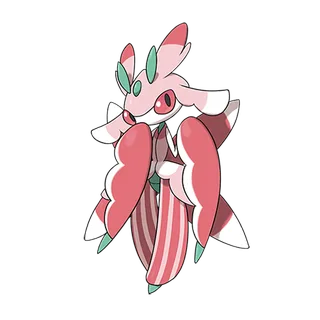
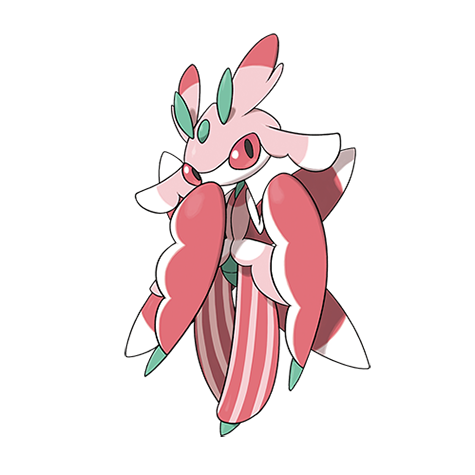
Lurantis is a Grass-type Pokémon introduced in Generation VII and a final stage of its evolution line, with a base stat total of 480.
Lurantis

Abilities
Prevents status problems in sunny weather.
Makes stat changes have an opposite effect.
Hidden AbilityBase Stats
Lurantis's Weaknesses and Resistances





Evolution Chain
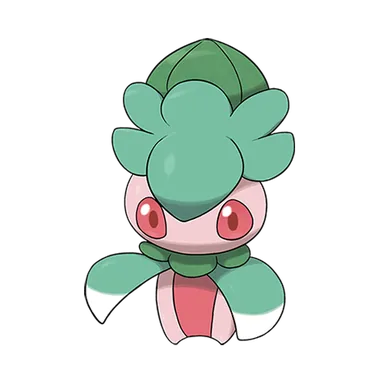
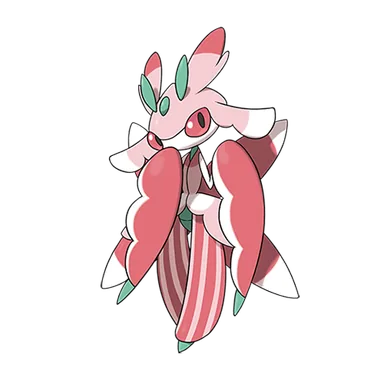
Fomantis evolves into Lurantis by leveling up at level 34during the day.
 Fomantis
 Lurantis
Forms
 Lurantis Totem
Lurantis Playthrough, Competitive, and Nuzlocke Usage
Using Lurantis in a Playthrough
Fomantis evolves into Lurantis at level 34 only when it levels up during the daytime, so the evolution is not especially late but can be delayed accidentally if the player reaches the required level at night. Lurantis is a slow physical-leaning Grass-type with base 105 Attack, respectable 70/90/90 bulk, and only base 45 Speed; Leaf Blade is usually a safer everyday STAB than the more dramatic two-turn Solar Blade unless sun support is already part of the team. Pure Grass grants useful Water, Ground, Electric, and Grass resistances but also five weaknesses to Bug, Fire, Flying, Ice, and Poison, so Lurantis benefits from deliberate matchup selection rather than simply relying on its decent defenses. Its ordinary Ability Leaf Guard prevents status in harsh sunlight, but the line becomes mechanically much more interesting with its Hidden Ability Contrary, which reverses stat changes and turns normally self-debilitating moves such as Leaf Storm and Superpower into boosting attacks when those moves are available. Contrary is not something every normal playthrough Lurantis will naturally possess, especially in Alola where the Hidden Ability requires special acquisition through SOS mechanics, so ordinary physical sets should not be evaluated as though every Lurantis automatically has access to that strategy. Adamant is useful for straightforward Leaf Blade and physical coverage sets, while slower Contrary-oriented builds can justify defensive or mixed Natures depending on whether the team is leaning on Leaf Storm, Superpower, or utility.
Lurantis in Competitive Pokémon
Lurantis has remained a lower-tier Pokémon throughout its competitive history, but Contrary prevents it from being completely generic and has repeatedly given it a specialized role on bulky teams. In Generation VII it was PU, where Defog, Synthesis, Aromatherapy, solid mixed defenses, and a pure Grass typing let it switch into many Ground- and Water-types while clearing hazards; Contrary Leaf Storm and Superpower also meant it could increase its own stats while attacking instead of becoming completely passive. It faced heavy competition from faster or more flexible hazard removers and suffered from common Fire- and Flying-type weaknesses, low Speed, and low-PP key moves, which kept it from establishing a higher-tier presence. Sword and Shield dropped it to ZU but preserved essentially the same identity: a bulky Contrary user capable of Defogging while threatening to snowball through Leaf Storm and Superpower. Scarlet and Violet currently also list Lurantis in ZU, where Terastallization can patch its poor defensive typing or provide better coverage, but its base 45 Speed and dependence on a narrow set of Contrary-compatible attacks remain major restrictions. Historically, therefore, Lurantis is best described as a legitimate low-tier utility Pokémon with a unique self-boosting mechanic, not as an overlooked high-tier sweeper.
Lurantis in Nuzlockes
Lurantis is useful in a Nuzlocke when its favorable resistances can be planned around, but its five weaknesses and low Speed make it much less forgiving than its balanced defensive stats first suggest. The level-34 daytime evolution is manageable as long as the player remembers the time requirement, and Fomantis can be protected more easily than species that remain unevolved into the late 30s or 40s. Accurate physical Grass STAB such as Leaf Blade is generally safer than relying on Solar Blade's charge turn or Leaf Storm's imperfect accuracy, particularly when a missed or interrupted attack could expose Lurantis to a second hit. Synthesis provides valuable recovery in generations where it is available, though weather affects the amount healed and later games reduce the move's PP, so it should not be treated as unlimited sustain. Contrary can be excellent if the Hidden Ability is legitimately obtained because Leaf Storm can raise Special Attack and Superpower can raise Attack and Defense, but attempting to accumulate boosts against an opponent carrying super-effective coverage still creates unnecessary critical-hit exposure. Against Water- and Ground-type opponents Lurantis can be a sturdy answer, but Fire, Flying, Ice, Poison, and Bug coverage should be checked carefully because base 45 Speed rarely allows it to escape a bad matchup by simply moving first.
Learnsets
54 moves · Scarlet Violet
Level Up





Machine


Pokédex Entries
6 entries
It requires a lot of effort to maintain Lurantis’s vivid coloring, but some collectors enjoy this work and treat it as their hobby.
It fires beams from its sickle-shaped petals. These beams are powerful enough to cleave through thick metal plates.
For self-protection, it pretends to be a bug Pokémon. Both of its arms bear keen-edged petals.
As it slashes into its enemies, it looks like it’s dancing. Its elegant appearance has led some to call it the most glamorous Grass Pokémon.
This Pokémon resembles a beautiful flower. A properly raised Lurantis will have gorgeous, brilliant colors.
The petals on this Pokémon’s arms are thin and super sharp, and they can fire laser beams if Lurantis gathers light first.
Where To Find Lurantis
1 locations
Heahea Beach · AlolaGift · version details vary
Heahea Beach Area
Held Items
1 items
- Sun: 5% chance
- Moon: 5% chance
- Ultra Sun: 5% chance
- Ultra Moon: 5% chance
Additional Images
PokeAPI sprites
Open this section to load extra PokeAPI sprite images.
Lurantis Biology and Behavior
Lurantis reverses the usual relationship between flower and insect mimicry: although it is a Grass-type plant Pokémon, it resembles a mantis and uses its flowerlike appearance and sweet aroma to lure actual Bug Pokémon into lowering their guard before attacking them with its scythes. Its brilliant coloration and elegant movements have led to it being described as one of the most beautiful Grass-type Pokémon, but maintaining that appearance requires meticulous grooming. This care affects its relationship with people: Lurantis is said to trust a Trainer who diligently maintains it, while having difficulty bonding with a lazy caretaker. Its scythe-like arms can channel Solar Blade, producing a cutting beam sharp enough in official descriptions to slice rock in half. The species therefore combines visual mimicry, active predation, dependence on careful physical maintenance, and powerful sunlight-based attacks rather than behaving merely as a decorative flower Pokémon.
Lurantis Biological Data
- National Pokédex
- #754
- Species
- Bloom Sickle Pokémon
- Height
- 2' 11" (0.9 m)
- Weight
- 40.8 lbs (18.5 kg)
- Habitat
- Currently Unknown
- Color
- Pink
- Body Style
- Humanoid
- Gender
- 50% female / 50% male
Misc
Catch Rate: 75
Base Experience: 168 Exp
Hatch Counter: 20
Lurantis Size Comparison: BETA
Lurantis is listed at 2' 11" (0.9 m); this chart uses a pose-adjusted visual scale.

How is visual size determined?
Pokédex height is treated as the official listed measurement, but the chart uses pose-aware visual scaling so each sprite looks reasonable in a direct comparison.
For long or coiled Pokémon, the listed height may represent total body length rather than upright height. For Pokémon with floppy ears, leaves, feathers, antennae, wings, or other flexible features, the chart usually measures to the top of the solid, substantial part of the head or body instead of the tallest decorative feature.
The goal is not to replace the official height, but to make the artwork compare naturally at the size it appears to occupy.
Lurantis currently uses a pose-adjusted visual scale.