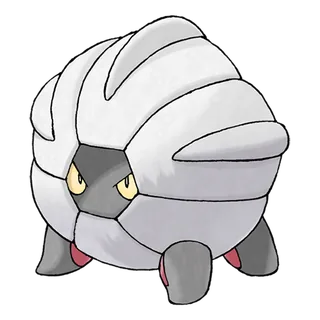
Shelgon is a Dragon-type Pokémon introduced in Generation III and a middle stage of its evolution line, with a base stat total of 420.
Shelgon

Abilities
Base Stats
Shelgon's Weaknesses and Resistances






Evolution Chain
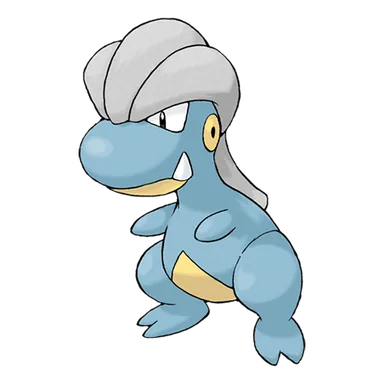
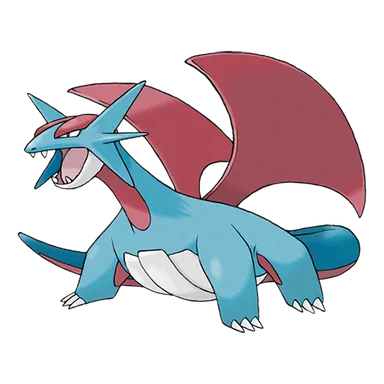
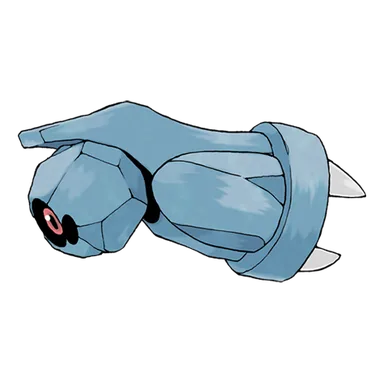
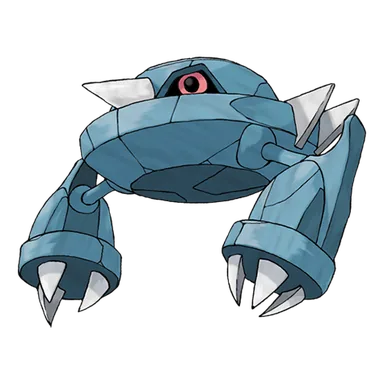
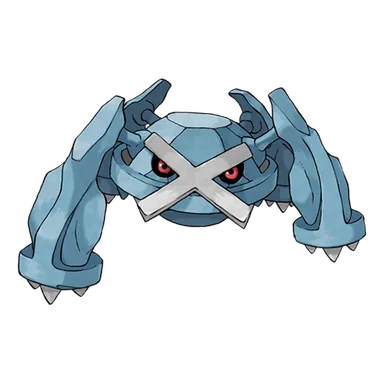
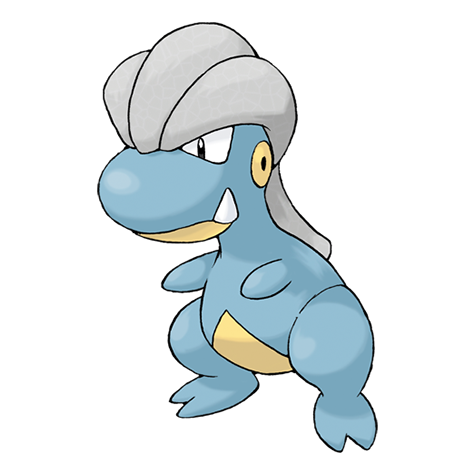
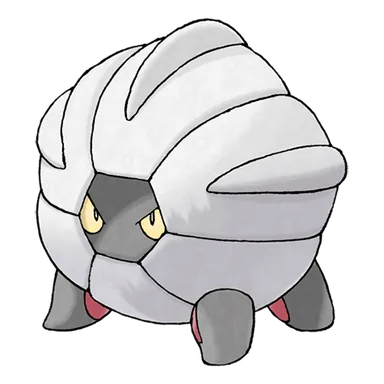
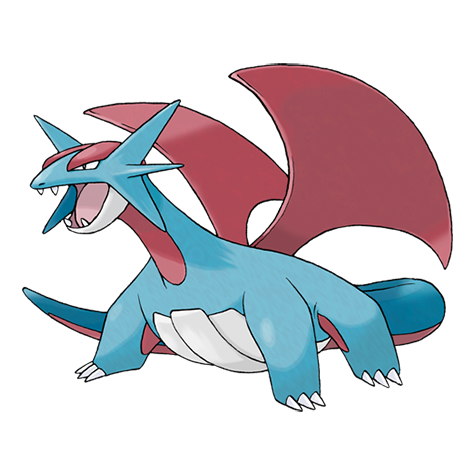
Bagon evolves into Shelgon at level 30, and Shelgon evolves into Salamence at level 50.
 Bagon
 Shelgon
 Salamence

Shelgon Playthrough, Competitive, and Nuzlocke Usage
Using Shelgon in a Playthrough
The Bagon line is Hoenn's Dragon-type pseudo-legendary family, evolving from Bagon to Shelgon at level 30 and finally into Salamence at the unusually late level 50. The payoff is enormous: Salamence has base 135 Attack, 110 Special Attack, and 100 Speed alongside Intimidate, making it both a powerful mixed attacker and a useful physical pivot whenever it enters battle. Generation III gives Salamence an unusual mixed profile because Dragon attacks are special while Flying attacks, Earthquake, and most Normal coverage are physical; Dragon Dance can strengthen physical Attack and Speed even though its Dragon STAB itself still uses Special Attack. The Generation IV physical/special split unlocks physical Dragon STAB such as Dragon Claw and Outrage, making Dragon Dance substantially more threatening, while the later Hidden Ability Moxie can raise Attack after each knockout and create snowballing sweeps. Mega Salamence raises Attack to 145, Defense to 130, Special Attack to 120, and Speed to 120 while Aerilate turns Normal moves into boosted Flying STAB, but every ordinary and Mega form retains a quadruple Ice weakness that must be respected.
Shelgon in Competitive Pokémon
Salamence was one of the defining threats of ADV OU from the moment it appeared, combining 135 Attack, 110 Special Attack, 100 Speed, Intimidate, a Ground immunity, and enough coverage to function as a mixed wallbreaker, Choice Band attacker, or Dragon Dance sweeper. The Generation IV physical/special split and access to powerful physical Dragon moves pushed it even further, and Salamence ultimately ended DPP classified in Ubers rather than OU. Later generations brought competition from other Dragons and Fairy-types, but Moxie preserved dangerous cleaning sets and the introduction of Mega Salamence in ORAS completely reset the family's competitive ceiling. Mega Salamence's 95/145/130/120/90/120 stats, pre-Mega Intimidate, Dragon Dance, Roost, and Aerilate-boosted Flying attacks proved overwhelming for ORAS OU and resulted in a rapid ban to Ubers, where it remained a genuine top-level threat rather than merely an exile from standard play. Its enduring counters are the quadruple Ice weakness, Rock damage and entry hazards, Fairy- and Dragon-type attacks, and faster revenge killers before setup, but few non-legendary Pokemon have matched Salamence's combination of offensive versatility and repeated high-tier relevance.
Shelgon in Nuzlockes
The Bagon line is a major long-term Nuzlocke investment because Bagon is usually obtained relatively late and does not reach Salamence until level 50, leaving a long period in which the team must protect Bagon and then the slow, defensive Shelgon. Shelgon's base 100 Defense and strong shell make the middle stage much safer physically than Bagon, while Salamence finally adds base 100 Speed, enormous offense, a Ground immunity, and Intimidate for immediate physical damage reduction. Intimidate is one of the family's strongest permadeath tools because simply switching Salamence into a known physical move lowers the opponent's Attack before damage calculations begin. The quadruple Ice weakness is the critical danger and makes unexpected Ice Beam, Ice Punch, or Ice Shard potentially lethal even to a healthy Salamence; Rock, Dragon, and later Fairy coverage also require careful scouting. Mega Salamence's dramatically improved Defense and Speed increase its margin for error, but it does not remove the Ice weakness, so the family remains strongest when its offensive power is paired with disciplined coverage knowledge.
Learnsets
53 moves · Scarlet Violet
Level Up






Machine





Pokédex Entries
14 entries
Inside SHELGON’s armor-like shell, cells are in the midst of transformation to create an entirely new body. This POKéMON’s shell is extremely heavy, making its movements sluggish.
Covering SHELGON’s body are outgrowths much like bones. The shell is very hard and bounces off enemy attacks. When awaiting evolution, this POKéMON hides away in a cavern.
It hardly eats while it awaits evolution. It becomes hardier by enduring hunger. Its shell peels off the instant it begins to evolve.
Its armored body makes all attacks bounce off. The armor is too tough, however, making it heavy and somewhat sluggish.
Within its rugged shell, its cells have begun changing. The shell peels off the instant it evolves.
It surrounds its body in an iron-hard shell to accumulate enough power to evolve.
Inside Shelgon’s armor-like shell, cells are in the midst of transformation to create an entirely new body. This Pokémon’s shell is extremely heavy, making its movements sluggish.
Covering Shelgon’s body are outgrowths much like bones. The shell is very hard and bounces off enemy attacks. When awaiting evolution, this Pokémon hides away in a cavern.
The cells within its shell transform with explosive speed, preparing it for evolution.
They lurk deep within caves—motionless, neither eating nor drinking. Why they don’t die is not known.
The cells within its body are changing at a bewildering pace. Its hard shell is made from the same substance as bone.
Shelgon lives deep within caves. It stays shut up in its hard shell, dreaming of the day it will be able to fly.
This Pokémon has covered its body in a hard shell that has the same composition as bone. Shelgon stores energy for evolution.
Shelgon ignores its hunger entirely, never eating any food. Apparently, Shelgon will evolve once all its energy stores are used up.
Where To Find Shelgon
2 locations
Kala’e Bay · AlolaSOS Encounter · version details vary
Kalae Bay Area
Friend Safari · KalosWalking · version details vary
Friend Safari (Dragon)
Held Items
2 items
- Diamond: 5% chance
- Pearl: 5% chance
- Platinum: 5% chance
- Heartgold: 5% chance
- Soulsilver: 5% chance
- Black: 5% chance
- White: 5% chance
- Black 2: 5% chance
- White 2: 5% chance
- X: 5% chance
- Y: 5% chance
- Omega Ruby: 5% chance
- Alpha Sapphire: 5% chance
- Sun: 5% chance
- Moon: 5% chance
- Ultra Sun: 5% chance
- Ultra Moon: 5% chance
- Ruby: 5% chance
- Sapphire: 5% chance
- Emerald: 5% chance
- Firered: 5% chance
- Leafgreen: 5% chance
Additional Images
PokeAPI sprites
Open this section to load extra PokeAPI sprite images.
Shelgon Biology and Behavior
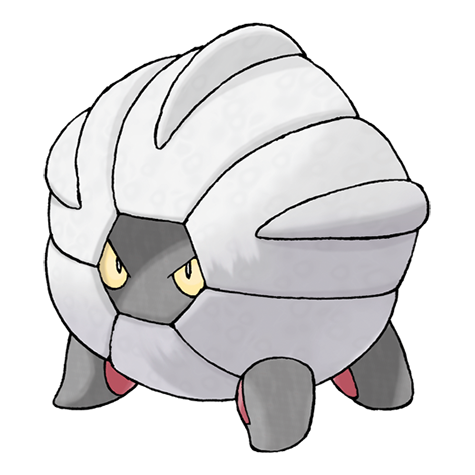
Shelgon represents an extended transformation stage in which Bagon's body becomes almost completely enclosed inside six hard white shell plates made from a substance similar to bone. The shell repels most attacks but is so heavy that Shelgon can barely move, causing it to hide deep inside caves while its internal cells rapidly reorganize into the body of Salamence. During this period Shelgon is never seen eating or drinking despite remaining alive for a long time, and researchers suspect that energy stored before evolution sustains the transformation. When the process is complete, the shell peels away almost immediately rather than gradually wearing down. Even while sleeping and conserving energy, Shelgon can be observed moving its legs as though running or flying in a dream, suggesting that Bagon's fixation on the sky survives intact throughout the otherwise almost motionless pupal stage.
Shelgon Biological Data
- National Pokédex
- #372
- Species
- Endurance Pokémon
- Height
- 3' 7" (1.1 m)
- Weight
- 243.6 lbs (110.5 kg)
- Habitat
- Rough Terrain
- Color
- White
- Body Style
- Quadruped
- Gender
- 50% female / 50% male
Misc
Catch Rate: 45
Base Experience: 147 Exp
Hatch Counter: 40
Shelgon Size Comparison: BETA
Shelgon is listed at 3' 7" (1.1 m) and shown in an in-chart visual comparison.

How is visual size determined?
Pokédex height is treated as the official listed measurement, but the chart uses pose-aware visual scaling so each sprite looks reasonable in a direct comparison.
For long or coiled Pokémon, the listed height may represent total body length rather than upright height. For Pokémon with floppy ears, leaves, feathers, antennae, wings, or other flexible features, the chart usually measures to the top of the solid, substantial part of the head or body instead of the tallest decorative feature.
The goal is not to replace the official height, but to make the artwork compare naturally at the size it appears to occupy.