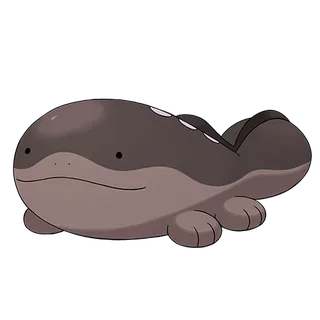
Clodsire is a Poison/Ground-type Pokémon introduced in Generation IX and a final stage of its evolution line, with a base stat total of 430.
Clodsire


Abilities
Poisons foe on contact.
Changes water into HP.
Ignores any change in ability by the foe.
Hidden AbilityBase Stats
Clodsire's Weaknesses and Resistances





Evolution Chain
Wooper can evolve into Quagsire at level 20 or Clodsire at level 20.
 Wooper

 Quagsire
 Clodsire
 Playthrough, Competitive, and Nuzlocke Usage
Using Clodsire in a Playthrough
The Wooper family now contains two distinct evolutionary branches with very different roles. Johtonian Wooper is Water/Ground and evolves into Quagsire at level 20, providing an early, bulky physical Water/Ground Pokemon with an Electric immunity, useful Ground STAB, and only one ordinary weakness—Grass, although that weakness is quadruple. Quagsire's offenses are modest but dependable, and options such as Surf or Waterfall, Earthquake, Ice coverage, Yawn, Recover, and later abilities such as Water Absorb or Unaware can make it an extremely practical story Pokemon. Paldean Wooper is Poison/Ground and evolves into Clodsire at level 20 instead; Clodsire has enormous HP and Special Defense, a base 20 Speed stat, Ground STAB, Poison utility, and abilities such as Water Absorb or Unaware that can dramatically alter which attacks it can safely absorb. Both branches are slow and rely on durability rather than attacking first, but Quagsire is generally the more physically balanced all-purpose option while Clodsire is especially well suited to soaking up special attacks and spreading status or hazards.
Clodsire in Competitive Pokémon
Quagsire's defining competitive niche is Unaware, which allows it to ignore an opponent's positive stat boosts when calculating damage and has repeatedly let it serve as an emergency answer to dangerous setup sweepers far above its nominal tier placement. Combined with Water/Ground typing, respectable physical bulk, Recover, Scald or Earthquake, Toxic, and other defensive tools, Quagsire has appeared on stall teams in formats ranging from standard OU to extremely high-powered environments specifically because certain boosted attackers cannot overpower it in the usual way. Clodsire inherited the same Unaware option but approaches defense from the opposite side: base 130 HP and 100 Special Defense make it a natural special wall, while Poison/Ground typing, Recover, hazards, status, and Water Absorb as an alternative ability let it check a very different set of threats. Neither Pokemon is particularly threatening offensively, and both can become passive or be overwhelmed by strong attacks aimed at their weaker defensive side; Quagsire is also devastated by Grass moves, while Clodsire must account for Ground, Ice, Psychic, and normally Water attacks if it lacks Water Absorb. Their competitive success therefore comes from unusually valuable abilities and role-specific defensive matchups rather than raw base-stat totals.
Clodsire in Nuzlockes
Johtonian Wooper is one of the safer early Nuzlocke encounters in games where it appears because it evolves into Quagsire at level 20 and immediately offers useful HP, physical bulk, an Electric immunity, and Water/Ground STAB. The obvious danger is its quadruple Grass weakness, which makes even relatively weak Grass coverage capable of causing a sudden knockout; outside that weakness, however, Quagsire's defensive profile is unusually compact. Water Absorb can create additional safe switches in generations where abilities are available, while Damp can prevent Self-Destruct and Explosion and Unaware can neutralize setup sweepers if the Hidden Ability is legitimately obtainable. Paldean Wooper and Clodsire provide a different kind of safety: Clodsire's enormous special bulk, Electric immunity, and possible Water Absorb make it excellent against selected special attackers, but its low physical Defense means strong Ground or other physical coverage should never be ignored. Both branches are slow enough that they usually take a hit before responding, so their Nuzlocke value comes from predictable resistances and bulk rather than offensive speed.
Learnsets
66 moves · Scarlet Violet
Level Up




Machine


Pokédex Entries
2 entries
When attacked, this Pokémon will retaliate by sticking thick spines out from its body. It’s a risky move that puts everything on the line.
It lives at the bottom of ponds and swamps. It will carry Wooper on its back and ferry them across water from one shore to the other.
Additional Images
PokeAPI sprites
Open this section to load extra PokeAPI sprite images.
Clodsire Biology and Behavior
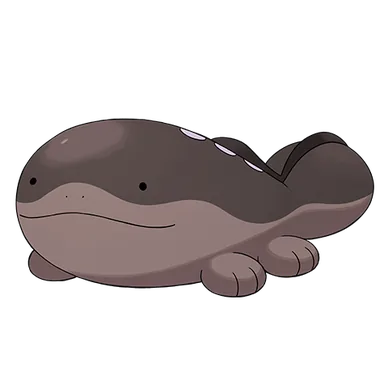
Clodsire is a large, extremely broad-bodied amphibian that lives in the depths of ponds and swamps and acts as a living ferry for groups of Paldean Wooper that need to cross water. Six spots along its back conceal thick poisonous spines that can be forced outward when Clodsire is attacked, turning its otherwise soft-looking body into a dangerous defensive weapon. Using these spines is described as risky even for Clodsire itself, suggesting that the defense is reserved for situations serious enough to justify the danger. Its relationship with Paldean Wooper is notably cooperative: Clodsire routinely carries the smaller Pokemon on its back, and individuals have been observed sleeping in mud after becoming exhausted from transporting them.
Clodsire Biological Data
- National Pokédex
- #980
- Species
- Spiny Fish Pokémon
- Height
- 5' 11" (1.8 m)
- Weight
- 491.6 lbs (223.0 kg)
- Habitat
- Currently Unknown
- Color
- Brown
- Body Style
- Quadruped
- Gender
- 50% female / 50% male
Misc
Catch Rate: 90
Base Experience: 151 Exp
Hatch Counter: 20
Clodsire Size Comparison: BETA
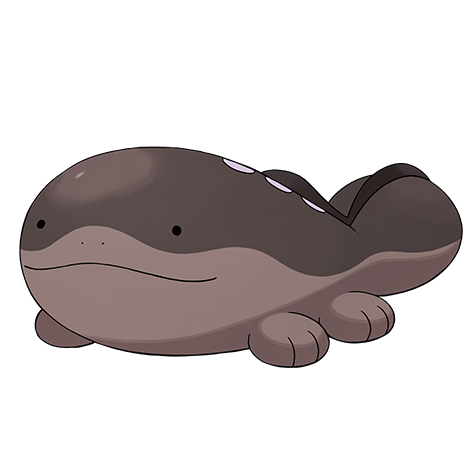
Clodsire is listed at 5' 11" (1.8 m) and shown in an in-chart visual comparison.

How is visual size determined?
Pokédex height is treated as the official listed measurement, but the chart uses pose-aware visual scaling so each sprite looks reasonable in a direct comparison.
For long or coiled Pokémon, the listed height may represent total body length rather than upright height. For Pokémon with floppy ears, leaves, feathers, antennae, wings, or other flexible features, the chart usually measures to the top of the solid, substantial part of the head or body instead of the tallest decorative feature.
The goal is not to replace the official height, but to make the artwork compare naturally at the size it appears to occupy.