Great Tusk is a Ground/Fighting-type Pokémon introduced in Generation IX, with a base stat total of 570 and no standard evolutions.
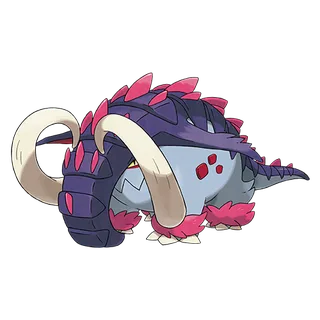
Great Tusk


Abilities
Boosts the Pokémon's most proficient stat in harsh sunlight or if the Pokémon is holding Booster Energy.
Base Stats
Great Tusk's Weaknesses and Resistances






Evolution Chain
Great Tusk does not evolve into or from any other Pokémon.
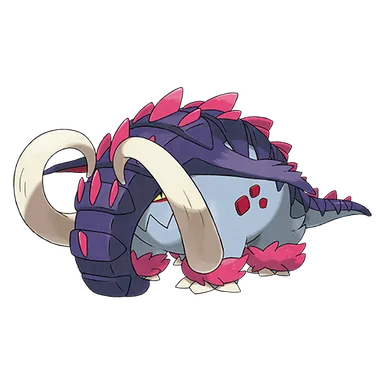 Great Tusk
 Playthrough, Competitive, and Nuzlocke Usage
Using Great Tusk in a Playthrough
Great Tusk is a standalone Ground/Fighting Paradox Pokémon and a Scarlet exclusive, with Violet players normally needing trade or Union Circle access to obtain one. Unlike most ancient Paradox Pokémon, it can be obtained before the final Area Zero chapter: after the Quaking Earth Titan is defeated in Scarlet, the Former Titan Great Tusk can be challenged and caught in the Asado Desert, while additional specimens appear later in Area Zero. Its 115 HP, 131 Attack, and 131 Defense make it immediately exceptional against physical opponents, and Ground/Fighting STAB gives it enormous offensive reach through moves such as Earthquake or Headlong Rush and Close Combat. Rapid Spin provides useful hazard removal while also raising Speed, Ice Spinner covers Flying-types and Dragons that resist or avoid its Ground attacks, and Knock Off or Stealth Rock can add utility once their relevant move access is available. Protosynthesis boosts Great Tusk's highest stat in harsh sunlight or when activated by Booster Energy, normally strengthening Attack or another deliberately optimized stat; because its Attack and Defense are both extremely high, Nature, IV, and EV differences can affect which stat receives the boost. Its major weakness is special durability: base 53 Special Defense is extremely poor, and Water, Grass, Ice, Flying, Psychic, and Fairy attacks can exploit that weakness despite its huge physical bulk. Headlong Rush and Close Combat are both perfectly accurate and extremely powerful but lower Great Tusk's defenses after use, so Earthquake and other less self-punishing attacks can be preferable when repeated fighting is expected. Adamant emphasizes its extraordinary physical damage, Jolly improves the middling base 87 Speed, and Impish can suit a more defensive physical role.
Great Tusk in Competitive Pokémon
Great Tusk has been one of the defining Pokémon of Scarlet/Violet singles from the beginning of Generation IX and remains classified as OU in Smogon's current SV Pokédex. Its exceptional role compression is the core of that success: 115/131 physical bulk, base 131 Attack, Ground/Fighting STAB, Rapid Spin, Stealth Rock, Knock Off, and broad coverage allow one team slot to provide hazard removal, hazard setting, item disruption, physical checking, and real offensive pressure. Headlong Rush is often preferred for maximum Ground damage, while Ice Spinner pressures Flying- and Ground-immune checks and Rapid Spin's Speed increase can turn a utility action into late-game offensive momentum. Defensive sets use its immense physical bulk to check threats such as Kingambit and other physical attackers, while Booster Energy and Bulk Up variants exploit Protosynthesis to become dangerous sweepers rather than merely support Pokémon. Its poor base 53 Special Defense is the fundamental balancing flaw: strong special Water, Grass, Ice, Psychic, Fairy, or Flying attacks can force it out or KO it even when physical attackers struggle to make progress. Great Tusk was also immediately successful in early official VGC; for example, it appeared on the Masters Division champion teams at both the 2023 Perth and Vancouver Regionals, commonly using direct physical offense rather than its singles hazard-control identity. That distinction matters historically: Great Tusk's long-term singles reputation is as premier role compression, whereas doubles has generally valued its raw physical stats, Protosynthesis, spread or single-target Ground pressure, and offensive matchup control.
Great Tusk in Nuzlockes
Great Tusk can be an outstanding Scarlet Nuzlocke encounter because the static Former Titan can provide access before Area Zero if the ruleset permits static encounters, and the species arrives fully developed with no evolution requirement. Its 115 HP and 131 Defense make physical damage unusually predictable, while an Electric immunity and strong resistance to Rock plus resistances to Bug, Dark, and Poison create several useful switch opportunities. The danger is that its base 53 Special Defense provides very little protection from unexpected special coverage, and six ordinary weaknesses mean a Water, Grass, Ice, Flying, Psychic, or Fairy move can punish an otherwise safe-looking matchup. Earthquake is often safer than Headlong Rush because it preserves both defenses after attacking, and Close Combat should similarly be reserved for situations where its defensive drops will not expose Great Tusk on the following turn. Rapid Spin is unusually good Nuzlocke utility because it removes damaging hazards without sacrificing a teammate and simultaneously raises Speed, reducing future exposure if Great Tusk stays in. Bulk Up can make known physical matchups nearly one-sided, but setup does nothing to repair the Special Defense weakness and should not be attempted blindly against mixed attackers. If the player respects special coverage instead of treating its enormous Defense as universal bulk, Great Tusk is one of Paldea's strongest and most reliable physical Pokémon.
Learnsets
68 moves · Scarlet Violet
Level Up




Machine


Pokédex Entries
2 entries
Sightings of this Pokémon have occurred in recent years. The name Great Tusk was taken from a creature listed in a certain book.
This creature resembles a mysterious Pokémon that, according to a paranormal magazine, has lived since ancient times.
Additional Images
PokeAPI sprites
Open this section to load extra PokeAPI sprite images.
Great Tusk Biology and Behavior
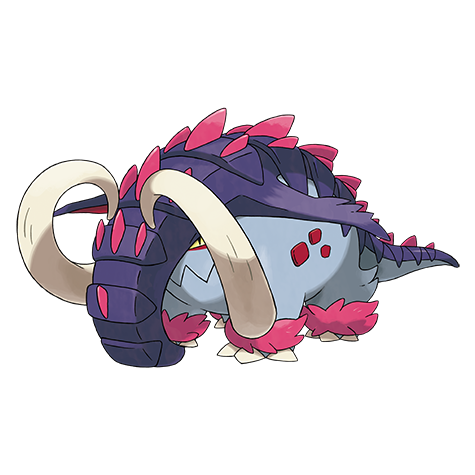
Great Tusk is a massive proboscidean Paradox Pokémon with enormous inward-curving tusks, armored dark plates, serrated ears, spikes, and patches of reddish fur. It is explicitly savage and aggressive: the Scarlet Book records a Great Tusk attacking the Area Zero expedition with its body and tusks and fatally injuring one of the explorers, while later Occulture material describes the species as a mysterious Donphan-like life-form with gigantic tusks and tough scales. Its tusks usually prevent the compact rolling behavior associated with Donphan, although Pokémon Horizons has shown a Great Tusk curling up while using Rollout. Its true origin remains unresolved; AI Sada describes the ancient Paradox Pokémon as ancestors brought through her time machine, whereas the Professor encountered at the Crystal Pool describes such Pokémon as counterparts from another timeline, and Great Tusk was recorded by Heath's expedition roughly two centuries before Sada's machine was built.
Great Tusk Biological Data
- National Pokédex
- #984
- Species
- Paradox Pokémon
- Height
- 7' 3" (2.2 m)
- Weight
- 705.5 lbs (320.0 kg)
- Habitat
- Currently Unknown
- Color
- Purple
- Body Style
- Quadruped
- Gender
- Genderless
Misc
Catch Rate: 30
Base Experience: 285 Exp
Hatch Counter: 50
Great Tusk Size Comparison: BETA
Great Tusk is listed at 7' 3" (2.2 m) and shown in an in-chart visual comparison.

How is visual size determined?
Pokédex height is treated as the official listed measurement, but the chart uses pose-aware visual scaling so each sprite looks reasonable in a direct comparison.
For long or coiled Pokémon, the listed height may represent total body length rather than upright height. For Pokémon with floppy ears, leaves, feathers, antennae, wings, or other flexible features, the chart usually measures to the top of the solid, substantial part of the head or body instead of the tallest decorative feature.
The goal is not to replace the official height, but to make the artwork compare naturally at the size it appears to occupy.