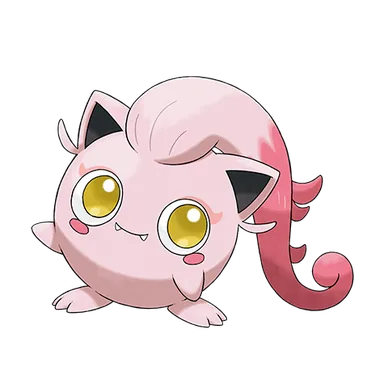
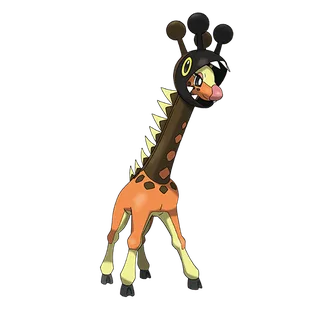
Farigiraf is a Normal/Psychic-type Pokémon introduced in Generation IX and a final stage of its evolution line, with a base stat total of 520.
Farigiraf


Abilities
When the Pokémon eats a Berry, it will regurgitate that Berry at the end of the next turn and eat it one more time.
The mysterious tail covering the Pokémon's head makes opponents unable to use priority moves against the Pokémon or its allies.
Boosts Attack when hit by a Grass-type move.
Hidden AbilityBase Stats
Farigiraf's Weaknesses and Resistances


Evolution Chain
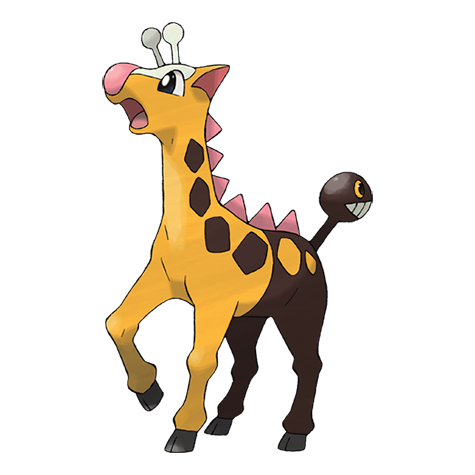
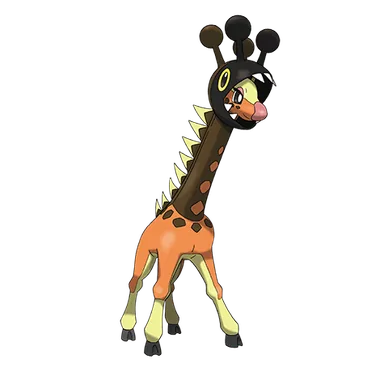
Girafarig evolves into Farigiraf by leveling up knowing Twin Beam.
 Girafarig
 Farigiraf
 Playthrough, Competitive, and Nuzlocke Usage
Using Farigiraf in a Playthrough
Girafarig is a mixed-capable Normal/Psychic Pokemon with useful special offense, respectable Speed, broad coverage, and an unusual defensive profile that includes a complete Ghost immunity. For most of the series Girafarig had no evolution and its average bulk and base 90 Special Attack left it useful but unspectacular, although Psychic STAB, Normal coverage, Baton Pass, screens, Thunderbolt, Shadow Ball, and setup options such as Agility or Calm Mind gave it considerable flexibility. Generation IX dramatically improves the line by allowing Girafarig to evolve into Farigiraf when leveled up while knowing Twin Beam. Farigiraf raises HP to 120 and Special Attack to 110 while becoming slower, turning the family into a bulky special attacker or Trick Room-oriented Pokemon rather than a mid-speed offensive utility option; Armor Tail can also block opposing priority moves, while Sap Sipper can create a Grass immunity. Normal/Psychic typing leaves only Bug and Dark as weaknesses under ordinary conditions, making Farigiraf deceptively sturdy when the player avoids those specific threats.
Farigiraf in Competitive Pokémon
Girafarig historically occupied lower tiers because its rare Normal/Psychic typing and broad movepool were useful but its stats were not specialized enough to outclass stronger Psychic-types. It could attempt Calm Mind, Nasty Plot, Agility, Baton Pass, Choice item, or Sap Sipper sets, but competition and middling defenses generally prevented it from becoming a major singles threat. Farigiraf changed the family's competitive relevance substantially, especially in doubles: its base 120 HP, solid Special Attack, Trick Room access, and Armor Tail ability let it block opposing priority moves such as Fake Out while also protecting its partner from priority. That combination has made Farigiraf a highly reliable Trick Room setter and support Pokemon in modern VGC-style formats, while singles sets can use Nasty Plot, Agility, Stored Power, or strong Psychic and Normal attacks to exploit its bulk. Its low base 60 Speed is a weakness on ordinary offensive teams but becomes an advantage under Trick Room, giving Farigiraf a much clearer competitive identity than Girafarig ever possessed.
Farigiraf in Nuzlockes
Girafarig is a solid Nuzlocke Pokemon because Normal/Psychic typing grants a Ghost immunity, a Psychic resistance, and only two conventional weaknesses—Bug and Dark—while respectable Speed and Special Attack allow it to defeat many opponents before taking repeated damage. Its defenses are only average, so strong neutral physical attacks can still be dangerous, but the compact weakness profile makes matchup planning relatively straightforward. In Generation IX, evolving into Farigiraf greatly improves the family's safety by raising HP dramatically and increasing offensive power, although the loss of Speed means it will take hits more often outside Trick Room. Armor Tail is particularly valuable in permadeath play because blocking priority prevents weakened Girafarig-family members and their allies from being picked off by moves such as Quick Attack, Aqua Jet, or Sucker Punch, while Sap Sipper offers a different kind of safety through Grass immunity. Farigiraf is therefore one of those evolutions that trades offensive tempo for a much larger margin for error, making it especially attractive in carefully planned boss battles.
Learnsets
80 moves · Scarlet Violet
Level Up



Machine






Pokédex Entries
2 entries
Now that the brain waves from the head and tail are synced up, the psychic power of this Pokémon is 10 times stronger than Girafarig’s.
The hardened head from the tail protects the head of the main body as Farigiraf whips its long neck around to headbutt enemies.
Additional Images
PokeAPI sprites
Open this section to load extra PokeAPI sprite images.
Farigiraf Biology and Behavior
When Girafarig evolves, the tail head migrates forward, hardens, and encloses the main head like a powerful protective hood, physically joining the two neural systems more closely than before. Thick nerves connect Farigiraf's two brains, allowing them to synchronize and generate psychic energy described as roughly ten times stronger than Girafarig's. Both brains continuously monitor the surroundings and can detect threats extremely quickly, although Farigiraf's large body is sometimes unable to react as fast as its minds recognize danger. The hardened outer head is both armor and a weapon: Farigiraf can clamp it shut around the inner head and swing its long neck with enough force to shatter stone and steel beams. Evolution therefore changes the relationship between the two heads from a loosely coordinated body-and-tail partnership into an integrated defensive and psychic system.
Farigiraf Biological Data
- National Pokédex
- #981
- Species
- Long Neck Pokémon
- Height
- 10' 6" (3.2 m)
- Weight
- 352.7 lbs (160.0 kg)
- Habitat
- Currently Unknown
- Color
- Brown
- Body Style
- Quadruped
- Gender
- 50% female / 50% male
Misc
Catch Rate: 45
Base Experience: 260 Exp
Hatch Counter: 20
Farigiraf Size Comparison: BETA
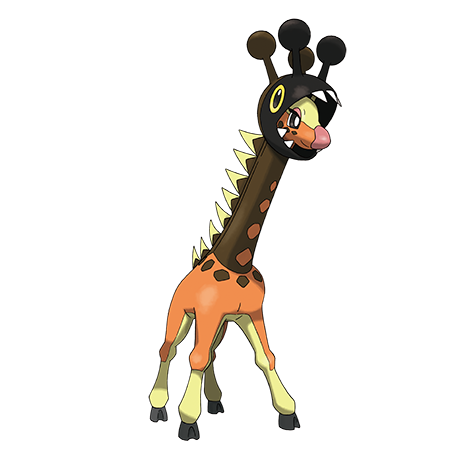
Farigiraf is listed at 10' 6" (3.2 m) and shown in an in-chart visual comparison.

How is visual size determined?
Pokédex height is treated as the official listed measurement, but the chart uses pose-aware visual scaling so each sprite looks reasonable in a direct comparison.
For long or coiled Pokémon, the listed height may represent total body length rather than upright height. For Pokémon with floppy ears, leaves, feathers, antennae, wings, or other flexible features, the chart usually measures to the top of the solid, substantial part of the head or body instead of the tallest decorative feature.
The goal is not to replace the official height, but to make the artwork compare naturally at the size it appears to occupy.