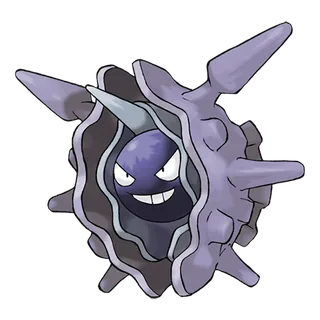
Cloyster is a Water/Ice-type Pokémon introduced in Generation I and a final stage of its evolution line, with a base stat total of 525.
Cloyster


Abilities
Blocks critical hits.
Increases the frequency of multi-strike moves.
Protects the Pokémon from damage from weather.
Hidden AbilityBase Stats
Cloyster's Weaknesses and Resistances




Evolution Chain
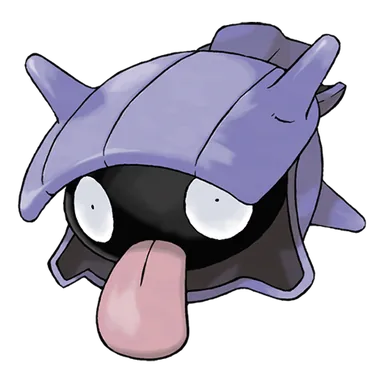
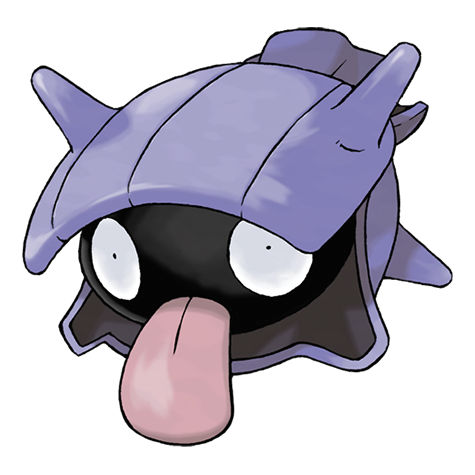
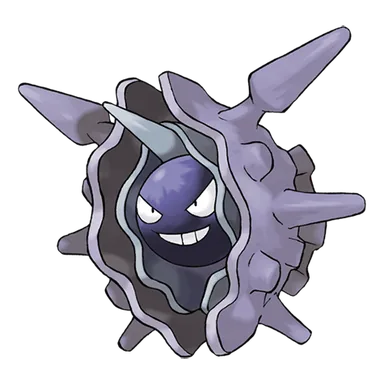
Shellder evolves into Cloyster with a Water Stone.
 Shellder
 Cloyster
 Playthrough, Competitive, and Nuzlocke Usage
Using Cloyster in a Playthrough
The Shellder line develops into Cloyster, a Water/Ice Pokemon defined by enormous physical Defense and strong offensive potential. Its 180 Defense allows Cloyster to withstand physical attacks exceptionally well, while Water and Ice STAB provide valuable coverage, particularly against Ground-, Flying-, and Dragon-type opponents. Its Special Defense is extremely poor, however, making strong special attacks dangerous regardless of its impressive physical durability. From Generation V onward, Shell Smash greatly increases Cloyster's offensive ceiling, and Skill Link makes multi-hit attacks such as Icicle Spear consistently powerful; Water Stone evolution can also require some move-planning depending on the game.
Cloyster in Competitive Pokémon
Cloyster's modern competitive identity is built primarily around Shell Smash and Skill Link. Shell Smash sharply raises its Attack, Special Attack, and Speed at the cost of defensive reductions, while Skill Link guarantees the maximum number of hits from moves such as Icicle Spear and Rock Blast, allowing Cloyster to become a dangerous sweeper after a single setup turn. Its enormous physical Defense can create setup opportunities against physical attackers and also historically supported more defensive or hazard-oriented roles before Shell Smash became central to its identity. Extremely low Special Defense remains its largest structural weakness, allowing strong special attackers and priority or revenge-killing strategies to stop it even after setup.
Cloyster in Nuzlockes
Cloyster has unusually polarized Nuzlocke value because its physical Defense is exceptional while its Special Defense is extremely poor. Against known physical attackers it can function as one of the safest available switches, and its Ice STAB can be valuable against Dragon-heavy late-game battles, but special Electric-, Grass-, Fire-, or other strong neutral attacks can be far more dangerous than its overall Defense might suggest. FireRed and LeafGreen community discussion consequently rates it as useful but matchup-dependent rather than universally safe. In later generations Shell Smash provides enormous sweeping potential, but lowering Cloyster's defenses in a permadeath format introduces additional risk if the intended sweep fails.
Learnsets
57 moves · Scarlet Violet
Level Up







Machine

Pokédex Entries
17 entries
When attacked, it launches its horns in quick volleys. Its innards have never been seen.
For protection, it uses its harder- than-diamonds shell. It also shoots spikes from the shell.
Once it slams its shell shut, it is impossible to open, even by those with superior strength.
CLOYSTER that live in seas with harsh tidal currents grow large, sharp spikes on their shells.
Even a missile can't break the spikes it uses to stab opponents. They're even harder than its shell.
CLOYSTER is capable of swimming in the sea. It does so by swallowing water, then jetting it out toward the rear. This POKéMON shoots spikes from its shell using the same system.
It swims in the sea by swallowing water, then jetting it out toward the rear. The CLOYSTER shoots spikes from its shell using the same system.
Its shell is extremely hard. It cannot be shattered, even with a bomb. The shell opens only when it is attacking.
It fights by keeping its shell tightly shut for protection and by shooting spikes to repel foes.
Once it slams its shell shut, it is impossible to open, even by those with superior strength.
Cloyster that live in seas with harsh tidal currents grow large, sharp spikes on their shells.
Cloyster is capable of swimming in the sea. It does so by swallowing water, then jetting it out toward the rear. This Pokémon shoots spikes from its shell using the same system.
Its hard shell cannot be shattered—not even by a bomb. The contents of the shell remain unknown.
Excavation of the tombs of ancient hunting tribes has turned up many spears tipped with spikes that had fallen off this Pokémon’s shell.
If areas of Cloyster’s very hard shell get damaged, those areas swell, gradually growing into large sharp spikes.
Slowpoke tails are its favorite food. It has even been known to come up on land to look for Slowpoke from time to time.
For protection, it uses its harder-than-diamond shell. It also shoots spikes from the shell.
Where To Find Cloyster
8 locations
Friend Safari · KalosWalking · version details vary
Friend Safari (Ice)
Route 8 · KalosSuper Rod · version details vary
Road 8
Seafoam Islands · KantoOverworld Water · version details vary
Seafoam Islands (B3F)
Seafoam Islands (B4F)
Humilau City · UnovaSuper Rod Spots · version details vary
Humilau City
Route 13 · UnovaSuper Rod Spots · version details vary
Road 13
Seaside Cave · UnovaSuper Rod Spots · version details vary
Seaside Cave (1F)
Undella Bay · UnovaSuper Rod Spots · version details vary
Undella Bay
Undella Town · UnovaSuper Rod Spots · version details vary
Undella Town
Held Items
2 items
- Ruby: 5% chance
- Sapphire: 5% chance
- Emerald: 5% chance
- Firered: 5% chance
- Leafgreen: 5% chance
- Diamond: 5% chance
- Pearl: 5% chance
- Platinum: 5% chance
- Heartgold: 5% chance
- Soulsilver: 5% chance
- Black: 5% chance
- White: 5% chance
- Black 2: 5% chance
- White 2: 5% chance
- X: 5% chance
- Y: 5% chance
- Omega Ruby: 5% chance
- Alpha Sapphire: 5% chance
- Sun: 5% chance
- Moon: 5% chance
- Ultra Sun: 5% chance
- Ultra Moon: 5% chance
- Ruby: 50% chance
- Sapphire: 50% chance
- Emerald: 50% chance
- Firered: 50% chance
- Leafgreen: 50% chance
- Diamond: 50% chance
- Pearl: 50% chance
- Platinum: 50% chance
- Heartgold: 50% chance
- Soulsilver: 50% chance
- Black: 50% chance
- White: 50% chance
- Black 2: 50% chance
- White 2: 50% chance
- X: 50% chance
- Y: 50% chance
- Omega Ruby: 50% chance
- Alpha Sapphire: 50% chance
- Sun: 50% chance
- Moon: 50% chance
- Ultra Sun: 50% chance
- Ultra Moon: 50% chance
Additional Images
PokeAPI sprites
Open this section to load extra PokeAPI sprite images.
Cloyster Biology and Behavior
Cloyster is enclosed within two layers of shell, with an outer shell and spikes described as harder than diamond and durable enough to withstand extreme explosive force. Once Cloyster closes completely, its shell cannot normally be forced open from the outside. It can launch its spikes in rapid succession while remaining sealed and uses the same basic system for movement by drawing in seawater and ejecting it behind itself as jet propulsion. Wild Cloyster live around rocky sea floors and coral but have also been documented leaving the water to hunt Slowpoke tails.
Cloyster Biological Data
- National Pokédex
- #91
- Species
- Bivalve Pokémon
- Height
- 4' 11" (1.5 m)
- Weight
- 292.1 lbs (132.5 kg)
- Habitat
- Sea
- Color
- Purple
- Body Style
- Ball
- Gender
- 50% female / 50% male
Misc
Catch Rate: 60
Base Experience: 184 Exp
Hatch Counter: 20
Cloyster Size Comparison: BETA
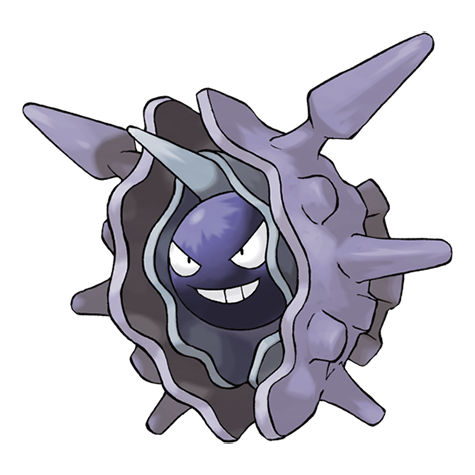
Cloyster is listed at 4' 11" (1.5 m); this chart uses a pose-adjusted visual scale.

How is visual size determined?
Pokédex height is treated as the official listed measurement, but the chart uses pose-aware visual scaling so each sprite looks reasonable in a direct comparison.
For long or coiled Pokémon, the listed height may represent total body length rather than upright height. For Pokémon with floppy ears, leaves, feathers, antennae, wings, or other flexible features, the chart usually measures to the top of the solid, substantial part of the head or body instead of the tallest decorative feature.
The goal is not to replace the official height, but to make the artwork compare naturally at the size it appears to occupy.
Cloyster currently uses a pose-adjusted visual scale.