Gastly is a Ghost/Poison-type Pokémon introduced in Generation I and the first stage of its evolution line, with a base stat total of 310.

Gastly


Abilities
Not hit by GROUND attacks.
Base Stats
Gastly's Weaknesses and Resistances






Evolution Chain
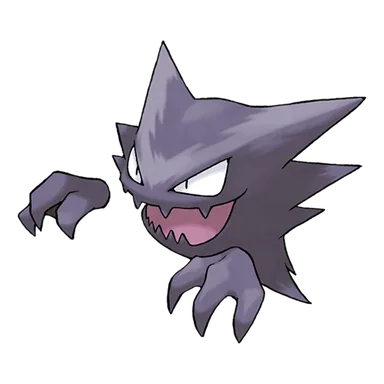
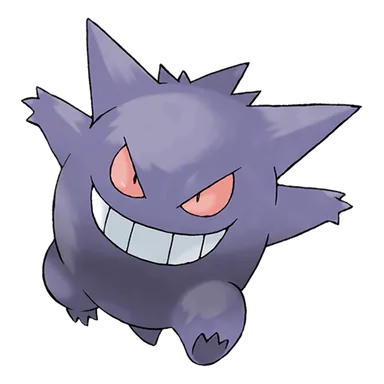
Gastly evolves into Haunter at level 25, and Haunter evolves into Gengar by trading or with a Linking Cord.
 Gastly
 Haunter
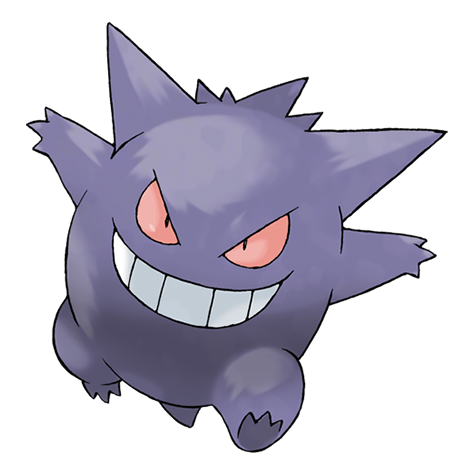 Gengar
Gastly Playthrough, Competitive, and Nuzlocke Usage
Using Gastly in a Playthrough
The Gastly line develops into one of the series' fastest and strongest special-attacking Ghost lines, combining high Special Attack and Speed with useful immunities to Normal and Fighting attacks. Haunter already possesses strong offensive stats after evolving at level 25 and remains a viable playthrough Pokemon when trading is unavailable, while Gengar improves its Speed, power, and durability further. The need to trade Haunter to obtain Gengar is the line's major practical drawback in many games, making Haunter the realistic final stage for players without access to trading. Earlier generations restrict the line more severely because Ghost attacks such as Shadow Ball were physical before the Generation IV physical/special split, preventing Gengar from using its high Special Attack for its primary Ghost STAB; the split dramatically improved its direct offense. Gengar has also benefited from broad special coverage, status and disruption moves, and, in games where it is available, Mega Evolution. Its defensive profile also changes unusually across generations: Gengar possessed Levitate from Generations III through VI, granting a valuable Ground immunity, but from Generation VII onward its ability became Cursed Body and Ground attacks once again became a major threat. In Red, Blue, and Yellow Version, Haunter can be picked up before the 4th gym at lvl 25. Even without access to Gengar, Haunter can still hit very hard with TMs like Thunderbolt, Psychic, Gigadrain. In early gens, Normal moves are very common so Ghost typing is incredibly useful.
Gastly in Competitive Pokémon
Gengar has one of the longest histories of competitive relevance among Generation I Pokemon, with high Special Attack, excellent Speed, immunities, and an unusually broad utility movepool allowing it to function as an attacker, disruptor, spinblocker in older formats, or revenge killer across many generations. Its competitive importance actually begins in Generation I, where Gengar is the only fully evolved Ghost-type and occupies a role unlike anything else in the format. Its Normal immunity lets it completely ignore influential moves such as Body Slam, Hyper Beam, Self-Destruct, and Explosion, while its Speed makes Hypnosis the fastest sleep-inducing move available in standard RBY play. Its high Generation I Speed also gives it a comparatively high critical-hit rate under that game's mechanics, adding another layer of danger to an already unpredictable Pokemon. Smogon describes it as a centralizing threat in ADV and a potent offensive and utility Pokemon in DPP, while later generations continued to use combinations of Shadow Ball, Sludge Wave, Focus Blast, Taunt, Destiny Bond, and other disruptive options. Mega Gengar raised the line's competitive ceiling dramatically through much higher offensive stats and Shadow Tag, which prevented many opponents from switching and made it an exceptionally powerful trapper. Gengar remains physically frail, and its loss of Levitate beginning in Generation VII removed the Ground immunity that standard Gengar possessed during Generations III through VI.
Gastly in Nuzlockes
The Gastly line is a strong but fragile Nuzlocke option whose immunities can create completely safe switches against predictable Normal- and Fighting-type attacks. Haunter remains valuable even without trade evolution because its Special Attack and Speed are already high, while Gengar provides a substantial improvement when trading is allowed; FireRed and LeafGreen community evaluations place both forms favorably despite the pre-split weakness of physical Shadow Ball. Their low physical bulk means unexpected coverage or failed damage calculations can be fatal, and the Poison typing also creates a Psychic weakness that must be respected. One particularly important generational quirk is that evolving Haunter can actually remove a defensive immunity. Haunter retains Levitate in later games, while Gengar has Cursed Body from Generation VII onward, meaning a Haunter that was completely safe from Ground attacks suddenly becomes weak to them after evolving. This makes opponent moveset knowledge especially important in a Nuzlocke and can occasionally make delaying the evolution tactically useful. The line therefore rewards planned switching and offensive play much more than attempting to absorb unknown neutral attacks.
Learnsets
70 moves · Scarlet Violet
Level Up



Machine




Egg
Pokédex Entries
19 entries
Almost invisible, this gaseous POKéMON cloaks the target and puts it to sleep without notice.
Said to appear in decrepit, deserted buildings. It has no real shape as it appears to be made of a gas.
With its gas-like body, it can sneak into any place it desires. However, it can be blown away by wind.
Its thin body is made of gas. It can envelop an opponent of any size and cause suffocation.
It wraps its opponent in its gas- like body, slowly weakening its prey by poisoning it through the skin.
GASTLY is largely composed of gaseous matter. When exposed to a strong wind, the gaseous body quickly dwindles away. Groups of this POKéMON cluster under the eaves of houses to escape the ravages of wind.
When exposed to a strong wind, a GASTLY’s gaseous body quickly dwindles away. They cluster under the eaves of houses to escape the ravages of wind.
A being that exists as a thin gas. It can topple an Indian elephant by enveloping the prey in two seconds.
This Pokémon’s body is 95% made up of gases, which are blown away by strong gusts of wind.
A Pokémon born from poison gases. It defeats even the largest foes by enveloping them in gas.
Born from gases, anyone would faint if engulfed by its gaseous body, which contains poison.
Its body is made of gas. Despite lacking substance, it can envelop an opponent of any size and cause suffocation.
Gastly is largely composed of gaseous matter. When exposed to a strong wind, the gaseous body quickly dwindles away. Groups of this Pokémon cluster under the eaves of houses to escape the ravages of wind.
Should a strange light be seen flickering in an abandoned building, Gastly is lurking there.
Although Gastly is barely visible, when it’s near, a faint sweet smell lingers.
It’s said that gas emanating from a graveyard was possessed by the grievances of the deceased and thus became a Pokémon.
Poisonous gas comprises 95% of its body. It’s said that the remaining 5% is made up of the souls of those who died from the gas.
Said to appear in decrepit, deserted buildings. It has no real shape, as it appears to be made of a gas.
Gaseous and completely impalpable. Also highly dangerous— inhaling part of its poisonous body will cause one to faint instantly.
Where To Find Gastly
18 locations
Hau’oli Cemetery · AlolaWalking · version details vary
Hauoli Cemetery Area
Memorial Hill · AlolaWalking · version details vary
Memorial Hill Area
Poké Pelago · AlolaGift · version details vary
Poke Pelago Elite Four Defeated
Poke Pelago Poni Island Reached
Poke Pelago Ulaula Island Reached
Route 1 · AlolaOne-time · version details vary
Alola Route 1 Trainers School
Bell Tower · JohtoWalking · version details vary
Bell Tower (10F)
Bell Tower (2F)
Bell Tower (3F)
Bell Tower (4F)
Bell Tower (5F)
Bell Tower (6F)
Bell Tower (7F)
Bell Tower (8F)
Bell Tower (9F)
Johto Safari Zone · JohtoWalking · version details vary
Safari Zone Forest
Route 31 · JohtoWalking · version details vary
Road 31
Route 32 · JohtoWalking · version details vary
Road 32
Route 36 · JohtoWalking · version details vary
Road 36
Sprout Tower · JohtoWalking · version details vary
Sprout Tower (2F)
Sprout Tower (3F)
Lost Cave · KantoWalking · version details vary
Lost Cave (item rooms)
Lost Cave (room 1)
Lost Cave (room 10)
Lost Cave (room 2)
Lost Cave (room 3)
Lost Cave (room 4)
Lost Cave (room 5)
Lost Cave (room 6)
Lost Cave (room 7)
Lost Cave (room 8)
Lost Cave (room 9)
Pokémon Tower · KantoWalking, Overworld · version details vary
Pokemon Tower (3F)
Pokemon Tower (4F)
Pokemon Tower (5F)
Pokemon Tower (6F)
Pokemon Tower (7F)
Eterna Forest · SinnohWalking · version details vary
Eterna Forest
Lost Tower · SinnohWalking · version details vary
Lost Tower (1F)
Lost Tower (2F)
Lost Tower (3F)
Lost Tower (4F)
Lost Tower (5F)
Old Chateau · SinnohWalking · version details vary
Old Chateau (2F left room)
Old Chateau (2F leftmost room)
Old Chateau (2F middle room)
Old Chateau (2F private room)
Old Chateau (2F right room)
Old Chateau (2F rightmost room)
Old Chateau (2F)
Old Chateau (dining room)
Old Chateau (entrance)
Route 209 · SinnohWalking · version details vary
Road 209
Trainers’ School · SinnohOne-time · version details vary
Trainers' School
Turnback Cave · SinnohWalking · version details vary
Turnback Cave (before pillar 1)
Turnback Cave (pillar 1)
Additional Images
PokeAPI sprites
Open this section to load extra PokeAPI sprite images.
Gastly Biology and Behavior
Gastly's body is described as approximately ninety-five percent poisonous gas, with the remaining portion believed in Pokedex lore to consist of souls lost to that gas. The surrounding vapor can cause fainting or suffocation and can expand around targets much larger than Gastly itself. Animated depictions show Gastly creating illusions, changing form, passing through solid objects, and forming temporary hands from its gas, while also portraying some individuals as playful pranksters. Strong winds can disperse its gaseous body, causing groups of Gastly to shelter together under structures such as house eaves.
Gastly Biological Data
- National Pokédex
- #92
- Species
- Gas Pokémon
- Height
- 4' 3" (1.3 m)
- Weight
- 0.2 lbs (0.1 kg)
- Habitat
- Cave
- Color
- Purple
- Body Style
- Ball
- Gender
- 50% female / 50% male
Misc
Catch Rate: 190
Base Experience: 62 Exp
Hatch Counter: 20
Gastly Size Comparison: BETA
Gastly is listed at 4' 3" (1.3 m) and shown in an in-chart visual comparison.


How is visual size determined?
Pokédex height is treated as the official listed measurement, but the chart uses pose-aware visual scaling so each sprite looks reasonable in a direct comparison.
For long or coiled Pokémon, the listed height may represent total body length rather than upright height. For Pokémon with floppy ears, leaves, feathers, antennae, wings, or other flexible features, the chart usually measures to the top of the solid, substantial part of the head or body instead of the tallest decorative feature.
The goal is not to replace the official height, but to make the artwork compare naturally at the size it appears to occupy.