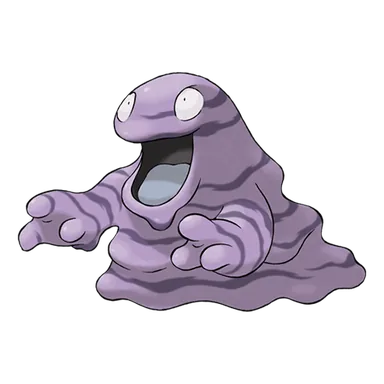
Muk is a Poison-type Pokémon introduced in Generation I and a final stage of its evolution line, with a base stat total of 500.
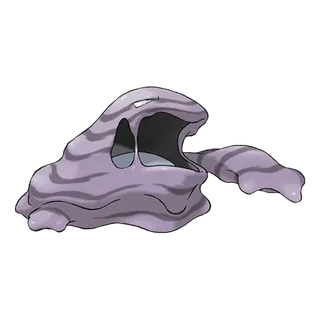
Muk

Abilities
Helps repel wild POKéMON.
Prevents item theft.
May poison targets when a Pokémon makes contact.
Hidden AbilityBase Stats
Muk's Weaknesses and Resistances





Evolution Chain
Grimer evolves into Muk at level 38.
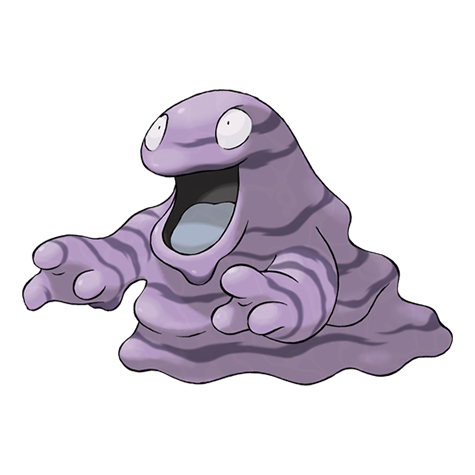 Grimer
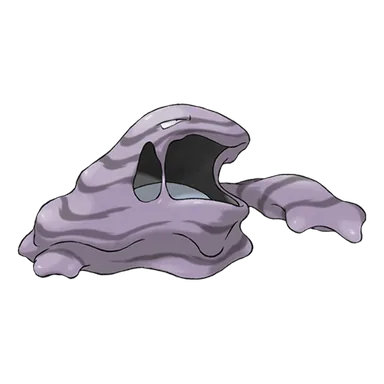 Muk
Forms
 Alolan Muk

Muk Playthrough, Competitive, and Nuzlocke Usage
Using Muk in a Playthrough
The Grimer line is a slow, physically oriented Poison line with high HP and strong Special Defense once it reaches Muk. Standard Muk can absorb special attacks effectively and use physical Poison STAB, status, and generation-dependent coverage, but its low Speed and relatively late level-38 evolution prevent it from being an especially efficient story-mode attacker. Alolan Muk is substantially more distinctive: Poison/Dark typing leaves it with only a Ground weakness under normal type interactions, provides a Psychic immunity, and complements its excellent special bulk with useful Dark STAB such as Knock Off or Crunch. Both forms can be effective bulky attackers, but Alolan Muk generally has the stronger defensive profile and easier time finding safe matchups.
Muk in Competitive Pokémon
Standard Muk has historically occupied lower-tier roles as a specially bulky physical attacker, using strong Poison STAB, status, and abilities such as Poison Touch or Sticky Hold to wear down opponents. Curse has also supported slow setup strategies by increasing Muk's Attack and Defense while its already poor Speed is of relatively little concern. Alolan Muk achieved a more prominent niche because Poison/Dark typing combines excellent defensive properties with very high special bulk, allowing Assault Vest sets in particular to check powerful special attackers while threatening them with Knock Off, Pursuit in generations where it exists, or Poison STAB. Poison Touch can add additional status pressure to contact moves, while Power of Alchemy provides a separate doubles-oriented ability unique to the Alolan line.
Muk in Nuzlockes
Standard Muk provides useful Nuzlocke safety against special attackers because of its high HP and Special Defense, but low Speed and relatively late evolution mean it frequently takes damage before acting and may join the team after several important early battles have passed. FireRed and LeafGreen community analysis places Muk around the middle of the encounter pool rather than among the game's strongest options, reflecting respectable durability but limited matchup dominance. Alolan Muk is considerably easier to use defensively because Poison/Dark typing supplies a Psychic immunity and normally leaves Ground as its only super-effective weakness, while its natural special bulk lets it absorb many neutral attacks safely. Both forms still need caution against strong physical Ground attacks, but Alolan Muk in particular can provide unusually reliable defensive role compression.
Learnsets
75 moves · Scarlet Violet
Level Up




Machine






Pokédex Entries
20 entries
Thickly covered with a filthy, vile sludge. It is so toxic, even its footprints contain poison.
Smells so awful, it can cause fainting. Through degeneration, it lost its sense of smell.
They love to gather in smelly areas where sludge accumulates, making the stench around them worse.
Its body is made of a powerful poison. Touching it accidentally will cause a fever that requires bed rest.
As it moves, a very strong poison leaks from it, making the ground there barren for three years.
From MUK’s body seeps a foul fluid that gives off a nose-bendingly horrible stench. Just one drop of this POKéMON’s body fluid can turn a pool stagnant and rancid.
This POKéMON’s favorite food is anything that is repugnantly filthy. In dirty towns where people think nothing of throwing away litter on the streets, MUK are certain to gather.
It prefers warm and humid habitats. In the summertime, the toxic substances in its body intensify, making MUK reek like putrid kitchen garbage.
It is usually undetectable because it blends in with the ground. Touching it can cause terrible poisoning.
A toxic fluid seeps from its body. The fluid instantly kills plants and trees on contact.
They love to gather in smelly areas where sludge accumulates, making the stench around them worse.
Its body is made of a powerful poison. Touching it accidentally will cause a fever that requires bed rest.
It’s so stinky! Muk’s body contains toxic elements, and any plant will wilt when it passes by.
From Muk’s body seeps a foul fluid that gives off a nose-bendingly horrible stench. Just one drop of this Pokémon’s body fluid can turn a pool stagnant and rancid.
This Pokémon’s favorite food is anything that is repugnantly filthy. In dirty towns where people think nothing of throwing away litter on the streets, Muk are certain to gather.
The stench it gives off will make your nose scrunch up. Still, there are Muk fans who think that’s a good thing.
After recent environmental improvements, this Pokémon is now hardly seen at all. People speculate that it may go extinct at some point.
Their food sources have decreased, and their numbers have declined sharply. Sludge ponds are being built to prevent their extinction.
Because they scatter germs everywhere, they’ve long been targeted for extermination, leading to a steep decline in their population.
Smells so awful, it can cause fainting. Through degeneration of its nose, it lost its sense of smell.
Where To Find Muk
10 locations
Friend Safari · KalosWalking · version details vary
Friend Safari (Poison)
Celadon City · KantoSurf · version details vary
Celadon City
Cinnabar Island · KantoNpc Trade · version details vary
Cinnabar Lab (Cinnabar Island)
Kanto Power Plant · KantoOverworld, Walking · version details vary
Power Plant
Pokémon Mansion · KantoWalking, Overworld · version details vary
Pokemon Mansion (1F)
Pokemon Mansion (2F)
Pokemon Mansion (3F)
Pokemon Mansion (B1F)
Route 16 · KantoWalking · version details vary
Road 16
Route 17 · KantoWalking · version details vary
Road 17
Route 18 · KantoWalking · version details vary
Road 18
Castelia Sewers · UnovaSuper Rod Spots, Surf Spots · version details vary
Castelia Sewers
Castelia Sewers (unknown area 38)
Route 9 · UnovaDark Grass, Walking, Hidden Grotto · version details vary
Road 9
Unova Route 9 (Hidden Grotto)
Held Items
3 items
- Black 2: 50% chance
- White 2: 50% chance
- X: 50% chance
- Y: 50% chance
- Omega Ruby: 50% chance
- Alpha Sapphire: 50% chance
- Sun: 50% chance
- Moon: 50% chance
- Ultra Sun: 50% chance
- Ultra Moon: 50% chance
- Ruby: 5% chance
- Sapphire: 5% chance
- Emerald: 5% chance
- Diamond: 5% chance
- Pearl: 5% chance
- Platinum: 5% chance
- Heartgold: 5% chance
- Soulsilver: 5% chance
- Black: 5% chance
- White: 5% chance
- Black 2: 1% chance
- White 2: 1% chance
Additional Images
PokeAPI sprites
Open this section to load extra PokeAPI sprite images.
Muk Biology and Behavior
Muk is a living mass of highly toxic sludge whose secretions can kill vegetation on contact and leave contaminated ground barren for years. Even proximity to Muk can cause plants to wilt, while physical contact may cause severe illness and its odor is strong enough to make people faint. It feeds readily on human and Pokemon waste and gathers around polluted waterways, factories, and cities where refuse is abundant. Environmental cleanup and extermination efforts have reduced some Muk populations enough that artificial sludge ponds have been created to help preserve the species.
Muk Biological Data
- National Pokédex
- #89
- Species
- Sludge Pokémon
- Height
- 3' 11" (1.2 m)
- Weight
- 66.1 lbs (30.0 kg)
- Habitat
- Urban
- Color
- Purple
- Body Style
- Arms
- Gender
- 50% female / 50% male
Misc
Catch Rate: 75
Base Experience: 175 Exp
Hatch Counter: 20
Muk Size Comparison: BETA
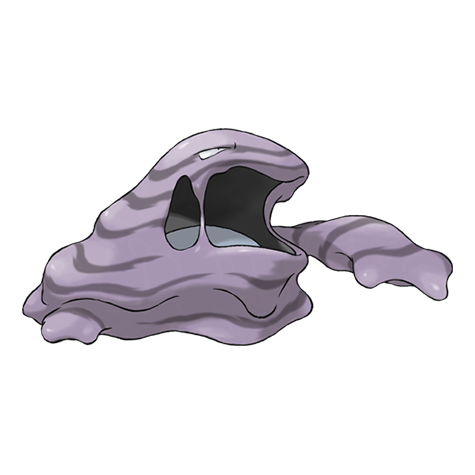
Muk is listed at 3' 11" (1.2 m) and shown in an in-chart visual comparison.

How is visual size determined?
Pokédex height is treated as the official listed measurement, but the chart uses pose-aware visual scaling so each sprite looks reasonable in a direct comparison.
For long or coiled Pokémon, the listed height may represent total body length rather than upright height. For Pokémon with floppy ears, leaves, feathers, antennae, wings, or other flexible features, the chart usually measures to the top of the solid, substantial part of the head or body instead of the tallest decorative feature.
The goal is not to replace the official height, but to make the artwork compare naturally at the size it appears to occupy.