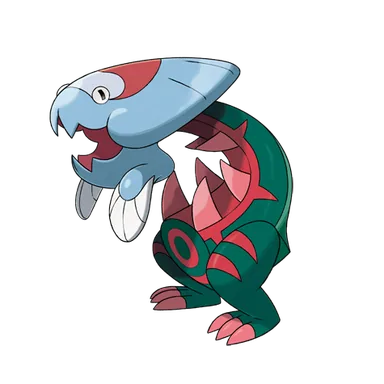
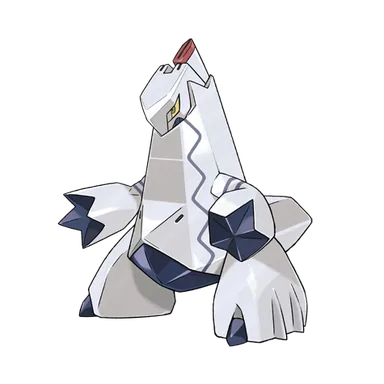
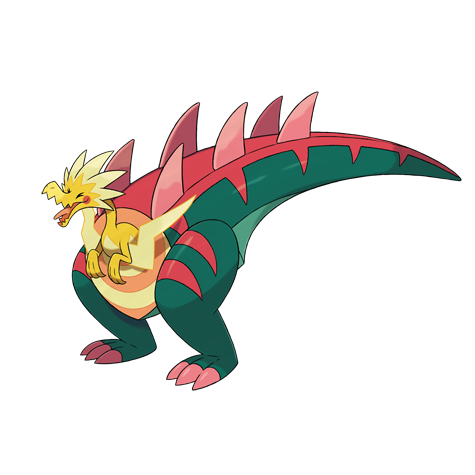
Dracozolt is an Electric/Dragon-type Pokémon introduced in Generation VIII, with a base stat total of 505 and no standard evolutions.
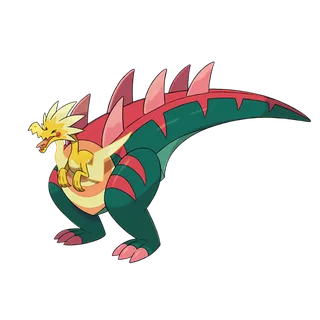
Dracozolt


Abilities
Turns electricity into HP.
Trades accuracy for power.
Boosts the Pokémon’s Speed in a sandstorm.
Hidden AbilityBase Stats
Dracozolt's Weaknesses and Resistances





Evolution Chain
Dracozolt does not evolve into or from any other Pokémon.
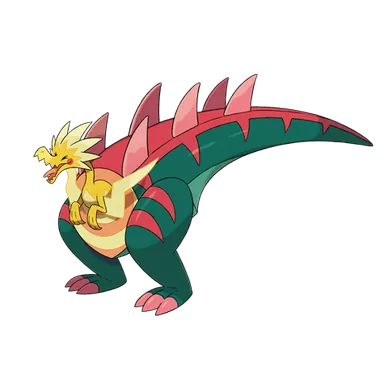 Dracozolt
 Playthrough, Competitive, and Nuzlocke Usage
Using Dracozolt in a Playthrough
Dracozolt is a standalone Galarian Fossil Pokémon restored in Sword and Shield by combining a Fossilized Bird with a Fossilized Drake, so it has no evolution stage to train through once the fossils are obtained. Its Electric/Dragon typing is excellent offensively and offers useful resistances to Fire, Flying, Grass, Steel, Water, and especially Electric, while Dragon, Fairy, Ground, and Ice attacks are its primary weaknesses. The defining move is Bolt Beak, an 85-power physical Electric attack in Sword/Shield that doubles to 170 power if Dracozolt moves before its target, making speed control dramatically more important than the species' ordinary base 100 Attack would imply. Base 75 Speed is only moderate, so Thunder Wave support, Choice Scarf, or the Hidden Ability Sand Rush can help Dracozolt activate Bolt Beak's doubled power more consistently; under sand, Sand Rush doubles its Speed and also prevents sandstorm damage. Hustle instead raises physical Attack by 50% but reduces the accuracy of physical moves to 80% of their normal value, creating spectacular damage at the cost of exactly the sort of misses that can make a story battle unreliable. Dragon Claw or Breaking Swipe gives dependable secondary STAB, while Earthquake, Fire Fang, Rock Slide, Low Kick, and special options such as Draco Meteor or Fire Blast can fill coverage gaps depending on the set. For a normal playthrough, Volt Absorb is often the most forgiving Ability because it creates an Electric immunity and healing opportunity without requiring weather or accepting Hustle's accuracy penalty.
Dracozolt in Competitive Pokémon
Dracozolt finished Sword/Shield in UUBL and developed a genuine OU niche because Sand Rush fixes its middling base 75 Speed and turns Bolt Beak into an extraordinarily threatening wallbreaking tool whenever Dracozolt moves first. Smogon's SS OU analysis describes it as one of sand's most dangerous breakers, capable of threatening staples such as Toxapex and Corviknight while using mixed coverage to pressure the Ground- and Grass-types normally expected to absorb Electric attacks. Bolt Beak is the centerpiece: its power doubles from 85 to 170 when Dracozolt attacks before its target, and Sand Rush can make that condition routine rather than exceptional. Mixed sets used Draco Meteor for Ground- and Dragon-types and Fire Blast or Fire Spin for targets such as Ferrothorn, while Earthquake supplied physical coverage; this flexibility made simply switching a Ground-type into Bolt Beak less automatic than the type chart suggested. Hustle was another offensive route earlier in the generation, multiplying Attack at the cost of physical accuracy, but competitive sand teams preferred Sand Rush's ability to guarantee favorable Speed interactions without introducing an accuracy tax. Its limitations were equally clear: Dracozolt was strongly dependent on sand support, could be pressured easily outside weather, and often had to predict correctly during a limited number of sand turns. It is unavailable in Scarlet/Violet and Legends: Z-A, so it has no normal Generation IX usage tier; its established singles history remains primarily a Generation VIII sand offense story rather than a current SV metagame role.
Dracozolt in Nuzlockes
Dracozolt is powerful enough to trivialize many favorable Nuzlocke matchups, but its safest configuration is not always the one that produces the highest theoretical damage. Volt Absorb is particularly valuable in permadeath play because an Electric attack becomes a healing opportunity, while Electric/Dragon typing supplies several useful resistances for controlled switches. Bolt Beak is excellent when Dracozolt is definitely faster because its doubled power can prevent the opponent from attacking at all, but base 75 Speed is not sufficient to assume that condition against every evolved opponent. Hustle should be treated cautiously: increasing Attack by 50% is attractive, but multiplying physical accuracy by 0.8 turns otherwise reliable moves into potential run-ending misses, and Bolt Beak is already strong without accepting that risk. Sand Rush can make Bolt Beak safer by doubling Speed in sand, but a Nuzlocke team should not depend on temporary weather unless the setter and turn count are under control. Dragon Claw, Earthquake, and other 100%-accurate attacks are preferable when Bolt Beak's doubled power is unnecessary, while Draco Meteor and Fire Blast bring accuracy or stat-drop concerns better suited to specific planned matchups than routine travel. Fairy, Ground, Ice, and Dragon moves remain the major matchup hazards, and Dracozolt's merely average special bulk means a wrong prediction can still be costly despite its strong offensive pressure.
Learnsets
13 moves · Sword Shield
Level Up — Sword Shield





Pokédex Entries
2 entries
In ancient times, it was unbeatable thanks to its powerful lower body, but it went extinct anyway after it depleted all its plant-based food sources.
The powerful muscles in its tail generate its electricity. Compared to its lower body, its upper half is entirely too small.
Additional Images
PokeAPI sprites
Open this section to load extra PokeAPI sprite images.
Dracozolt Biology and Behavior
Dracozolt is a restored hybrid Fossil Pokémon assembled from a small bird-like upper fossil and a much larger draconic lower fossil, producing an intentionally mismatched body rather than a conventional prehistoric anatomy. Its enormous tail and lower-body muscles generate electricity, making the oversized lower half directly responsible for its Electric-type power. Galar's Pokédex claims that Dracozolt was once unbeatable because of its powerful lower body and eventually went extinct after consuming all of its plant-based food supply. Because the restored Pokémon is formed by combining fossils from two different creatures, that extinction narrative is best treated as an in-universe reconstruction claim rather than certain evidence about a naturally occurring ancient Dracozolt species.
Dracozolt Biological Data
- National Pokédex
- #880
- Species
- Fossil Pokémon
- Height
- 5' 11" (1.8 m)
- Weight
- 418.9 lbs (190.0 kg)
- Habitat
- Currently Unknown
- Color
- Green
- Body Style
- Upright
- Gender
- Genderless
Misc
Catch Rate: 45
Base Experience: 177 Exp
Hatch Counter: 35
Dracozolt Size Comparison: BETA
Dracozolt is listed at 5' 11" (1.8 m) and shown in an in-chart visual comparison.

How is visual size determined?
Pokédex height is treated as the official listed measurement, but the chart uses pose-aware visual scaling so each sprite looks reasonable in a direct comparison.
For long or coiled Pokémon, the listed height may represent total body length rather than upright height. For Pokémon with floppy ears, leaves, feathers, antennae, wings, or other flexible features, the chart usually measures to the top of the solid, substantial part of the head or body instead of the tallest decorative feature.
The goal is not to replace the official height, but to make the artwork compare naturally at the size it appears to occupy.