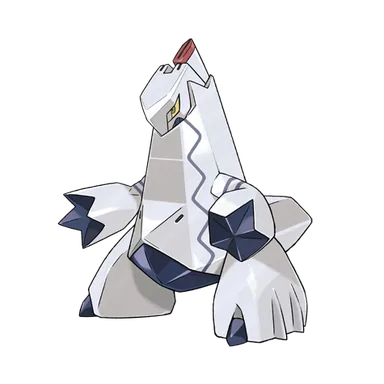
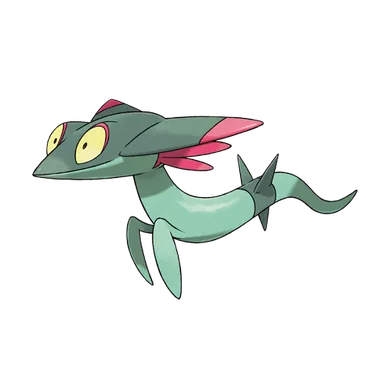
Dracovish is a Water/Dragon-type Pokémon introduced in Generation VIII, with a base stat total of 505 and no standard evolutions.
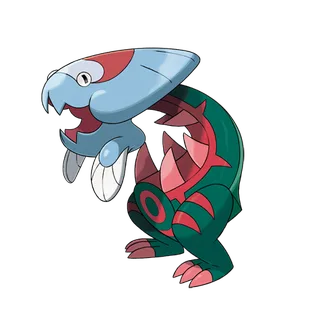
Dracovish


Abilities
Changes water into HP.
The Pokémon’s strong jaw gives it tremendous biting power.
Boosts the Pokémon’s Speed in a sandstorm.
Hidden AbilityBase Stats
Dracovish's Weaknesses and Resistances


Evolution Chain
Dracovish does not evolve into or from any other Pokémon.
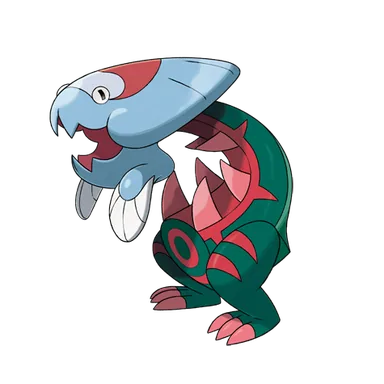 Dracovish
 Playthrough, Competitive, and Nuzlocke Usage
Using Dracovish in a Playthrough
Dracovish is restored from a Fossilized Fish and a Fossilized Drake and has no evolution, making its full 505 base-stat total available as soon as the player completes the fossil restoration on Route 6. Its Water/Dragon typing is exceptionally efficient defensively, leaving only Dragon and Fairy weaknesses while resisting Steel and taking only one-quarter damage from both Fire and Water. The defining combination is Strong Jaw plus Fishious Rend: Fishious Rend has 85 base power in Sword/Shield, doubles to 170 if Dracovish moves before its target, and then receives the 1.5× Strong Jaw boost because it is a biting move, before even accounting for STAB, rain, or held items. Base 75 Speed is only moderate, so a Choice Scarf or speed support greatly increases the number of targets against which Fishious Rend receives its doubled power, while Choice Band maximizes damage when Dracovish already outspeeds the opponent. Crunch and Psychic Fangs are also boosted by Strong Jaw and supply useful coverage, while Dragon STAB such as Outrage or Dragon Rush can punish Water-immune Pokémon and opposing Dragons. Water Absorb offers a much more defensive playthrough option by turning Water attacks into healing, and the Hidden Ability Sand Rush can double Speed in sand, although Strong Jaw is usually the simplest way to exploit what makes Dracovish exceptional. For ordinary story battles, Dracovish combines favorable typing, good physical bulk, and a perfectly accurate signature move with extraordinary damage, making it one of the most immediately powerful fossil restorations in the series.
Dracovish in Competitive Pokémon
Dracovish was one of the most metagame-warping Pokémon introduced in Sword and Shield and ultimately became an Uber despite an otherwise ordinary-looking 505 base-stat total. Its central interaction was Choice Band or Choice Scarf Strong Jaw Fishious Rend: the move doubles from 85 to 170 base power whenever Dracovish attacks before the target, receives Strong Jaw's 1.5× boost, gains Water STAB, and can be amplified still further by rain. From the beginning of SS OU, this allowed Dracovish to overwhelm nominal Water resists such as Toxapex and Ferrothorn and forced teams to rely heavily on Water immunities such as Seismitoad, Gastrodon, or Jellicent if they wanted a truly safe initial answer. That teambuilding pressure led to an official OU suspect test beginning in May 2020, and on June 1, 2020, Dracovish was banned from SS OU. It remained viable even after entering Ubers: Smogon's Ubers analysis describes Fishious Rend as strong enough to break defensive staples such as Necrozma-Dusk-Mane, Blissey, and Ho-Oh, with Choice Band maximizing wallbreaking and Choice Scarf improving the chance of moving first. The counters became more realistic at that power level—Eternatus could resist Water and threaten Dragon damage, faster offensive teams reduced the Fishious Rend bonus, and lack of recovery made Dracovish susceptible to status and chip—but the basic wallbreaking mechanism remained dangerous. Dracovish is unavailable in Scarlet/Violet and Legends: Z-A and was not part of Pokémon Champions' initial 2026 roster, so its defining competitive résumé remains the extraordinary Generation VIII rise from new fossil Pokémon to OU ban and Ubers wallbreaker.
Dracovish in Nuzlockes
Dracovish is outstanding in a Nuzlocke because Water/Dragon typing gives it only two weaknesses and strong Fire and Water resistances, while 90 HP and 100 Defense provide respectable physical durability. Strong Jaw Fishious Rend is also unusually safe for such a powerful attack because it has perfect accuracy, and moving first can turn many planned battles into one-hit knockouts rather than damage trades. The important caveat is Speed: base 75 is not fast enough to assume the doubled Fishious Rend power against every opponent, so damage calculations based on 170 power are unsafe unless the speed order is known. Water Absorb can be preferable when the team needs a defensive Water immunity and healing pivot, while Sand Rush can provide speed control in a planned sand composition; both sacrifice Strong Jaw's enormous damage boost. Psychic Fangs and Crunch are accurate Strong Jaw coverage moves and usually safer than Dragon Rush, whose 75% accuracy is difficult to justify in permadeath play. Outrage is powerful but locks Dracovish into multiple turns and causes confusion afterward, making it risky when the opponent has Fairy-types, revenge killers, or multiple remaining Pokémon. Fairy and Dragon attacks should be scouted carefully, but outside those matchups Dracovish's typing, bulk, and accurate high-power STAB give it one of the largest safety margins among the Galar fossils.
Learnsets
13 moves · Sword Shield
Level Up — Sword Shield






Pokédex Entries
2 entries
Powerful legs and jaws made it the apex predator of its time. Its own overhunting of its prey was what drove it to extinction.
Its mighty legs are capable of running at speeds exceeding 40 mph, but this Pokémon can’t breathe unless it’s underwater.
Additional Images
PokeAPI sprites
Open this section to load extra PokeAPI sprite images.
Dracovish Biology and Behavior
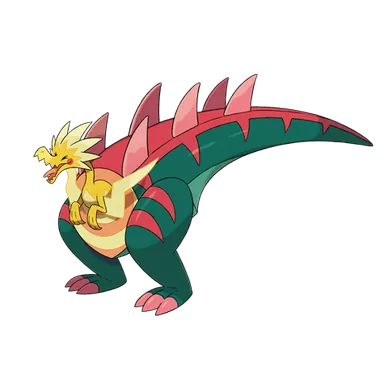
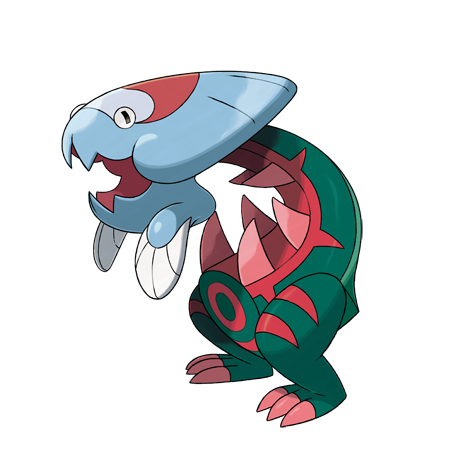
Dracovish is a reconstructed hybrid Fossil Pokémon in which a fish-like head is attached to the tail end of a powerful draconic lower body, creating a radically mismatched anatomy. Its legs and jaws are tremendously strong, and Galar's Pokédex describes it as capable of running faster than 40 miles per hour while functioning as an apex predator. Paradoxically, it can breathe only while underwater, making the powerful terrestrial legs difficult to reconcile with the fish head's respiratory needs. Pokédex records claim that it drove its prey toward depletion and thereby caused its own extinction, but the creature is assembled from two separate fossil species, so that narrative is better understood as an in-universe reconstruction theory rather than certain natural history. In Pokémon Journeys, Ash's Dracovish also displayed a dormant power that surrounded its chest spikes with a red aura and allowed those spikes to extend or bind targets, adding an animated-series behavior not explained by the game Pokédex.
Dracovish Biological Data
- National Pokédex
- #882
- Species
- Fossil Pokémon
- Height
- 7' 7" (2.3 m)
- Weight
- 474.0 lbs (215.0 kg)
- Habitat
- Currently Unknown
- Color
- Green
- Body Style
- Legs
- Gender
- Genderless
Misc
Catch Rate: 45
Base Experience: 177 Exp
Hatch Counter: 35
Dracovish Size Comparison: BETA
Dracovish is listed at 7' 7" (2.3 m) and shown in an in-chart visual comparison.

How is visual size determined?
Pokédex height is treated as the official listed measurement, but the chart uses pose-aware visual scaling so each sprite looks reasonable in a direct comparison.
For long or coiled Pokémon, the listed height may represent total body length rather than upright height. For Pokémon with floppy ears, leaves, feathers, antennae, wings, or other flexible features, the chart usually measures to the top of the solid, substantial part of the head or body instead of the tallest decorative feature.
The goal is not to replace the official height, but to make the artwork compare naturally at the size it appears to occupy.