Eevee is a Normal-type Pokémon introduced in Generation I and the first stage of its evolution line, with a base stat total of 325.
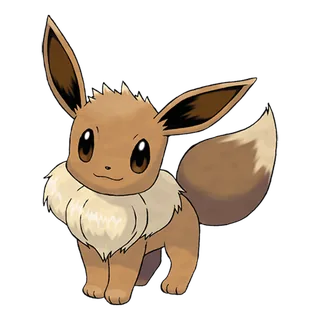
Eevee

Abilities
Enables a sure getaway from wild Pokémon.
Powers up moves of the same type.
Senses the foe’s dangerous moves.
Hidden AbilityBase Stats
Eevee's Weaknesses and Resistances


Evolution Chain
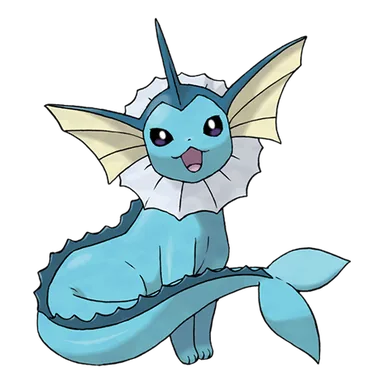
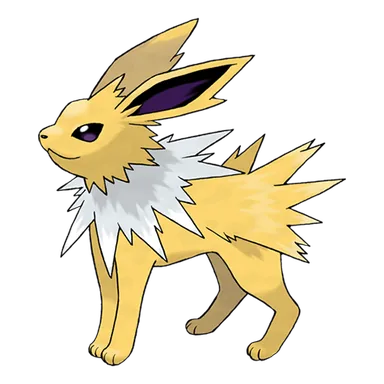
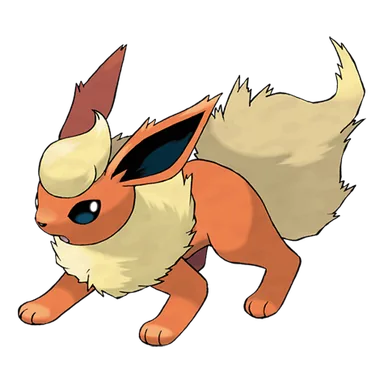
Eevee has 8 possible evolutions: Vaporeon, Jolteon, Flareon, Espeon, Umbreon, Leafeon, Glaceon, and Sylveon, with the required method varying by evolution.
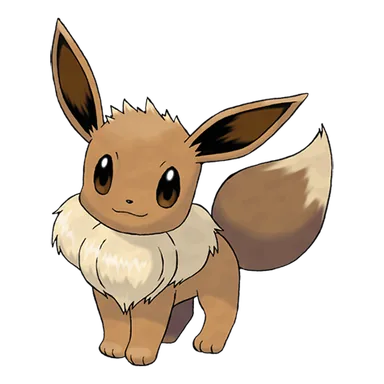 Eevee
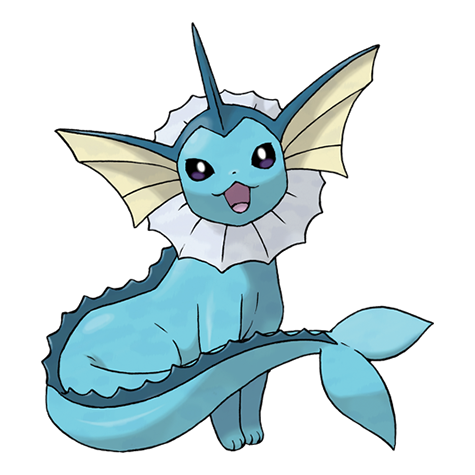 Vaporeon

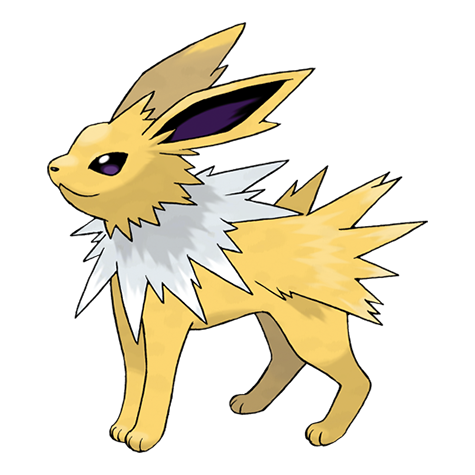 Jolteon

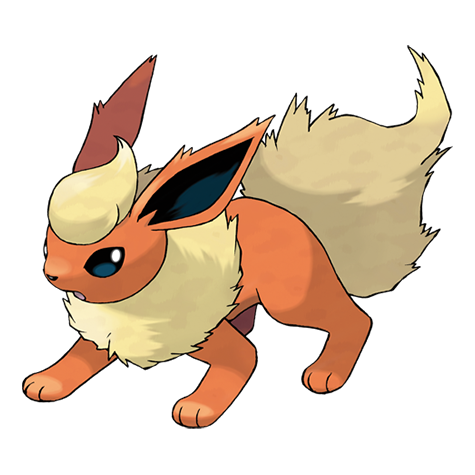 Flareon

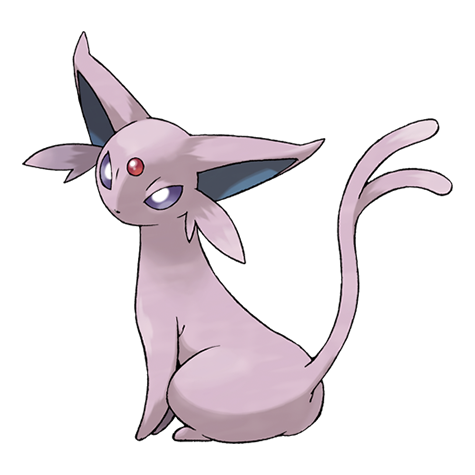 Espeon

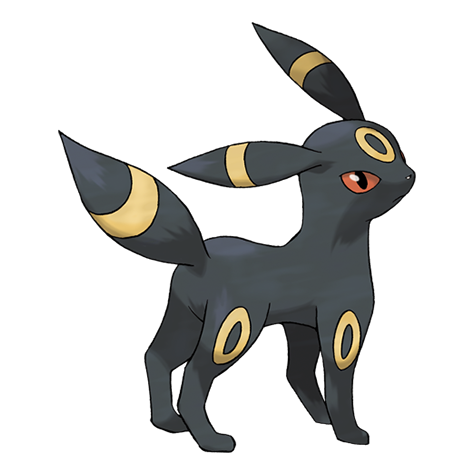 Umbreon

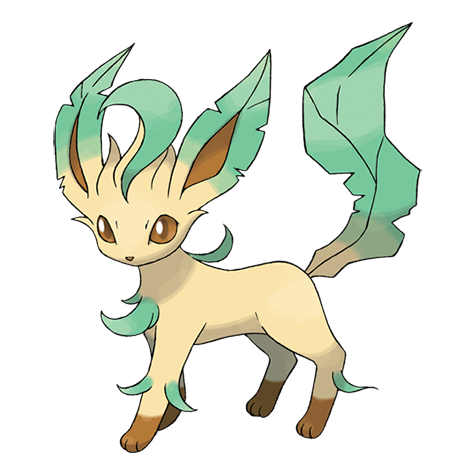 Leafeon

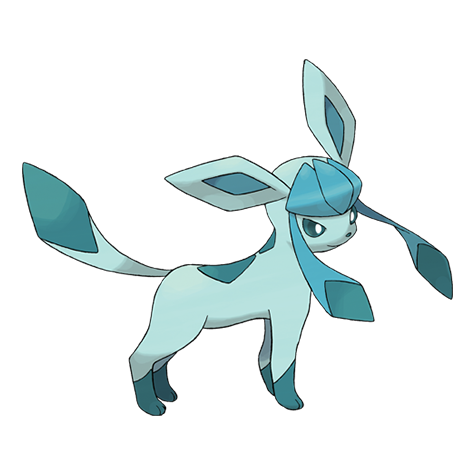 Glaceon

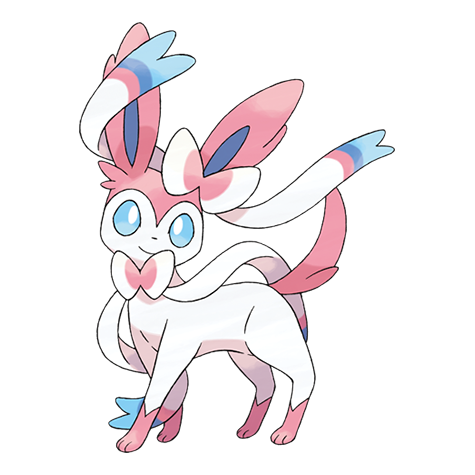 Sylveon

Forms
 Eevee Starter
 Eevee Gmax
Eevee Playthrough, Competitive, and Nuzlocke Usage
Using Eevee in a Playthrough
Eevee's greatest value in a normal playthrough is not its performance before evolving, but the extraordinary amount of control it gives the player over what role a single encounter can eventually fill. Standard Eevee has only a 325 base-stat total and modest offenses, bulk, and Speed, so leaving it unevolved usually means deliberately giving up a substantial amount of battle power. Instead, Eevee can be developed into eight different specialized Pokemon: Vaporeon, Jolteon, Flareon, Espeon, Umbreon, Leafeon, Glaceon, or Sylveon. Depending on the game, that can let one Eevee become a Water-type tank, extremely fast Electric attacker, physical Fire attacker, fast Psychic specialist, defensive Dark-type, physical Grass attacker, Ice-type special attacker, or bulky Fairy-type. The available branches and exact evolution methods differ between generations, so Eevee's practical value depends heavily on the game being played. That flexibility makes Eevee particularly useful when obtained before the player's final team is settled. Instead of choosing an evolution immediately, a player can wait to see which typings, resistances, or offensive roles the rest of the team lacks. The original games make this decision especially consequential: Eevee could evolve only into Vaporeon, Jolteon, or Flareon, and the single Eevee obtained in Kanto forced the player to commit to one branch. Later generations progressively added Espeon and Umbreon through friendship and time of day, Leafeon and Glaceon through environmental locations and later Evolution stones, and Sylveon through friendship or affection combined with knowledge of a Fairy-type move. Eevee itself is a Normal-type with only a Fighting weakness and a Ghost immunity, but its average stats mean those favorable defensive properties do not make it especially durable. Adaptability, available from Generation IV onward, is its most useful ordinary offensive ability because it increases the same-type attack bonus of Eevee's Normal moves from 1.5x to 2x. This allows moves such as Return in generations where it exists, Double-Edge, or other strong Normal attacks to hit considerably harder than Eevee's base Attack would otherwise suggest. Even so, in ordinary games there is rarely a battle-related reason to keep a standard Eevee unevolved for long unless the player is waiting for a particular evolution condition or simply wants to use Eevee itself. Partner Eevee in Pokemon: Let's Go, Eevee! is the major exception. This Eevee cannot evolve, but it is substantially stronger than an ordinary member of the species, with a 435 base-stat total instead of 325. It can also learn eight exclusive partner moves: Bouncy Bubble, Buzzy Buzz, Sizzly Slide, Glitzy Glow, Baddy Bad, Sappy Seed, Freezy Frost, and Sparkly Swirl, giving it unusually broad Water, Electric, Fire, Psychic, Dark, Grass, Ice, and Fairy coverage. Because these moves often combine respectable damage with powerful secondary effects, Partner Eevee can function as an exceptionally versatile centerpiece throughout the entire game rather than as a temporary stage waiting to evolve.
Eevee in Competitive Pokémon
Unevolved Eevee has rarely been a conventional competitive threat because its low base stats leave it weaker, slower, and less durable than the overwhelming majority of fully evolved Pokemon. Its most persistent ordinary niche has come from Adaptability, which gives its Normal-type attacks unusually strong STAB and can make Eevee more threatening than its base 55 Attack initially suggests in formats where unevolved Pokemon are viable. It has consequently appeared primarily in Little Cup or other restricted environments rather than standard high-level singles play. Generation VII gave Eevee a far more unusual and historically significant competitive identity through Eevium Z and Extreme Evoboost. When Eevee used its exclusive Z-Move, its Attack, Defense, Special Attack, Special Defense, and Speed each rose by two stages at once. Eevee could then use Baton Pass to transfer those enormous boosts to a much more powerful teammate. A recipient gaining +2 in essentially every relevant stat could become extraordinarily difficult to stop, making the strategy known as EeveePass a legitimate team archetype rather than a novelty. The strategy required substantial team support because Eevee remained slow and fragile before activating Extreme Evoboost, and losing Eevee before it could pass its boosts could leave the entire team structure compromised. Opponents could also attempt to stop the strategy with Taunt, Haze, phazing moves such as Roar or Whirlwind, Perish Song, or simply enough immediate offensive pressure to prevent Eevee from setting up safely. Nevertheless, successful EeveePass teams became influential enough that the strategy figured prominently in competitive discussions surrounding Baton Pass; Smogon's Generation VII Ubers council specifically identified EeveePass as the most common Baton Pass archetype when Baton Pass was ultimately banned from that format. Extreme Evoboost could also turn Eevee into an attacker in its own right under the right circumstances. Because Stored Power becomes stronger for each accumulated stat boost, receiving ten total positive stages from Extreme Evoboost raises Stored Power to enormous power despite Eevee's otherwise weak Special Attack. That role remained secondary to passing the boosts to a stronger teammate, but it gave Eevee a way to punish certain opponents that attempted to shut down Baton Pass directly. Outside this unusual Generation VII strategy and specialized lower-level formats, Eevee's competitive importance is overwhelmingly overshadowed by its evolutions.
Eevee in Nuzlockes
Eevee is one of the most strategically valuable Nuzlocke encounters despite being relatively unimpressive in battle before evolution. Its defining advantage is choice: obtaining Eevee effectively gives the player the ability to select one of several completely different Pokemon after seeing what the existing team needs. A run lacking a reliable Water-type might turn it into Vaporeon; a team struggling against Water- or Flying-types might prefer Jolteon; Umbreon can provide exceptional defensive security; Espeon offers fast special offense; and the later Eeveelutions expand the possible roles even further. Unlike a random encounter whose usefulness is largely determined at the moment it is caught, Eevee can be held in reserve until a death, difficult upcoming boss, or major coverage gap makes the best evolution clearer. This flexibility becomes even more valuable because Eevee has frequently been obtainable through gifts or otherwise controlled encounters in main-series games, reducing some of the randomness normally associated with Nuzlocke team building. Kanto is a particularly important example: the Celadon City Eevee provides the player with a guaranteed opportunity to choose among the available Eeveelutions rather than relying entirely on grass encounter tables. The downside is that the choice is normally irreversible. Evolving an only Eevee into the wrong branch can become costly later in the run, so there is often genuine value in postponing the decision until the team's long-term weaknesses are apparent. Using Eevee itself in difficult Nuzlocke battles is considerably less attractive. Its 55 HP, 50 Defense, and 65 Special Defense provide little room for unexpected critical hits or strong neutral attacks, while base 55 Speed is not fast enough to reliably prevent opponents from moving. Its pure Normal typing does provide a valuable Ghost immunity and only one conventional weakness, and Adaptability can give its Normal attacks respectable damage, but these advantages generally do not compensate for unevolved stats. Eevee is therefore safest when treated as an investment rather than as a front-line battler. Evolution method also matters more in a Nuzlocke than it might in a casual playthrough. Stone evolutions can often be obtained immediately once the correct item is available, while Espeon, Umbreon, Sylveon, and historically Leafeon or Glaceon may require friendship, time-of-day conditions, specific moves, or access to particular locations depending on the generation. This can delay the evolution the player actually wants or create opportunities for accidental evolution into the wrong branch if the conditions are not understood. Because Eevee can potentially solve several different team-building problems but normally only gets to solve one, deciding when and how to evolve it is one of the more strategically meaningful choices associated with any single Nuzlocke encounter. Partner Eevee in Pokemon: Let's Go, Eevee! is again a special case. If a Nuzlocke ruleset permits the mandatory partner starter, its increased stats and extraordinary exclusive coverage make it dramatically safer and more versatile than a normal Eevee. Its inability to evolve is barely a handicap in that game because the Partner Eevee's enhanced stats and tutor moves were specifically designed to allow it to remain useful throughout the adventure.
Learnsets
52 moves · Scarlet Violet
Level Up




Machine
Egg
Pokédex Entries
21 entries
Its genetic code is irregular. It may mutate if it is exposed to radiation from element STONEs.
Its genetic code is unstable, so it could evolve in a variety of ways. There are only a few alive.
It has the ability to alter the composition of its body to suit its surrounding environment.
Its irregularly configured DNA is affected by its surroundings. It evolves if its environment changes.
Its ability to evolve into many forms allows it to adapt smoothly and perfectly to any environment.
EEVEE has an unstable genetic makeup that suddenly mutates due to the environment in which it lives. Radiation from various STONES causes this POKéMON to evolve.
An EEVEE has an unstable genetic makeup that suddenly mutates due to its environment. Radiation from various STONES causes this POKéMON to evolve.
An extremely rare POKéMON that may evolve in a number of different ways depending on stimuli.
Its genetic code is irregular. It may mutate if it is exposed to radiation from element STONES.
A rare Pokémon that adapts to harsh environments by taking on different evolutionary forms.
Because its genetic makeup is irregular, it quickly changes its form due to a variety of causes.
It has the ability to alter the composition of its body to suit its surrounding environment.
Its irregularly configured DNA is affected by its surroundings. It evolves if its environment changes.
Thanks to its unstable genetic makeup, this special Pokémon conceals many different possible evolutions.
Eevee has an unstable genetic makeup that suddenly mutates due to the environment in which it lives. Radiation from various stones causes this Pokémon to evolve.
Possessing an unbalanced and unstable genetic makeup, it conceals many possible evolutions.
Current studies show it can evolve into an incredible eight different species of Pokémon.
The question of why only Eevee has such unstable genes has still not been solved.
Its genes are easily influenced by its surroundings. Even its face starts to look like that of its Trainer.
It can evolve into a variety of forms. Eevee’s genes are the key to solving the mysteries of Pokémon evolution.
Harbors the potential to evolve into manifold forms. Within Eevee lies the key to the mysteries of Pokémon evolution—I'm certain of it.
Where To Find Eevee
14 locations
Paniola Ranch · AlolaGift · version details vary
Paniola Ranch Area
Route 4 · AlolaWalking · version details vary
Alola Route 4 Area
Route 6 · AlolaWalking · version details vary
Alola Route 6 North
Alola Route 6 South
Route 4 · GalarOverworld · version details vary
Route 4
Goldenrod City · JohtoGift · version details vary
Goldenrod City (Bill's house)
Friend Safari · KalosWalking · version details vary
Friend Safari (Normal)
Route 10 · KalosWalking, Yellow Flowers · version details vary
Road 10
Celadon City · KantoGift · version details vary
Celadon City Prize Corner
Celadon Mansion rooftop
Pallet Town · KantoGift · version details vary
Pallet Town
Route 17 · KantoOverworld · version details vary
Road 17
Pokemon Hq Lab · OrreGift · version details vary
Pokemon HQ Lab
Hearthome City · SinnohGift · version details vary
Hearthome City
Trophy Garden · SinnohWalking · version details vary
Trophy Garden
Castelia City · UnovaDark Grass, Gift, Walking · version details vary
Castelia City
Additional Images
PokeAPI sprites
Open this section to load extra PokeAPI sprite images.
Eevee Biology and Behavior
Eevee is a small mammalian Pokemon whose most extraordinary biological feature is an unstable and unusually adaptable genetic structure. Pokedex research repeatedly describes its genetic code or DNA as irregular and exceptionally sensitive to outside influences. Radiation from certain Evolution stones can trigger rapid physical transformation, while other environmental and social conditions can direct Eevee toward entirely different evolutionary forms. Its body is consequently capable of adapting to environments that would require entirely different anatomical and physiological specializations in most other Pokemon. The cause of this extreme genetic instability remains unexplained within the Pokemon world, and researchers have specifically suggested that understanding Eevee's genes could reveal broader secrets about Pokemon evolution itself. This adaptability is not portrayed merely as a battle mechanic. Pokedex accounts describe Eevee as altering the composition of its body in response to its surroundings and being capable of adapting smoothly to harsh environments through evolution. Eight distinct evolutionary outcomes are currently documented, producing forms specialized for Water, Electric, Fire, Psychic, Dark, Grass, Ice, or Fairy characteristics. Despite this extraordinary evolutionary potential, Eevee itself is considered rare and is most often associated with towns and cities rather than a single specialized wild habitat. Eevee's responsiveness to its environment may even extend beyond evolution. One Pokedex account states that an Eevee's face can begin to resemble that of its Trainer, suggesting that prolonged social surroundings can influence its appearance as well as its evolutionary biology. Eevee is commonly portrayed as affectionate, curious, and highly responsive to human companionship, a behavioral trait that fits particularly well with the friendship-dependent evolution of Espeon and Umbreon and the bond-related mechanics historically associated with Sylveon. Pokemon Sleep even depicts Eevee dreaming about the evolutionary form it may someday become, emphasizing how deeply the possibility of transformation is associated with the species. There are also visible differences between male and female Eevee. In modern depictions, female Eevee have a distinctive heart-like pattern in the cream-colored tip of the tail, while males retain a more jagged pattern. This trait first appeared prominently on the female Partner Eevee in Pokemon: Let's Go, Eevee! before being applied more broadly to female Eevee in later games. Gigantamax Eevee exaggerates the species' friendly nature to potentially dangerous proportions. Its already prominent neck fur expands into an enormous, exceptionally fluffy mane capable of enveloping opponents and causing them to become enamored and lose their desire to fight. Gigantamaxing also makes Eevee even more playful and affectionate; it attempts to play with opponents despite its enormous size and can accidentally crush them in the process. Unlike ordinary Eevee, an individual possessing the Gigantamax Factor cannot evolve, making this another unusual case in which Eevee's famous evolutionary potential is exchanged for a specialized form of its own.
Eevee Biological Data
- National Pokédex
- #133
- Species
- Evolution Pokémon
- Height
- 1' 0" (0.3 m)
- Weight
- 14.3 lbs (6.5 kg)
- Habitat
- Urban
- Color
- Brown
- Body Style
- Quadruped
- Gender
- 12.5% female / 87.5% male
Misc
Catch Rate: 45
Base Experience: 65 Exp
Hatch Counter: 35
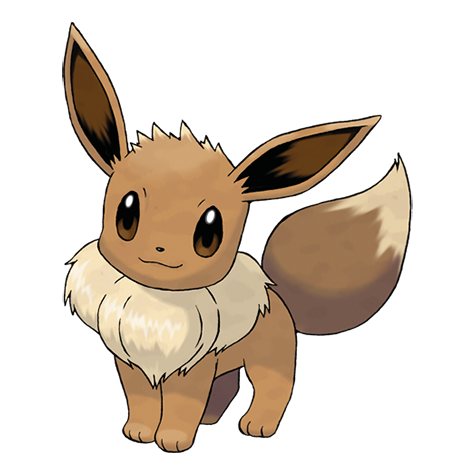
Eevee Size Comparison: BETA
Eevee is listed at 1' 0" (0.3 m); this chart uses a pose-adjusted visual scale.

How is visual size determined?
Pokédex height is treated as the official listed measurement, but the chart uses pose-aware visual scaling so each sprite looks reasonable in a direct comparison.
For long or coiled Pokémon, the listed height may represent total body length rather than upright height. For Pokémon with floppy ears, leaves, feathers, antennae, wings, or other flexible features, the chart usually measures to the top of the solid, substantial part of the head or body instead of the tallest decorative feature.
The goal is not to replace the official height, but to make the artwork compare naturally at the size it appears to occupy.
Eevee currently uses a pose-adjusted visual scale.