Gible is a Dragon/Ground-type Pokémon introduced in Generation IV and the first stage of its evolution line, with a base stat total of 300.
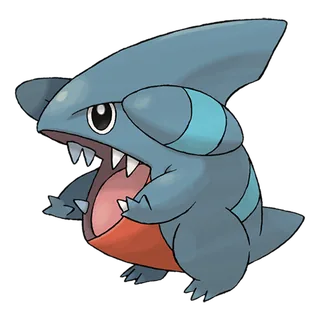
Gible


Abilities
Ups evasion in a sandstorm.
Hurts to touch.
Hidden AbilityBase Stats
Gible's Weaknesses and Resistances



Evolution Chain
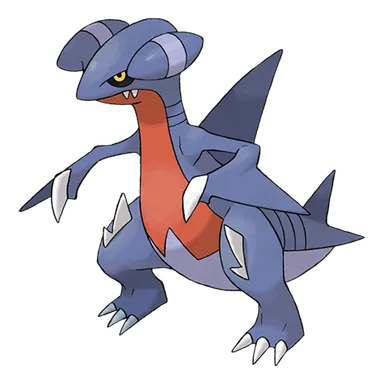
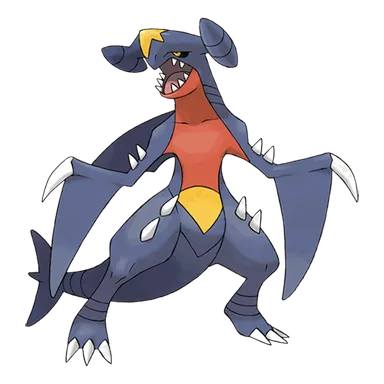
Gible evolves into Gabite at level 24, and Gabite evolves into Garchomp at level 48.
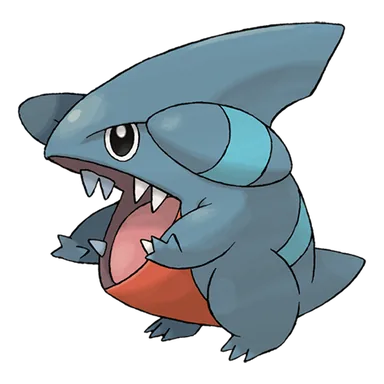 Gible
 Gabite
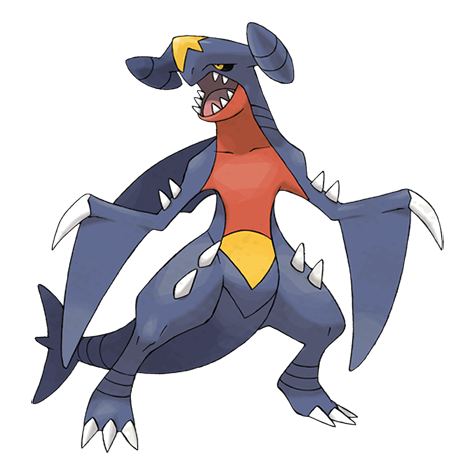 Garchomp
Gible Playthrough, Competitive, and Nuzlocke Usage
Using Gible in a Playthrough
The Gible line is Sinnoh's Dragon/Ground pseudo-legendary family, with Gible evolving into Gabite at level 24 and Garchomp at level 48. Garchomp combines base 130 Attack, 102 Speed, 108 HP, and solid defenses with an Electric immunity and powerful STAB Earthquake plus Dragon Claw or Outrage, while Swords Dance, Stone Edge, Fire Fang, Crunch, and other coverage let it handle most ordinary story opponents without relying on special attacks. The Generation IV physical/special split is particularly favorable because both Ground and important Dragon attacks can now use its enormous physical Attack, unlike older Dragon-type families whose Dragon STAB was forced to be special. Sand Veil can increase evasion in sand, while the later Hidden Ability Rough Skin damages contact attackers and is far more predictable; Jolly is excellent for preserving Garchomp's valuable base-102 Speed tier, while Adamant maximizes its already extreme physical power. Mega Garchomp raises Attack to 170, Special Attack to 120, and both defenses while gaining Sand Force, but its Speed falls from 102 to 92, so Mega Evolution can actually make some ordinary matchups less safe despite the enormous increase in power and bulk.
Gible in Competitive Pokémon
Garchomp immediately became one of Generation IV's defining competitive threats and was ultimately banned from DPP OU to Ubers, where its 130 Attack, 102 Speed, excellent bulk, near-perfect Dragon/Ground coverage, Swords Dance, and Sand Veil still allowed it to threaten legendary teams. It returned as an elite OU Pokemon in subsequent generations, with BW, XY, and SM all making extensive use of offensive Swords Dance, Choice Scarf, Stealth Rock, and bulky Rough Skin plus Rocky Helmet sets; the latter punishes contact attackers while providing hazards and phazing support rather than simply sweeping. Mega Garchomp raises Attack to a staggering 170 and Special Attack to 120 while gaining Sand Force, making it an exceptional mixed or physical wallbreaker on sand, but the drop from base 102 to 92 Speed often makes standard Garchomp easier to fit on offense and can justify delaying Mega Evolution until faster threats are removed. Fairy-types introduced another major defensive obstacle from Generation VI onward, but Earthquake, Fire coverage, Poison coverage in some formats, hazards, and sheer physical pressure have kept Garchomp relevant for far longer than most pseudo-legendaries. Its historical résumé therefore spans an actual OU ban, sustained OU prominence, defensive TankChomp roles, weather offense, and a Mega form that is more specialized than automatically superior.
Gible in Nuzlockes
The Gible line demands investment because Garchomp does not arrive until level 48, but Gible evolves into the substantially stronger Gabite at level 24 and the final payoff is one of the safest offensive Pokemon available when properly matched. Garchomp's excellent 108/95/85 bulk, Electric immunity, base 102 Speed, and base 130 Attack allow it to survive many neutral mistakes and end battles before slower opponents can retaliate. The critical danger is its quadruple Ice weakness: Ice Beam, Ice Fang, Ice Punch, and especially priority Ice Shard can kill or nearly kill even a healthy Garchomp, while Dragon and later Fairy attacks are also threatening. Rough Skin is very Nuzlocke-friendly because it provides guaranteed chip against contact without requiring setup, whereas Sand Veil relies on evasion and should not be treated as dependable protection; Outrage's multi-turn lock and eventual confusion are also much riskier than Dragon Claw when the extra power is unnecessary. Mega Garchomp adds bulk and tremendous power but loses ten points of Speed, so a run should account for opponents that ordinary Garchomp would outspeed but the Mega form would not; Jolly is often the safest nature when preserving Speed thresholds matters.
Learnsets
59 moves · Scarlet Violet
Level Up





Machine




Egg
Pokédex Entries
11 entries
It nests in small, horizontal holes in cave walls. It pounces to catch prey that stray too close.
It once lived in the tropics. To avoid the cold, it lives in caves warmed by geothermal heat.
It attacks using its huge mouth. While its attacks are powerful, it hurts itself out of clumsiness, too.
It nests in horizontal holes warmed by geothermal heat. Foes who get too close can expect to be pounced on and bitten.
It lives in caves warmed by geothermal heat. Even so, when the weather gets cold, it will huddle close with others of its kind.
It skulks in caves, and when prey or an enemy passes by, it leaps out and chomps them. The force of its attack sometimes chips its teeth.
It reacts to anything that moves—flies right at it and bites it. Sometimes it injures itself, but it doesn’t care too much.
Its original home is an area much hotter than Alola. If you’re planning to live with one, your heating bill will soar.
Gible prefers to stay in narrow holes in the sides of caves heated by geothermal energy. This way, Gible can stay warm even during a blizzard.
Gible attacks anything that moves, and it drags whatever it catches into the crevice that is its lair. Despite the big mouth, Gible’s stomach is small.
It nests in caves untouched by sunlight. Its sharp teeth may fall out when worn away or after an impact, but they regrow within a few days.
Where To Find Gible
3 locations
Route 13 · KalosRough Terrain · version details vary
Road 13
Wayward Cave · SinnohWalking · version details vary
Wayward Cave (B1F)
Floccesy Town · UnovaGift · version details vary
Floccesy Town
Held Items
1 items
- Diamond: 5% chance
- Pearl: 5% chance
- Platinum: 5% chance
- Heartgold: 5% chance
- Soulsilver: 5% chance
- Black: 5% chance
- White: 5% chance
- Black 2: 5% chance
- White 2: 5% chance
Additional Images
PokeAPI sprites
Open this section to load extra PokeAPI sprite images.
Gible Biology and Behavior
Gible is a powerful-jawed cave predator that makes deep holes in caverns warmed by geothermal heat, allowing a species descended from tropical ancestors to survive cold winters. Individuals sometimes huddle together for warmth and also engage in play-fighting, showing that the otherwise aggressive juvenile can tolerate close social contact with its own kind. Gible ambushes prey and enemies from narrow holes, seizes them with enormous jaws, and drags captured food back into its nest. Its attacks are enthusiastic but clumsy enough that Gible often chips or breaks its own teeth while biting; the loss causes little concern because replacement teeth grow back within only a few days. Animated portrayals show those jaws chewing through many kinds of metal, making the line's extraordinary bite strength evident long before it reaches its final evolution.
Gible Biological Data
- National Pokédex
- #443
- Species
- Land Shark Pokémon
- Height
- 2' 4" (0.7 m)
- Weight
- 45.2 lbs (20.5 kg)
- Habitat
- Currently Unknown
- Color
- Blue
- Body Style
- Upright
- Gender
- 50% female / 50% male
Misc
Catch Rate: 45
Base Experience: 60 Exp
Hatch Counter: 40
Gible Size Comparison: BETA
Gible is listed at 2' 4" (0.7 m) and shown in an in-chart visual comparison.
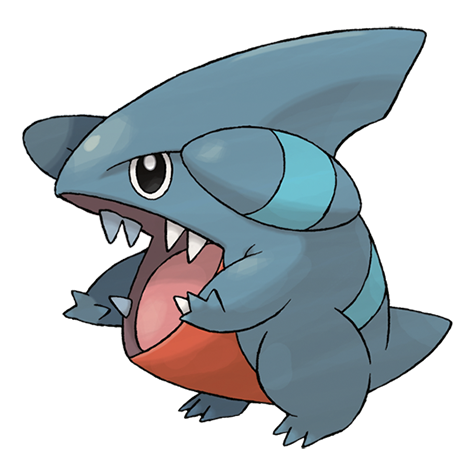

How is visual size determined?
Pokédex height is treated as the official listed measurement, but the chart uses pose-aware visual scaling so each sprite looks reasonable in a direct comparison.
For long or coiled Pokémon, the listed height may represent total body length rather than upright height. For Pokémon with floppy ears, leaves, feathers, antennae, wings, or other flexible features, the chart usually measures to the top of the solid, substantial part of the head or body instead of the tallest decorative feature.
The goal is not to replace the official height, but to make the artwork compare naturally at the size it appears to occupy.