Pikachu is an Electric-type Pokémon introduced in Generation I and a middle stage of its evolution line, with a base stat total of 320.
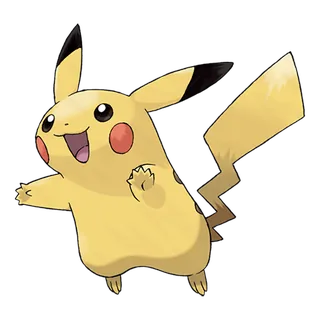
Pikachu

Abilities
Paralyzes on contact.
Draws electrical moves.
Hidden AbilityBase Stats
Pikachu's Weaknesses and Resistances



Evolution Chain
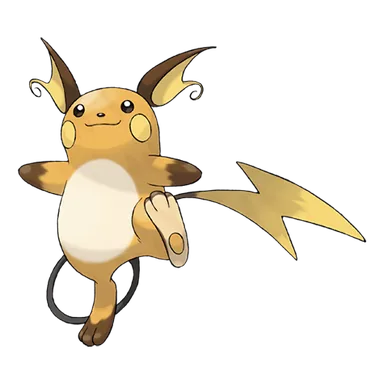
Pichu evolves into Pikachu by leveling up high friendship, and Pikachu evolves into Raichu with a Thunder Stone.
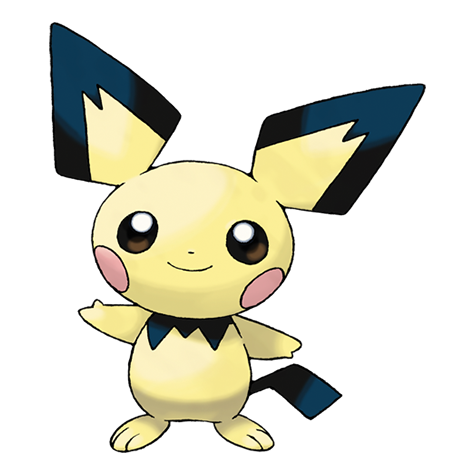 Pichu
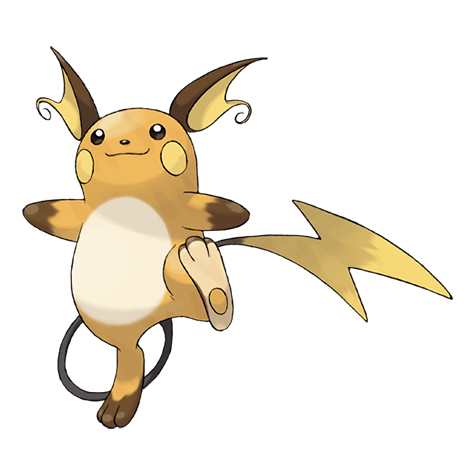 Raichu
Forms
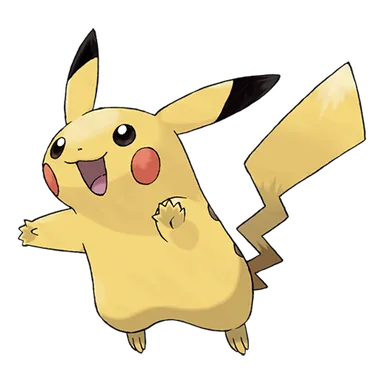 Pikachu #10080
 Pikachu Rock Star #10081
 Pikachu Belle #10082
 Pikachu Pop Star #10083
 Pikachu Phd #10084
 Pikachu Libre #10085
 Pikachu Cosplay #10094
 Pikachu Original Cap #10095
 Pikachu Hoenn Cap #10096
 Pikachu Sinnoh Cap #10097
 Pikachu Unova Cap #10098
 Pikachu Kalos Cap #10099
 Pikachu Alola Cap #10148
 Pikachu Partner Cap #10158
 Pikachu Starter #10160
 Pikachu World Cap #10199
 Pikachu Gmax
Pikachu Playthrough, Competitive, and Nuzlocke Usage
Using Pikachu in a Playthrough
The Pikachu line is usually most useful once it reaches Pikachu or Raichu, as Pichu's low stats and friendship-based evolution make the earliest stage much less practical in ordinary playthroughs. Once developed, the line offers a valuable Electric typing, strong Speed, and reliable offensive pressure against common Water- and Flying-type targets, with Raichu serving as a straightforward fast attacker and Pikachu remaining viable in some games through Light Ball or other special mechanics. In earlier generations, evolving too early could cost Pikachu some level-up options, so the timing of evolution can matter. Standard Raichu is easy to use and efficient, while later variants such as Alolan Raichu add a more distinct offensive identity where available.
Pikachu in Competitive Pokémon
The line's competitive history is split across three different identities: Light Ball Pikachu as a fragile but surprisingly powerful attacker, standard Raichu as a fast utility or offensive Pokemon, and Alolan Raichu as the line's most successful modern competitive variant. Smogon material repeatedly treats Light Ball as the item that makes Pikachu competitively relevant at all, while standard Raichu has found roles through Speed, Encore, support tools, and in some doubles formats Fake Out and Lightning Rod utility. Alolan Raichu has been notably stronger, using Surge Surfer under Electric Terrain to become an extremely fast cleaner or revenge killer with potent coverage. Even so, the line is generally constrained by frailty and by the need for either item support, terrain support, or careful positioning to maximize its value.
Pikachu in Nuzlockes
In Nuzlockes, the Pikachu line is often valued highly when obtained early because Electric-types are frequently scarce and their offensive matchups are immediately useful. Community Kanto Nuzlocke discussion tends to describe Raichu as a good but somewhat narrow Pokemon: fast, offensively practical, and able to contribute meaningfully with Thunderbolt and status support, but limited in coverage and not especially durable. If the line is obtained starting from Pichu, the friendship evolution requirement and poor early durability make it less reliable at first. Once it reaches Pikachu or Raichu, however, the line usually becomes a strong specialist for Water- and Flying-type matchups and a useful speed-based attacker, provided it is not asked to tank repeated hits.
Learnsets
67 moves · Scarlet Violet
Level Up






Machine



Pokédex Entries
26 entries
When several of these POKéMON gather, their electricity could build and cause lightning storms.
It keeps its tail raised to monitor its surroundings. If you yank its tail, it will try to bite you.
This intelligent POKéMON roasts hard BERRIES with electricity to make them tender enough to eat.
It raises its tail to check its surroundings. The tail is sometimes struck by lightning in this pose.
When it is angered, it immediately discharges the energy stored in the pouches in its cheeks.
Whenever PIKACHU comes across something new, it blasts it with a jolt of electricity. If you come across a blackened berry, it’s evidence that this POKéMON mistook the intensity of its charge.
This POKéMON has electricity-storing pouches on its cheeks. These appear to become electrically charged during the night while PIKACHU sleeps. It occasionally discharges electricity when it is dozy after waking up.
It stores electricity in the electric sacs on its cheeks. When it releases pent-up energy in a burst, the electric power is equal to a lightning bolt.
It has small electric sacs on both its cheeks. If threatened, it looses electric charges from the sacs.
When several of these POKéMON gather, their electricity can build and cause lightning storms.
It lives in forests with others. It stores electricity in the pouches on its cheeks.
If it looses crackling power from the electric pouches on its cheeks, it is being wary.
It occasionally uses an electric shock to recharge a fellow PIKACHU that is in a weakened state.
This intelligent Pokémon roasts hard berries with electricity to make them tender enough to eat.
It raises its tail to check its surroundings. The tail is sometimes struck by lightning in this pose.
It occasionally uses an electric shock to recharge a fellow Pikachu that is in a weakened state.
Whenever Pikachu comes across something new, it blasts it with a jolt of electricity. If you come across a blackened berry, it’s evidence that this Pokémon mistook the intensity of its charge.
This Pokémon has electricity-storing pouches on its cheeks. These appear to become electrically charged during the night while Pikachu sleeps. It occasionally discharges electricity when it is dozy after waking up.
A plan was recently announced to gather many Pikachu and make an electric power plant.
It’s in its nature to store electricity. It feels stressed now and then if it’s unable to fully discharge the electricity.
Its nature is to store up electricity. Forests where nests of Pikachu live are dangerous, since the trees are so often struck by lightning.
While sleeping, it generates electricity in the sacs in its cheeks. If it’s not getting enough sleep, it will be able to use only weak electricity.
This forest-dwelling Pokémon stores electricity in its cheeks, so you’ll feel a tingly shock if you touch it.
Pikachu that can generate powerful electricity have cheek sacs that are extra soft and super stretchy.
When Pikachu meet, they’ll touch their tails together and exchange electricity through them as a form of greeting.
Possesses cheek sacs in which it stores electricity. This clever forest-dweller roasts tough berries with an electric shock before consuming them.
Where To Find Pikachu
20 locations
Hau'oli City · AlolaSOS Encounter · version details vary
Hauoli City Shopping District
Heahea City · AlolaGift · version details vary
Heahea City Surf Association
Route 1 · AlolaSOS Encounter · version details vary
Alola Route 1 East
Alola Route 1 West
Route 4 · GalarOverworld · version details vary
Route 4
Fallarbor Town · HoennGift · version details vary
Contest Hall (Fallarbor Town)
Hoenn Pokecenter · HoennColosseum Bonus Disc JPN · version details vary
Hoenn Pokecenter Area
Lilycove City · HoennGift · version details vary
Contest Hall (Lilycove City)
Safari Zone · HoennWalking · version details vary
Safari Zone (SE)
Safari Zone (SW)
Slateport City · HoennGift · version details vary
Contest Hall (Slateport City)
Verdanturf Town · HoennGift · version details vary
Contest Hall (Verdanturf Town)
Friend Safari · KalosWalking · version details vary
Friend Safari (Electric)
Route 3 · KalosWalking · version details vary
Road 3
Santalune Forest · KalosWalking · version details vary
Santalune Forest
Celadon City · KantoGift · version details vary
Celadon City Prize Corner
Kanto Pokecenter · KantoColosseum Bonus Disc JPN · version details vary
Kanto Pokecenter Area
Kanto Power Plant · KantoWalking · version details vary
Power Plant
Pallet Town · KantoGift · version details vary
Pallet Town
Route 2 · KantoWalking · version details vary
Road 2 (south, towards Viridian City)
Viridian Forest · KantoWalking, Overworld · version details vary
Viridian Forest
Trophy Garden · SinnohWalking · version details vary
Trophy Garden
Held Items
2 items
- Ruby: 5% chance
- Sapphire: 5% chance
- Emerald: 5% chance
- Diamond: 5% chance
- Pearl: 5% chance
- Platinum: 5% chance
- Heartgold: 5% chance
- Soulsilver: 5% chance
- Black: 1% chance
- White: 1% chance
- Black 2: 5% chance
- White 2: 5% chance
- X: 5% chance
- Y: 5% chance
- Omega Ruby: 5% chance
- Alpha Sapphire: 5% chance
- Sun: 5% chance
- Moon: 5% chance
- Ultra Sun: 5% chance
- Ultra Moon: 5% chance
- Ruby: 50% chance
- Sapphire: 50% chance
- Emerald: 50% chance
- Diamond: 50% chance
- Pearl: 50% chance
- Platinum: 50% chance
- Heartgold: 50% chance
- Soulsilver: 50% chance
- Black: 50% chance
- White: 50% chance
Additional Images
PokeAPI sprites
Open this section to load extra PokeAPI sprite images.
Pikachu Biology and Behavior
Pikachu stores electricity in cheek pouches that charge during sleep, and if it does not get enough rest it cannot release electricity at full strength. When angered or threatened it discharges electricity rapidly, and groups of Pikachu can build up enough charge together to create thunderstorms. Wild Pikachu live socially in forest nests, greet one another by making contact with their tails, and can even revive weakened Pikachu with electric shocks. It is described as playful and intelligent, and it often roasts Berries with electricity before eating them, though it sometimes overdoes the charge and burns them.
Pikachu Biological Data
- National Pokédex
- #25
- Species
- Mouse Pokémon
- Height
- 1' 4" (0.4 m)
- Weight
- 13.2 lbs (6.0 kg)
- Habitat
- Forest
- Color
- Yellow
- Body Style
- Quadruped
- Gender
- 50% female / 50% male
Misc
Catch Rate: 190
Base Experience: 112 Exp
Hatch Counter: 10
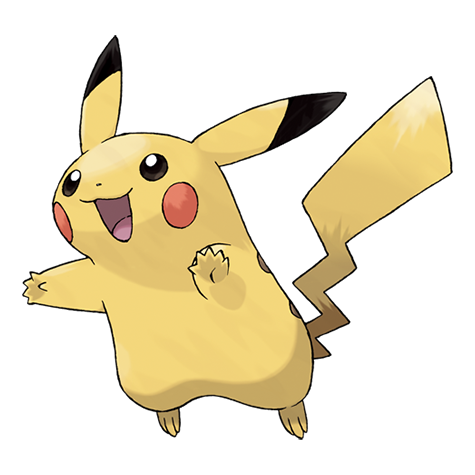
Pikachu Size Comparison: BETA
Pikachu is listed at 1' 4" (0.4 m); this chart uses a pose-adjusted visual scale.

How is visual size determined?
Pokédex height is treated as the official listed measurement, but the chart uses pose-aware visual scaling so each sprite looks reasonable in a direct comparison.
For long or coiled Pokémon, the listed height may represent total body length rather than upright height. For Pokémon with floppy ears, leaves, feathers, antennae, wings, or other flexible features, the chart usually measures to the top of the solid, substantial part of the head or body instead of the tallest decorative feature.
The goal is not to replace the official height, but to make the artwork compare naturally at the size it appears to occupy.
Pikachu currently uses a pose-adjusted visual scale.